




Why Choose Expandable Container Houses for Housing Projects
2026-02-22 06:25:27
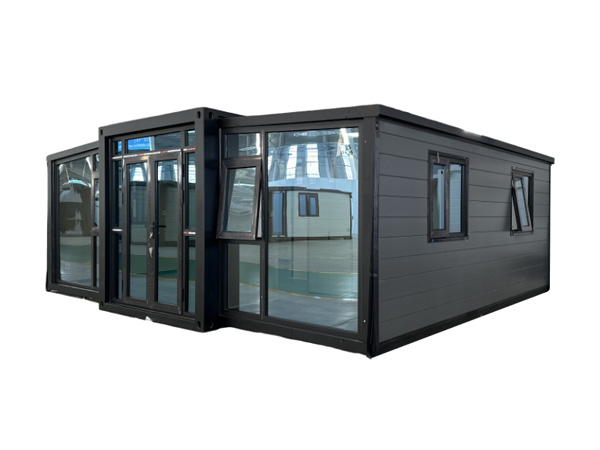
What Are Expandable Container Houses?
Expandable container houses are prefabricated modular units that remain compact during transportation and expand into full-size spaces once they arrive on site. Unlike fixed container buildings, these units are designed with fold-out or slide-out sections that significantly increase the usable area after deployment.
Most construction work is completed in a factory environment. Structural frames, insulation, electrical systems, plumbing, windows, and finishes are installed during production. When delivered to the project location, expandable container houses only need positioning, unfolding, and utility connection before use.
Because of this method, expandable container houses reduce logistics volume while providing comfortable, functional living spaces for short-term and long-term housing projects.
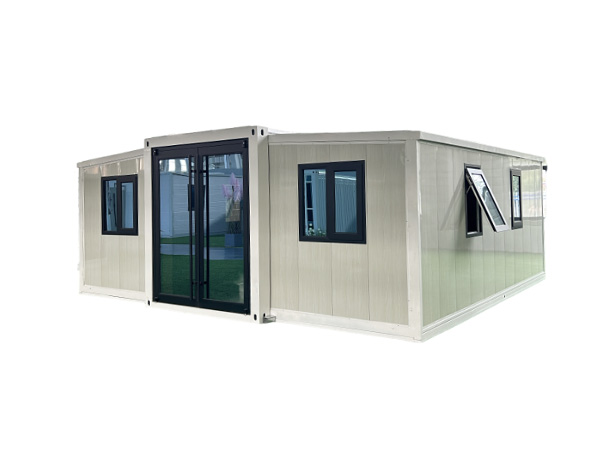
How Expandable Container Houses Work
The process behind expandable container houses follows an industrialized workflow:
1. Factory Manufacturing
Steel frames and expandable mechanisms are assembled on standardized production lines. Wall panels, flooring, insulation, and integrated systems are installed before shipment. From a manufacturer perspective, this controlled production improves consistency, safety, and efficiency for large-scale housing supply.
2. Compact Transportation
Before expansion, the unit is folded into a transport-friendly size. More expandable container houses can be shipped per truck or container, reducing logistics cost and delivery time.
3. On-Site Expansion
Once placed, the expandable sections unfold manually or with hydraulic support. Within hours, a compact module becomes a spacious housing unit without heavy construction work.
4. Utility Connection
Water, electricity, drainage, and optional HVAC systems are connected externally. After inspection, the house is ready for occupancy.
This streamlined process allows housing projects to move faster and with better schedule control.
Structural Design of Expandable Container Houses
Expandable container houses are engineered for durability and comfort:
·Steel Frame System: Provides strong load-bearing capacity and structural stability.
·Expandable Wall Panels: Designed to open smoothly while maintaining insulation performance.
·Thermal Insulation Layers: Improve indoor comfort in different climates.
·Floor and Roof Systems: Fire-resistant and moisture-proof for safety and long-term use.
·Doors and Windows: Enhance lighting, ventilation, and security.
·Electrical and Plumbing Systems: Pre-installed during production for fast deployment.
The expandable mechanism is designed for repeated use, ensuring that expansion does not compromise structural performance.
Advantages for Housing Projects
Fast Project Delivery
Expandable container houses shorten construction schedules. While the site is prepared, the units are produced in parallel, allowing projects to finish much faster than traditional builds.
Cost Efficiency
Factory production reduces labor costs, material waste, and rework. Transportation efficiency also lowers logistics expenses for housing developments.
Flexible Layout Design
Expandable container houses can be configured into different floor plans, including multi-room units, family housing, and multi-story combinations.
Scalable Development
Projects can start small and expand later by adding more units, making expandable container houses suitable for phased housing programs.
Durability and Safety
Steel structures offer resistance to wind, rain, corrosion, and seismic forces, supporting long-term housing use.
Sustainable Construction
Reduced on-site waste and energy-efficient insulation help lower environmental impact.
These advantages make expandable container houses highly attractive for modern housing projects.
Applications in Housing Projects
Expandable container houses fit a wide range of housing scenarios:
Residential Communities
Used for apartments, villas, and community housing, expandable container houses provide comfortable living spaces with rapid installation.
Workforce Housing
Infrastructure, mining, and industrial projects rely on expandable container houses for staff accommodation in remote areas.
Temporary and Transitional Housing
Expandable container houses work well for short-term housing needs, relocations, and fast urban development programs.
Public Housing Programs
Governments and institutions use expandable container houses for dormitories, social housing, and emergency accommodation because of fast deployment and scalability.
Because the units are modular, they can be combined into large developments with consistent quality and appearance.
Production Capacity and Bulk Supply
Expandable container houses are typically manufactured on standardized assembly lines. During production, steel fabrication, welding, panel installation, and system integration are completed before shipment. This industrialized approach ensures repeatable quality and predictable performance.
For large housing projects, batch production supports uniform specifications, faster turnaround, and controlled inspection. From a supply perspective, expandable container houses are suitable for residential developments and public housing programs that require reliable volume delivery and scalable manufacturing capability.
This production model allows expandable container houses to serve both small developments and large-scale housing deployments efficiently.
Customization Options
Modern expandable container houses offer many customization possibilities:
·Interior layouts for bedrooms, kitchens, bathrooms, and living areas
·Exterior finishes to match architectural styles
·Climate-specific insulation upgrades
·Electrical and smart system integration
·Multi-unit and multi-floor combinations
With proper planning, expandable container houses can perform and appear similar to traditional housing while keeping modular efficiency.
Why Expandable Container Houses Are a Smart Choice
Housing demand continues to grow while timelines and budgets become tighter. Expandable container houses answer these challenges by combining industrial production with architectural flexibility.
They allow developers and project owners to build faster, control costs, and adapt layouts as needs change. With continuous improvements in materials and engineering, expandable container houses are becoming more comfortable, durable, and suitable for long-term living.
Their ability to merge mobility, scalability, and efficient production makes them a strong foundation for modern housing projects.
Conclusion
Expandable container houses provide a practical and future-ready solution for housing projects. With compact transportation, rapid expansion, durable structures, and flexible layouts, expandable container houses meet the needs of residential, workforce, and public housing developments alike. Supported by standardized production and scalable manufacturing capability, expandable container houses deliver reliable quality and fast deployment for projects of any size.
For planners and developers seeking speed, efficiency, and adaptability, choosing expandable container houses is an investment in smarter construction and sustainable housing growth. The future of modern housing is increasingly built on the innovation of expandable container houses.
References
GB/T 7714:Kim S. Prefabricated and modularized residential construction: A review of present status, opportunities, and future challenges[J]. Buildings, 2025, 15(16): 2889.
MLA:Kim, Sunai. "Prefabricated and modularized residential construction: A review of present status, opportunities, and future challenges." Buildings 15.16 (2025): 2889.
APA:Kim, S. (2025). Prefabricated and modularized residential construction: A review of present status, opportunities, and future challenges. Buildings, 15(16), 2889.