




What are the key construction processes of container houses?
2026-02-04 09:55:49
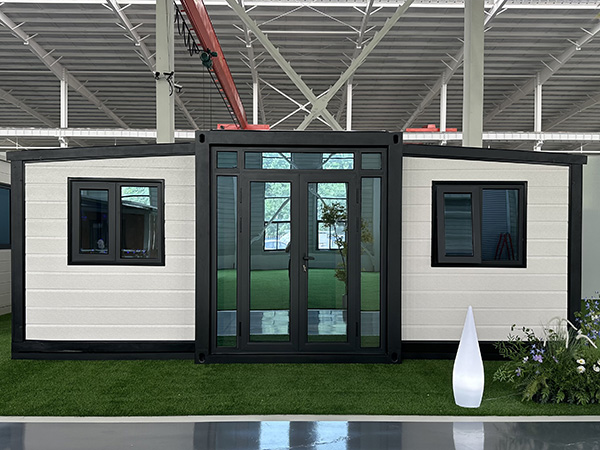
What are the key construction processes of container houses?
The construction of container houses is a systematic modular project centered on factory prefabrication and supplemented by on-site assembly,with strict adherence to industrial construction standards in every link to ensure structural safety,functional usability and durability.Different from the on-site cast-in-place mode of traditional buildings,its core processes focus on factory precision processing and on-site quick assembly,with a clear division of labor between off-site and on-site operations,effectively shortening the construction cycle while controlling quality.Below are the key standardized construction processes,applicable to mainstream integral welded and flat-pack container houses,the most common types on the market.
The first step is design and material preparation,the foundation of the entire construction process.According to the customer’s use scenarios(residence,office,dormitory),size requirements,and local climatic conditions(wind resistance,thermal insulation),professional designers create a detailed construction drawing,including structural layout,water and electricity pipeline routing,insulation and fireproof design,and modular combination plans(if multi-unit splicing is needed).After the design is confirmed,high-quality materials are procured in accordance with national building standards:high-strength steel plates for the main frame,eco-friendly insulation materials(rock wool,polyurethane foam)for walls and roofs,fireproof and corrosion-resistant decorative panels,as well as standardized doors,windows,water and electricity accessories.For shipping container-transformed houses,the original containers are also inspected and reinforced to remove rust and repair damaged parts to ensure structural stability.
The second step is factory prefabrication and processing,the core link that distinguishes container houses from traditional buildings,accounting for about 70%of the entire construction work.For integral welded container houses,the steel frame is first welded and formed in the factory,with the top,bottom and side panels fixed to the frame by full welding to ensure the overall structural firmness.Then,the wall and roof cavities are filled with insulation materials,and waterproof and vapor barrier layers are added to prevent water seepage and heat loss.For flat-pack container houses,prefabricated steel frame profiles,wall panels,roof panels and floor panels are processed separately,with precise reserved connecting holes for on-site assembly.Next,the internal basic decoration is completed in the factory:laying the floor,installing the inner wall panels,routing the hidden water and electricity pipelines,and pre-installing embedded parts for doors,windows and electrical appliances.All prefabricated units are strictly tested for waterproofing,airtightness and structural load-bearing before leaving the factory to ensure they meet the on-site assembly requirements.
The third step is site preparation and foundation construction,a simple but critical on-site preliminary work.Unlike traditional buildings that require heavy reinforced concrete foundations,container houses only need a lightweight and flat foundation adapted to their modular characteristics.The construction site is first leveled and compacted to remove sundries and uneven ground;then,according to the container size and layout,a strip concrete foundation,concrete pier foundation or steel support foundation is built.The core requirement is to ensure the foundation is horizontal and stable,with uniform force bearing,to prevent the container house from tilting or deforming due to uneven ground settlement.The foundation construction is fast,generally completed in 1-3 days,and no complex civil engineering is required,which greatly saves on-site construction time and costs.
The fourth step is on-site hoisting and assembly,the key on-site operation to realize the rapid forming of container houses.After the prefabricated container units(or flat-pack parts)are transported to the site by special vehicles,a crane is used to hoist the units to the pre-constructed foundation and align them accurately.For single-unit container houses,the hoisting is completed in one time,and the unit is fixed to the foundation with expansion bolts to prevent displacement caused by strong winds.For multi-unit combined houses,horizontal splicing and vertical stacking are carried out in accordance with the design drawings:professional connecting pieces are used to fix the adjacent units,and structural reinforcement is added at the splicing and stacking positions to enhance the overall stability of the building.For flat-pack container houses,construction workers splice and bolt the prefabricated steel frames,wall panels and roof panels in sequence according to the assembly drawings,with no on-site welding required,making the operation simple and efficient.The entire assembly process for a single unit takes only a few hours,and a multi-unit building can be formed in 1-2 days.
The fifth step is pipeline connection and accessory installation,the link that enables the functional use of container houses.After the main structure is assembled,the on-site connection of water supply,drainage,electricity,and heating pipelines is carried out,connecting the pre-laid hidden pipelines in the factory with the on-site municipal pipelines(or independent water and electricity systems)to ensure unobstructed water and normal power supply.Then,the finished doors,windows,lighting fixtures,sockets,switches,and other electrical accessories are installed and debugged;for houses with higher configuration requirements,air conditioners,water heaters,kitchen and bathroom facilities are also installed and tested for normal operation.At the same time,external waterproof and anti-corrosion treatment is supplemented at the pipeline connection and unit splicing positions to avoid water seepage and rust,and external decorative parts(such as rain awnings,guardrails)are installed according to the design requirements.
The final step is overall inspection and acceptance,the last pass to ensure the quality of the container house before delivery.Professional inspectors conduct a comprehensive check on the entire building:inspecting the structural firmness(frame,splicing parts,foundation fixation),testing the waterproofing performance(simulated rain test for roofs and walls),verifying the normal operation of water and electricity pipelines and electrical appliances,checking the thermal insulation and sound insulation effects,and confirming that all parts meet the design requirements and national building safety standards.Any unqualified problems(such as water seepage,loose connections,abnormal power supply)are repaired and adjusted in a timely manner.After passing the acceptance,the construction team cleans the site and the interior of the container house,and then the house can be officially delivered and put into use.
In summary,the key construction processes of container houses follow the logic of factory prefabrication+on-site assembly,with the advantages of high efficiency,standardization and low environmental impact.Each link is closely connected and strictly controlled,which not only ensures the structural safety and functional completeness of the building,but also embodies the core characteristics of modular prefabricated buildings—fast construction,flexible combination and green environmental protection.The entire process avoids the cumbersome on-site construction of traditional buildings,and adapts to the diverse use needs of modern society for fast,efficient and high-quality building solutions.
References
GB/T 7714:Bernardo L F A, Oliveira L A P, Nepomuceno M C S, et al. Use of refurbished shipping containers for the construction of housing buildings: details for the structural project[J]. Journal of civil engineering and management, 2013, 19(5): 628-646.
MLA:Bernardo, Luís FA, et al. "Use of refurbished shipping containers for the construction of housing buildings: details for the structural project." Journal of civil engineering and management 19.5 (2013): 628-646.
APA:Bernardo, L. F., Oliveira, L. A., Nepomuceno, M. C., & Andrade, J. M. (2013). Use of refurbished shipping containers for the construction of housing buildings: details for the structural project. Journal of civil engineering and management, 19(5), 628-646.