




How to do thermal insulation and sound insulation for container houses?
2026-02-04 09:57:47
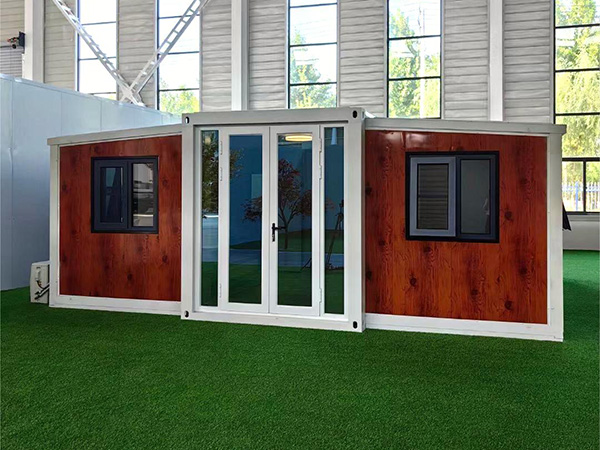
Thermal insulation and sound insulation are core upgrades for container houses to move from industrial steel structures to habitable and comfortable buildings.The metal shell of standard containers has high thermal conductivity and poor sound absorption,which easily causes temperature extremes in summer and winter and poor privacy from external and internal noise.The improvement of thermal and sound insulation performance follows the principle of layered composite construction and seamless sealing,integrating professional insulation,sound-absorbing materials and structural optimization in factory prefabrication—the key link—with supplementary on-site sealing treatment.Below is a systematic,practical method for thermal and sound insulation renovation,applicable to mainstream integral welded and flat-pack container houses,balancing cost,construction efficiency and actual effect.
Thermal Insulation:Block Heat Transfer with Layered Material and Seam Sealing
Thermal insulation for container houses targets three heat transfer forms:conduction,convection and radiation,with the core of filling high-performance insulation materials in the building envelope and sealing all gaps to cut off heat exchange channels.The operation is mainly completed in the factory during the secondary modification of the container,divided into wall,roof,floor and door/window four key parts,with consistent processes for welded and flat-pack types.
Wall insulation:First,clean and derust the inner side of the steel container wall,and lay a moisture-proof and vapor barrier film to prevent water vapor from entering the insulation layer and reducing its performance.Then fill the cavity between the steel shell and the inner decorative panel with density-adjusted rock wool,polyurethane foam or XPS extruded board—rock wool is preferred for fire resistance and cost performance,while polyurethane foam is suitable for scenarios with high insulation requirements due to its low thermal conductivity and full filling without gaps.The material thickness is generally 50-100mm,adjusted according to local climate:80-100mm for cold northern areas and 50-60mm for warm southern areas.Finally,fix the fireproof and decorative inner panel(gypsum board,bamboo wood fiber board)on the keel,with no gaps left between panels and the steel frame.
Roof insulation:The roof bears direct solar radiation,so the insulation layer is reinforced with a double-layer composite structure.On the basis of the inner insulation layer(same material and thickness as the wall),a 30-50mm thick heat insulation board is laid on the outer top of the container,and covered with a waterproof and anti-UV color steel tile or asphalt waterproof roll.This double-layer design blocks solar heat conduction from the outside and prevents internal heat loss,which is the most effective way to solve the problem of high roof temperature in summer.
Floor insulation:For the floor,first lay a moisture-proof mat on the steel bottom plate,then lay extruded board or glass wool board with a thickness of 50-80mm,and then lay a cement fiber board as the base layer,and finally pave the finished floor(laminate,vinyl,ceramic tile).This structure not only insulates against the ground temperature,but also prevents cold air from seeping up from the foundation in winter;for container houses built on damp ground,a ventilation layer can be added between the foundation and the steel bottom plate to further improve moisture and heat insulation effects.
Door and window insulation:Replace the original simple steel doors and windows with thermal break aluminum alloy doors and windows with double-layer hollow tempered glass—the hollow layer(6-12mm)blocks heat conduction effectively,and the thermal break aluminum frame reduces metal heat transfer.Install sealing strips(EPDM rubber)around the door and window frames to seal the gaps between frames and the container wall,eliminating heat convection through gaps;for large window openings,add sunshade awnings outside to reduce direct solar radiation in summer.
Whole-house sealing:Seal all structural gaps(splicing seams of container units,bolt holes,pipeline penetration holes)with waterproof and thermal insulation sealant and foam filling agent,which is a"small but critical"step.Even with thick insulation materials,unclosed gaps will cause serious heat loss,so seamless sealing is the guarantee for the overall insulation effect.
Sound Insulation:Absorb and Isolate Noise with Multi-layer Composite and Vibration Reduction
Sound insulation for container houses needs to solve two types of noise:airborne noise(external traffic,construction,human voice,internal conversation)and impact noise(footsteps,object collision,external vibration).The solution combines sound absorption,sound insulation and vibration reduction,and is constructed synchronously with thermal insulation in the factory,sharing the layered keel and composite structure to avoid repeated construction.
Basic sound insulation for walls/roof/floor:Reuse the thermal insulation layered structure and upgrade the material combination for sound insulation.The rock wool and glass wool used for thermal insulation are also excellent sound-absorbing materials—their porous structure absorbs airborne noise and weakens sound wave transmission.On this basis,add a sound insulation felt(1-3mm thick)between the insulation layer and the inner decorative panel;the high-density rubber-plastic sound insulation felt blocks sound wave penetration and isolates the solid sound conduction between the steel shell and the inner panel.For the floor,lay a shock-absorbing mat(EVA or rubber)between the insulation layer and the cement fiber board to reduce the transmission of impact noise(footsteps)to the steel bottom plate.
Enhanced sound insulation for multi-unit splicing:For modular combined container houses,the splicing seams between adjacent units are key sound insulation weak points.Add a sound insulation rubber pad between the splicing steel plates,and seal the inner and outer seams with sound insulation sealant;install a double-layer keel with a sound insulation gap between the inner walls of the splicing position,and fill the gap with rock wool,which forms a"sound insulation belt"to prevent noise transmission between units.
Vibration reduction for metal structure:The steel frame of container houses is a good sound conductor,and vibration will amplify noise.Add rubber shock absorption gaskets between the container frame and the foundation,and between the keel and the steel shell;the gaskets isolate the solid vibration transmission between the building and the ground,and reduce the noise amplification caused by the metal frame's resonance.For pipeline penetration parts(water supply,drainage,electricity),wrap the pipelines with sound insulation cotton and seal the penetration holes with fireproof sound insulation foam,avoiding noise transmission through pipeline gaps and solid conduction along the pipelines.
Door and window sound insulation optimization:On the basis of thermal insulation doors and windows,upgrade to triple hollow glass for scenarios with high sound insulation requirements(near busy roads,industrial areas);the multi-layer hollow structure greatly improves airborne noise insulation.Replace ordinary door panels with honeycomb core sound insulation doors(filled with sound-absorbing cotton in the core),and install multi-layer sealing strips around the door frame to enhance the sound insulation effect of door openings.
Internal sound absorption decoration:Use sound-absorbing decorative materials for the inner surface of the container house to weaken the internal reverberation and improve the sound insulation experience.For example,pave sound-absorbing wall cloth,install wood wool sound-absorbing boards or polyester fiber sound-absorbing panels in living rooms and offices,and lay thick carpets on the floor—these materials absorb internal reflected sound,reduce noise reverberation,and make the indoor environment quieter without increasing the construction difficulty.
Targeted sound insulation for special scenarios:For container houses used as offices,homestays or bedrooms(high privacy requirements),carry out local enhanced sound insulation:add a second layer of sound insulation gypsum board on the inner wall,fill the gap between the two layers with rock wool;install sound insulation covers for electrical equipment(air conditioners,water heaters)to reduce mechanical noise;for the drainage pipeline,wrap it with thick sound insulation cotton and fix it with a shock-absorbing clamp to avoid pipeline vibration and water flow noise.
Key Construction Tips&Matching Suggestions
Synchronous construction in factory:Thermal and sound insulation works must be completed in the factory prefabrication stage,not added on-site temporarily.Factory construction has precise processing and layered operation conditions,which ensures the material laying density and seam sealing effect,while on-site construction is limited by space and tools,and the effect is difficult to guarantee.
Material matching for cost and effect:Choose the material combination according to the use scenario and budget.For temporary use(construction site dormitories),use"rock wool+single-layer inner panel+basic sealing"to balance cost and basic performance;for long-term residence,homestays and offices,use"polyurethane foam+sound insulation felt+double-layer keel+thermal break doors/windows"for enhanced thermal and sound insulation.
Avoid structural damage:Do not cut the container steel frame randomly during renovation,as the cut will destroy the integral structure and form new heat and sound insulation weak points;if holes need to be opened(for pipelines,windows),reinforce the edge and seal the gap with professional materials immediately.
Post-maintenance:Check the sealing strips,sealant and shock absorption gaskets regularly(every 6-12 months);replace the aging sealing strips and re-seal the cracked seams in time to avoid the decline of thermal and sound insulation performance due to material aging.
References
GB/T 7714:Pinilla-Melo J, Aira-Zunzunegui J R, La Ferla G, et al. Design of a Shipping Container-Based Home: Structural, Thermal, and Acoustic Conditioning[J]. Buildings, 2025, 15(17): 3127.
MLA:Pinilla-Melo, Javier, et al. "Design of a Shipping Container-Based Home: Structural, Thermal, and Acoustic Conditioning." Buildings 15.17 (2025): 3127.
APA:Pinilla-Melo, J., Aira-Zunzunegui, J. R., La Ferla, G., de la Prida, D., & Navacerrada, M. Á. (2025). Design of a Shipping Container-Based Home: Structural, Thermal, and Acoustic Conditioning. Buildings, 15(17), 3127.