




Container houses vs traditional houses:Which is more suitable for you?
2026-02-04 09:50:07
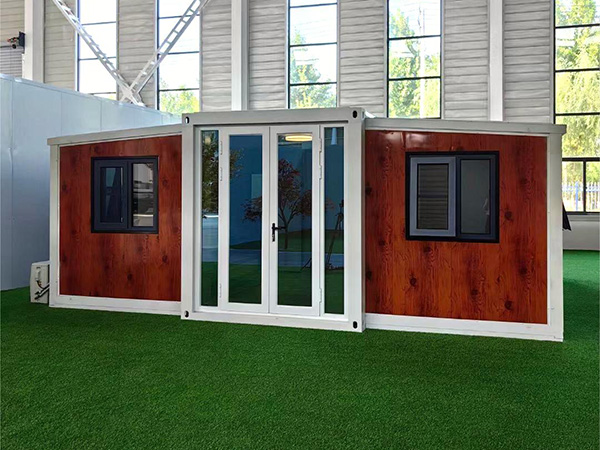
Container houses vs traditional houses:Which is more suitable for you?
Container houses and traditional houses(brick-concrete,reinforced concrete structures)represent two entirely different construction modes—one is a modular prefabricated building centered on low-carbon,flexibility and portability,the other is a cast-in-place fixed building featuring stability,permanence and a mature decoration system.Which one is more suitable depends on your actual needs,including usage demands,construction cycle,budget planning,land attributes and long-term layout.
Below is a comprehensive comparison from core dimensions such as construction,cost,performance and applicability,and clear selection criteria are summarized to help you quickly make a decision that fits your situation.
Core Dimension Comparison
Construction Mode
Container houses adopt the mode of factory prefabrication plus on-site assembly/splicing,without complex civil engineering construction;only a small construction team is needed to complete the on-site installation,and the operation is simple and efficient.
Traditional houses rely on on-site cast-in-place and bricklaying,involving the whole process of civil engineering such as foundation pouring,wall masonry and main structure construction;each link requires a professional and large-scale construction team,and the construction process is cumbersome.
Construction Cycle
Container houses have an ultra-short construction cycle:a single modular unit can be put into use in a few hours after on-site assembly,and even a large multi-module building can be completed in just a few days or weeks,basically unaffected by weather and other external factors.
Traditional houses have a long construction cycle that usually takes several months to even years;the progress is easily restricted by weather,construction team scheduling and decoration links,and the time cost is high.
Total Cost
Container houses have a low to medium overall cost:the foundation construction cost is extremely low,and the factory standardized production reduces on-site labor and material waste;it has a high cost performance for short and medium-term use,while high-end personalized customization will push up the cost to a certain extent.
Traditional houses have a medium to high overall cost:the foundation,masonry and on-site construction labor costs account for a large proportion;although the decoration cost is flexible and can be controlled according to the budget,the total life cycle cost is relatively stable,and the later maintenance and renovation also have certain fixed expenses.
Structural Features
Container houses take a steel frame as the core,with light overall weight,excellent seismic and wind resistance performance,and the modular design makes the structure compact and firm;the load-bearing capacity meets national building safety standards,and it can adapt to most conventional use scenarios.
Traditional houses are based on reinforced concrete or brick-concrete structures,with heavy overall weight and super high structural stability;the integral fixed structure has strong load-bearing capacity,and the structural safety is more recognized by the market for long-term use.
Mobility&Reusability
Container houses have high mobility and reusability:the whole unit can be hoisted and transported integrally by professional equipment,and can be quickly relocated according to the change of use location;after relocation,it can be reused without secondary demolition,which greatly reduces resource waste.
Traditional houses have zero mobility and reusability:they are fixedly built on the land and cannot be moved as a whole;once the use location changes,demolition is usually required,which will cause a lot of waste of building materials and resources,and the demolition cost is also high.
Space&Customization
Container houses rely on modular combination to realize space expansion,which can be freely spliced horizontally and stacked vertically to form large-scale use space;the interior layout and decoration can be customized from simple to high-end,and the operation is flexible,only slightly limited by the standard size of the basic modular unit.
Traditional houses have no restrictions on space design and size,and can be arbitrarily planned according to actual needs;the interior and exterior decoration can be fully personalized customized without the constraints of modular design,and the mature decoration industrial chain can meet all kinds of high-end and diversified customization needs.
Environmental Protection
Container houses are highly environmentally friendly:the factory prefabrication mode can realize a material utilization rate of more than 90%,with almost no on-site construction waste;the steel frame structure can be 90%recycled and reused,and the on-site assembly process produces no dust,noise or sewage pollution,in line with low-carbon development concepts.
Traditional houses have poor environmental protection performance:on-site construction will produce a lot of waste,with a material loss rate of more than 30%;the construction process consumes a lot of energy,and will bring dust,noise and sewage pollution to the surrounding environment,which is not conducive to ecological protection.
Land Requirement
Container houses have low land requirements:only a simple foundation such as strip concrete or steel support is needed to meet the use conditions,and they have strong adaptability to uneven terrain;they can be built on idle land,temporary use land and other non-permanent construction land,with low land access thresholds.
Traditional houses have high land requirements:they must be built on land with legal permanent construction rights,and need a solid reinforced concrete foundation;the terrain and geological conditions have strict restrictions,and professional geological prospecting is required before construction to ensure the stability of the main structure.
Permanence&Compliance
Container houses are mainly for temporary or quasi-permanent use:the approval procedures are simple and fast in most regions,with low time and energy costs for procedures;only a few regions can complete the formalities for permanent property rights,and most of them are recognized as temporary buildings in terms of property rights.
Traditional houses are for permanent use:they need to go through complete and standardized approval procedures including planning,construction and property right certification;after completion,formal property right certificates can be obtained,with clear legal property rights,and the building attribute is a permanent fixed asset.
Later Maintenance
Container houses have low later maintenance costs:the steel frame structure has undergone professional anti-corrosion and anti-rust treatment,with few easily damaged parts;the wall panels,roof panels and other accessories can be replaced independently if damaged,and the maintenance operation is simple and the cost is low.
Traditional houses have medium later maintenance costs:brick-concrete and reinforced concrete structures are prone to problems such as wall seepage and cracking after long-term use;the internal water and electricity pipelines are complex and easy to age,requiring regular inspection and replacement;the exterior walls and roofs also need regular maintenance and renovation,with high overall maintenance costs.
Key Advantages of Container Houses
Container houses have irreplaceable advantages in scenarios where speed,flexibility and cost control are the core demands,and are the first choice for modern flexible building needs:
Fast response for urgent use,which can solve the demand for temporary or urgent housing such as construction site dormitories,disaster relief resettlement and temporary business spaces in the shortest time,without waiting for a long construction cycle.
Low construction threshold,no need for complex land approval and professional geological prospecting;simple foundation treatment can be adapted to most terrains,saving a lot of preliminary preparation time and cost.
Flexible layout and convenient relocation,which can be freely combined according to changes in use needs;the whole unit can be hoisted and moved with the transfer of projects or the change of operation locations,realizing the recycling of the building itself and reducing resource waste.
Green and low-carbon,the factory standardized production mode realizes green construction with less pollution and high material utilization rate,in line with the national low-carbon development concept,and more suitable for scenarios with environmental protection building demands.
High cost performance for short-term use,for medium and short-term use(1-5 years),the total cost including construction,maintenance and relocation is far lower than that of traditional houses,which can effectively control the budget.
Strong adaptability to complex terrains,which can be built on mountainous areas,suburbs,uneven land and other areas where traditional civil engineering is difficult to implement,making up for the shortage of traditional house construction in special terrains.
Key Advantages of Traditional Houses
Traditional houses are the classic first choice for long-term fixed use,permanent residence and high-quality living experience,with mature and stable comprehensive advantages:
Clear permanent property rights and complete legal compliance,with formal construction approval procedures and property right certificates;the asset attribute is clear,suitable for permanent building scenarios such as self-occupied residences and commercial shops,and has high asset value.
Unlimited customization and mature high-quality decoration,without the constraints of modular size,arbitrary space design and high-end decoration can be realized;the mature decoration industrial chain can meet all personalized living and use needs,and the decoration effect is more diverse.
Super high structural stability and living comfort,brick-concrete and reinforced concrete structures have better thermal insulation,sound insulation and airtightness;the space design and living experience are more in line with people's traditional living habits,and the overall comfort is higher.
High asset appreciation potential,as a fixed building bound to the land with permanent construction rights,it follows the appreciation trend of land and real estate,with stable long-term asset appreciation space;it is a suitable choice for long-term investment and layout.
Large space for later renovation and expansion,the integral structure can be renovated and expanded according to later needs,and various decoration style changes and functional transformations can be realized;the service life is long(generally 50-70 years),and the long-term use cost performance is high.
High adaptability to strict construction areas,in urban central areas,residential quarters and other regions with strict requirements for permanent buildings,traditional houses are the only compliant choice,and container houses as temporary buildings are usually not allowed to be built.
Clear Selection Criteria:Which One Is More Suitable for You?
Choose Container Houses if you meet any of the following conditions
You have temporary or short-to-medium term use needs(1-5 years),such as building construction site dormitories,temporary office spaces,emergency disaster relief resettlement housing or outdoor event temporary supporting housing.
You have an urgent construction demand and need to put the building into use in the shortest time(days or weeks),and the time cost is the key consideration factor.
The land you use is non-permanent construction land,idle land or temporary use land,and it is impossible to complete complex and time-consuming permanent construction approval procedures.
You may need to relocate the building with the change of project progress,operation location or use demand,such as project-following dormitories,mobile commercial service points and temporary construction command posts.
You pursue green and low-carbon construction,hope to reduce construction waste and energy consumption,or your budget is limited and you need to strictly control the total construction and later use costs.
You need to build buildings in complex terrains such as mountainous areas,suburbs and uneven land,where traditional civil engineering construction is difficult to implement and the cost is too high.
Choose Traditional Houses if you meet any of the following conditions
You have permanent fixed use needs(more than 10 years),such as building self-occupied residential houses,fixed-address commercial shops,office buildings or community permanent supporting facilities.
The land you use has formal permanent construction rights,and you can complete all standardized approval procedures including planning,construction and property right certification.
You pursue a high-quality living or office experience,and have high requirements for the thermal insulation,sound insulation,space design and high-end decoration of the building.
You regard the building as a long-term asset investment,hope to obtain stable asset appreciation space,and need formal legal property right certification to ensure the safety of asset rights.
You need a large space for later renovation and expansion,and have high requirements for the flexibility of space transformation and the diversity of decoration styles,and hope to adjust the building function according to the changes of later needs.
You are in a region with strict requirements for building permanence,such as urban central areas,mature residential quarters and core commercial districts,where temporary prefabricated buildings are not allowed to be built.
Special Reminder:A Complementary Choice
In actual application,container houses and traditional houses are not mutually exclusive,but can form a complementary combination to meet more diversified use needs.For example:
Build a traditional permanent main house for daily living,and match it with a container house as a temporary auxiliary space such as a storage room,study or guest room,saving construction time and cost of auxiliary space.
In industrial parks or commercial streets,build traditional permanent main buildings for formal office and business use,and use container houses as flexible business spaces such as pop-up shops,cafes and exhibition booths to enrich the business format and realize flexible operation.
In rural homestay and camp projects,use traditional houses as the main accommodation area to retain the local cultural style,and use container houses as supporting facilities such as reception halls,activity rooms and catering areas,which can be quickly put into use and reduce the overall construction cycle.
The core of choosing between container houses and traditional houses is to match the building type with your actual demand.Container houses are the"flexible solution"for modern diversified and temporary building demands,while traditional houses are the"stable choice"for long-term fixed use and permanent asset layout.Based on your actual usage cycle,land attributes,budget scale and long-term development layout,you can make the most suitable building decision.
References
GB/T 7714:Patel J, Kaushal V. Comparative Review Study of Modular Construction with Traditional On-site Construction[J]. 2024.
MLA:Patel, Jainil, and Vinayak Kaushal. "Comparative Review Study of Modular Construction with Traditional On-site Construction." (2024).
APA:Patel, J., & Kaushal, V. (2024). Comparative Review Study of Modular Construction with Traditional On-site Construction.