




Top 5 Customizations for Expandable Container Villas
2026-07-20 08:01:24
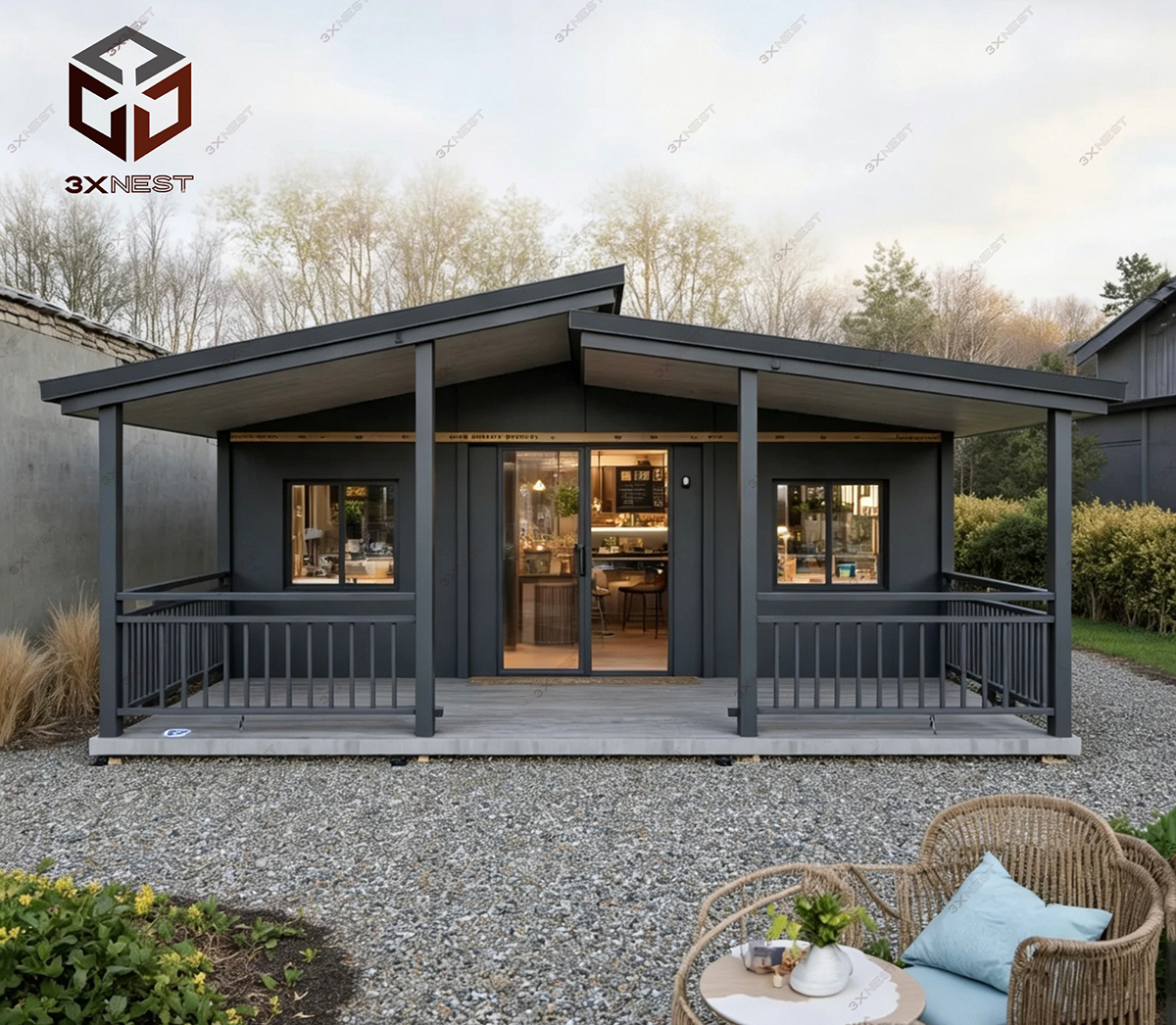
If you think container homes are all about bare-bones, industrial-chic austerity, you haven't seen what's possible with today's expandable villa configurations. The gap between a basic shipping container and a luxury villa has narrowed to the point where guests often can't tell they're staying in a repurposed steel box. And that's exactly the point—modern container villas aren't trying to look "alternative." They're just beautiful homes that happen to have an interesting structural story.
1. Expandable Deck and Outdoor Living Systems
Let's start with the customization that has the biggest visual impact: integrated outdoor living spaces. Expandable container villas shine here because the deck can literally expand along with the living area. We're not talking about a simple wooden platform—though those have their place. Modern systems include motorized awnings, built-in LED lighting, outdoor kitchens with weather-protected stainless steel appliances, and even retractable insect screens.
One manufacturer I visited in Hebei Province showed me a villa configuration where the entire front façade opens up—not just sliding doors, but the actual wall panels retract into pockets, creating a 20-foot-wide opening between interior and exterior. The deck extending from that opening features concealed gas lines for built-in grills, pre-wired speaker zones, and heated flooring for three-season use in colder climates.
The factory advantage here is huge. When outdoor systems are pre-plumbed and pre-wired before the unit leaves the factory, you avoid the weather delays and quality inconsistencies that plague on-site installations. Everything's tested before shipping—you're not discovering that your outdoor kitchen gas line has a leak when you're trying to host a dinner party.
2. Solar Power and Energy Storage Integration
If you're building a villa, energy independence isn't just eco-friendly—it's a luxury amenity. Top-tier container villa configurations now come with integrated solar roof systems (not just panels bolted to the roof, but actual solar roofing tiles that blend seamlessly with the aesthetic), battery storage systems sized for 24-48 hours of off-grid operation, and smart energy management systems that optimize consumption based on weather forecasts and utility rate schedules.
The expandable nature of these villas makes solar particularly effective. When you unfold the additional living space, you're also exposing more roof surface for panel installation. A typical 3-module expandable villa can accommodate 8-10 kW of solar capacity—enough to run air conditioning, induction cooking, and all electronics with surplus to feed back to the grid (where regulations allow).
What impresses me most is how manufacturers are integrating the battery systems. Instead of a rack of ugly batteries in your living room, they're concealed behind custom cabinetry with active ventilation and fire suppression systems. The inverter and charge controller live in a sound-insulated compartment that's accessible for maintenance but silent during operation.
3. Smart Home Technology: Not Just Gadgets
Smart home tech in a luxury villa isn't about showing off with voice-controlled lights (though you can certainly do that). It's about systems integration that makes the home more comfortable, more efficient, and easier to manage—especially if your villa is a vacation property that sits empty for weeks at a time.
Comprehensive smart systems for container villas typically include: whole-home water leak detection with automatic shutoff (critical when your home is essentially a steel box that could rust if continuously wet), remote HVAC control with geofencing, integrated security systems with cellular backup, and air quality monitoring with automated ventilation adjustments.
The manufacturer advantage is integration. When the smart home infrastructure is installed during the build process, wire runs are concealed within wall cavities, sensors are calibrated for the specific space, and the user interface is customized for your floor plan. It's the difference between buying smart devices and building a smart home.
One particularly clever integration I've seen: smart glass that switches from transparent to opaque with a wall switch or app control. It's expensive (no question), but for container villas with large glass expanses, it provides privacy on demand without curtains or blinds that collect dust and require cleaning.
4. Premium Interior Finishes: Raising the Bar
Here's where the "container" origins become invisible. High-end villa configurations feature Italian marble countertops, hardwood flooring (engineered for dimensional stability in varying humidity), custom millwork with soft-close hardware, and bathroom fixtures from European design houses. We're not talking about "good enough for a container home" finishes—these are materials you'd find in million-dollar traditionally built homes.
The factory environment enables finish quality that's genuinely difficult to achieve on a construction site. Paint booths allow for dust-free finishing of cabinetry. Controlled humidity prevents wood flooring from acclimating poorly and later gaping or cupping. And specialized equipment—like CNC routers for custom millwork—produces joinery that fits perfectly every time.
Manufacturers who serve the villa market understand that their clients aren't making aesthetic compromises. They're choosing container construction for reasons of speed, sustainability, or architectural interest, but they still expect luxury-level finishes. The good suppliers deliver exactly that, with design teams that can specify finishes to match any aesthetic from minimalist Scandinavian to opulent Mediterranean.
5. Modular Expansion Systems: Grow Your Villa Over Time
Perhaps the smartest customization for villa buyers is the ability to start with a modest configuration and expand over time. Unlike traditional homes where additions require major construction, container villas can accept new modules that connect seamlessly to existing units. The MEP (mechanical, electrical, plumbing) systems are designed from day one with future expansion in mind—pre-plumbed connection points, oversized electrical panels, and structural connections that accept additional modules without modification.
Popular expansion configurations include: adding a guest suite module, incorporating a separate garage/workshop container, attaching a gym or spa module, or creating a multi-generational compound with separate but connected living spaces for extended family.
The key to making this work is choosing a manufacturer with a consistent platform. If you buy a villa today and want to add a module five years from now, you need confidence that the connection systems will still be compatible. Leading suppliers maintain platform consistency across product generations and can even refurbish older modules to integrate with newer designs.
I've seen incredible multi-module installations where what started as a simple 2-container vacation home evolved into a 6-container compound with separate bedrooms for each family member, a dedicated home theater module, and a pool house that's actually a high-spec container with full bath and changing area. The flexibility is genuinely transformative for how people think about home ownership.
Making It Happen: Working with Manufacturers
If you're serious about a customized container villa, the most important decision is choosing who builds it. Look for manufacturers who: have dedicated design teams (not just engineers who can "figure it out"), maintain relationships with premium finish suppliers, offer factory tours so you can see quality firsthand, and provide references from completed villa projects.
The customizations I've described aren't theoretical—they're being built and delivered today. But they require a manufacturer who treats your project as a collaboration, not just a transaction. When you find that partner, the only limit is your imagination (and possibly your budget, but that's true of any luxury home project).
References
International Organization for Standardization. (2019). ISO 21723:2019 - Expandable container buildings for residential use. Geneva: ISO.
Journal of Architectural Engineering. (2021). Smart building systems integration in prefabricated and modular construction. Volume 27, Issue 3.
U.S. Department of Energy. (2020). Solar energy integration in residential modular construction: Best practices guide. Washington, DC: DOE.
National Association of Home Builders. (2021). Custom home buyer preferences: Luxury amenities in alternative construction. Washington, DC: NAHB Research Center.
International Code Council. (2020). ICC PCX 2020: Prescriptive code for one- and two-family plug and play modular dwellings. Washington, DC: ICC.