




Folding Container House: A Complete Guide to Prefab Foldable Homes in 2026
2026-08-04 03:35:46
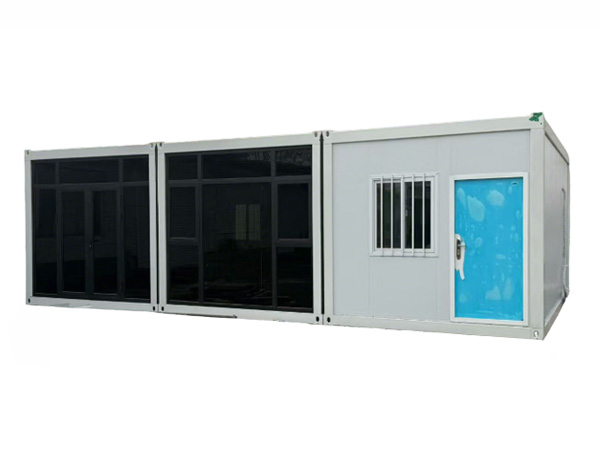
Flat-pack prefab buildings aren't new — the concept has been around since the mid-twentieth century in various forms — but the folding container house has matured into a genuinely practical product category. What used to be a niche architectural experiment is now a mainstream option for anyone who needs durable, relocatable shelter without the cost and time of conventional construction. If you're evaluating these units for a project, this is what you actually need to know.
The Folding Mechanism: Why It Matters More Than You Think
The hinge-and-panel design that gives folding container houses their compact shipping form is also the component most likely to cause problems down the line. After watching dozens of units go through their unfolding cycles in the field, the ones that hold up well have a few things in common that aren't immediately obvious from a catalogue.
Hot-dip galvanization on the entire frame — not just the exterior surfaces — is the single most important indicator of longevity. Frames that are merely painted will corrode in coastal air, in tropical humidity, and anywhere with significant rainfall. The galvanization process matters too: hot-dip produces a thicker, more even coating than electro-galvanization, and it's what you should insist on.
The corner post connections deserve close attention. This is where the repeated stress of folding and unfolding concentrates. Look for reinforced corner posts with high-tensile steel connectors rather than standard bolts. Standard bolts shear under repeated stress cycles; proper connectors are designed for it.
Folding vs. Expandable: Sorting Through the Confusion
The terms are often mixed up, and some suppliers use them interchangeably, but there is a real difference worth understanding.
Folding container houses use hinged panels that fold inward against the main frame. The mechanism is straightforward, reliable, and well-understood by field crews. It's a good fit for single-room applications and for buyers who prioritize simplicity and ease of maintenance.
Expandable houses use a different approach: the side sections slide and lock outward from the main frame rather than folding inward. This typically creates a larger interior footprint per shipping unit, and the mechanism allows for more complex interior configurations. The trade-off is a more intricate system to maintain and a higher unit cost.
If interior space per unit is the priority, expandable is usually the better choice. If reliability and maintenance simplicity matter more, folding is often the right call. Most buyers find that answering those two questions resolves the decision quickly.
What Actually Goes Into a Well-Built Unit
Beyond the frame, the next critical component is the wall panel construction. A proper sandwich panel — an insulated core between two steel skins — is standard in quality units. The core material varies: EPS is the most common and performs adequately in most conditions; rock wool is better for fire resistance and acoustic performance; PU foam gives the highest insulation value in the thinnest profile.
Windows and doors are where cost-cutting is most tempting for lower-quality suppliers. Aluminum alloy or UPVC frames with double-glazed glass are the minimum acceptable specification for any residential or commercial application. Single-glazed units lose heat too quickly to be practical in any climate with significant temperature variation.
Steel security doors with deadbolt systems are non-negotiable for any deployment where the unit will be unoccupied for periods — which applies to most construction camps, mining camps, and disaster response deployments. A flimsy door on an otherwise solid unit is a vulnerability that gets exploited.
What On-Site Installation Actually Looks Like
The selling point of folding container houses is that a small crew can handle installation without heavy equipment. That is true — but "small crew" and "no equipment" need some qualification.
A reasonably level surface is the baseline requirement. A concrete slab is ideal; compacted gravel with a treated timber or steel frame base works fine too. The key thing is drainage — water pooling under the unit accelerates corrosion and causes floor problems over time. Spend a day getting the site drainage right; it pays dividends for years.
Unloading uses standard container-handling equipment at the port. From there, a flatbed truck moves the unit to site. Once on-site, unfolding takes the most time. A crew of three typically completes a single unit in three to six hours. Utility connections — electrical, water, drainage — are the final step and usually take another hour or two per unit.
Where Folding Container Houses Are Being Used
The construction industry is the largest global buyer by volume. Worker accommodation for medium-term projects — twelve to thirty-six months — is the primary application. The ability to deploy, use, and redeploy the same units across multiple projects is what makes the economics work for contractors.
Remote mining operations follow closely. The combination of durability, rapid deployment, and relocatability addresses the core requirements of any remote-site accommodation project. Units that handle extreme heat, dusty conditions, and occasional flooding without significant maintenance intervention are what site managers are looking for.
Humanitarian organizations have been increasing their use of folding container houses following several high-profile disaster responses where tent-based shelter proved inadequate for long-term displacement situations. A folding container unit deployed after a major earthquake provides weatherproof, secure shelter for families who may be displaced for two to four years.
Remote community infrastructure — classrooms, health clinics, community centers — is a growing application. In regions where conventional construction takes years due to procurement complexity and contractor availability, folding container buildings are delivering functional community facilities in months.