




Sustainable Living: How Container Homes Reduce Carbon Footprint
2026-07-17 05:28:43
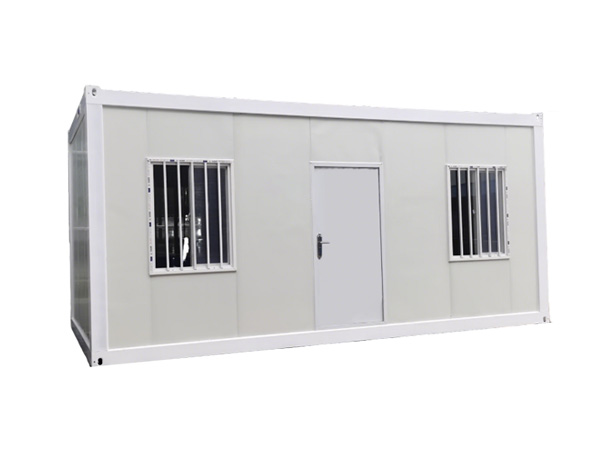
You've probably seen those Instagram-perfect shipping container homes and thought, "That's neat," before scrolling past. But here's what doesn't show up in the photos: container homes might just be one of the most environmentally responsible housing choices available today. And no, I'm not talking about slapping some solar panels on a rusty box and calling it "green." The sustainability story runs deeper than that.

The Recycling Argument That Actually Holds Water
Let's start with the obvious but oft-misunderstood benefit: you're reusing steel that's already been produced. Manufacturing new steel from iron ore is absolutely brutal on the environment—we're talking about 1.85 tons of CO2 emissions per ton of steel produced. When you repurpose a shipping container that's already completed its logistical life (typically after 10-15 years of service), you're essentially performing an industrial-scale recycling operation.
But here's where it gets interesting. A standard 40-foot container contains roughly 3.5 tons of steel. By converting it to a home rather than melting it down for scrap (which itself requires enormous energy inputs), you're preserving that embedded energy. Research from the Steel Construction Institute suggests that reusing steel structures can reduce associated carbon emissions by up to 60% compared to new fabrication.
Progressive manufacturers have caught onto this. Some factories now source containers exclusively from shipping lines retiring units due to new international structural standards—essentially creating a closed-loop system where housing demand drives responsible container retirement.
Energy Efficiency: It's About the Envelope
Here's something that might surprise you: a properly insulated container home can outperform many traditionally built houses in energy efficiency tests. The key is in the building envelope—the barrier between conditioned interior and the outside world.
Containers arrive with thin corrugated walls that conduct heat like nobody's business. But when a quality manufacturer applies spray foam insulation to both interior and exterior surfaces (yes, exterior—it's a game-changer), the thermal performance transforms dramatically. We're seeing whole-house energy consumption drop by 30-40% compared to code-minimum stick-built homes.
The factory-based construction process deserves credit here. When insulation installation happens in a controlled environment rather than on a windy job site, you get consistent coverage without gaps. No thermal bridging from studs every 16 inches. No compressed batts from inexperienced installers. Just continuous, high-R-value insulation applied by technicians who do this every day.
Lifecycle Analysis: The Numbers Behind the Hype
If you really want to understand environmental impact, you need to look at the entire lifecycle—from raw material extraction to eventual disposal. Several academic studies have tackled this for container homes, and the results are genuinely compelling.
A 2020 study published in the Journal of Cleaner Production found that container-based housing had 34% lower embodied carbon compared to concrete block construction and 18% lower than light-gauge steel framing. The savings came primarily from three sources: reduced material inputs (thanks to the container's structural role), less construction waste, and elimination of foundation systems in many installations.
But—and this is important—those numbers assume proper design and execution. A poorly converted container with inadequate ventilation, thermal bridging issues, and moisture problems can actually underperform a standard home. This is why working with an experienced supplier matters enormously. The difference between a DIY conversion and a factory-engineered unit isn't just cosmetic; it's measurable in energy performance and indoor air quality.
Green Building Certifications: Container Homes Are Getting Certified
A decade ago, getting a shipping container home LEED certified would have raised eyebrows. Today? There are container-based projects with Platinum-level LEED certification, Net Zero Energy certification from the International Living Future Institute, and Passive House certification in climates ranging from British Columbia to the Australian Outback.
The path to certification usually involves integrating several strategies: high-performance HVAC systems, heat recovery ventilation (crucial in airtight container homes), renewable energy systems, and water conservation fixtures. Manufacturers who understand these requirements can pre-install much of this infrastructure, simplifying the certification process for homeowners.
One particularly clever approach I've seen: using the container's steel structure as a thermal mass element in Passive House designs. The steel absorbs heat during the day and releases it at night, reducing HVAC loads. It's the kind of systems-thinking that separates a true sustainable design from greenwashing.
Transportation Emissions: The Hidden Factor
We should talk about transportation, because it's easy to overlook. Traditional construction involves dozens of truck deliveries—lumber, concrete, roofing, insulation, windows, doors—each with its own carbon footprint. Modular container construction consolidates this. A single truck can deliver 4-6 fully outfitted container modules, complete with finishes, fixtures, and appliances.
For remote installations, this consolidation can reduce transportation-related emissions by 70% or more. And because containers are designed for intermodal transport, they can arrive by ship, rail, and truck without repackaging—further reducing the logistical carbon footprint.
Smart suppliers are optimizing this even further. By locating manufacturing facilities near major shipping ports, they're reducing the "first mile" emissions when sourcing containers. And some are experimenting with electric trucking for the "last mile" delivery to urban job sites.
The Durability Multiplier Effect
Sustainability isn't just about initial impact—it's about longevity. A home that lasts 80 years has a lower annual carbon footprint than one needing replacement after 40 years, even if the latter had lower initial impact.
Container homes, when properly maintained, can easily exceed 50 years of service life. The steel structure doesn't rot, doesn't attract termites, and doesn't suffer from the moisture-related failures that plague traditional wood-frame construction. Yes, you need to manage corrosion (especially in coastal environments), but modern protective coatings and cathodic protection systems make this manageable.
I spoke with one manufacturer who's offering 30-year structural warranties on their container homes. That kind of confidence only comes from understanding the material's long-term behavior. And from a carbon accounting perspective, durability is a powerful form of sustainability.
Future-Proofing Through Adaptability
Here's a sustainability angle that doesn't get enough attention: adaptability. Container homes can be relocated, reconfigured, or expanded with minimal waste. Outgrew your first container? Add a second one perpendicular to create an L-shaped layout. Need to move to a different city? Your home can go with you—try doing that with a concrete foundation.
This adaptability extends the useful life of the materials and reduces the likelihood of demolition and landfill disposal. In a circular economy framework, that's huge. The container that houses your family today might become a remote office, a retail space, or emergency housing in its next lifecycle.
Some innovative suppliers are even designing with disassembly in mind—using mechanical fasteners instead of welds where possible, standardizing connection points, and documenting the assembly process for future owners. It's sustainability thinking applied to the entire product lifecycle.
References
Journal of Cleaner Production. (2020). Comparative lifecycle assessment of alternative residential construction methods. Volume 258, Article 120680.
Steel Construction Institute. (2019). Embodied carbon in steel-framed buildings: Reuse versus new construction. Ascot: SCI Publications.
U.S. Green Building Council. (2021). LEED v4.1 Residential: Guidance for alternative construction methods. Washington, DC: USGBC.
International Energy Agency. (2019). Buildings and construction: A snapshot of energy trends. Paris: IEA Publishing.
Passive House Institute. (2020). Certification criteria for prefabricated and modular buildings. Darmstadt: PHI Technical Documentation.