




Modular Housing Solutions for Remote Work Camps: The 2026 Industry Guide
2026-08-04 03:40:47
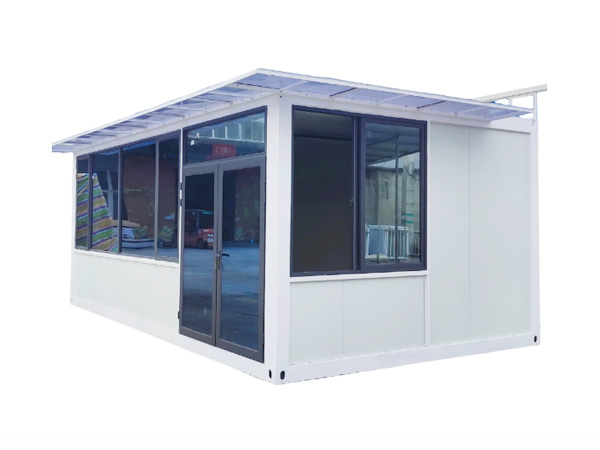
Procurement officers and project managers who are new to remote-site accommodation often underestimate how much the choice of housing system shapes project outcomes. I've watched projects succeed or struggle based on decisions made at the procurement stage — decisions that seemed technical at the time but turned out to have direct consequences for worker welfare, project timelines, and budget performance. This guide covers what actually matters when sourcing modular housing for remote camps.
Why Modular Housing Dominates Remote Site Accommodation
The case for modular housing at remote sites is straightforward, but it's worth spelling out clearly because the logic applies across a wide range of industries and project types.
When a resource extraction company, construction firm, or infrastructure developer needs to house workers at a remote location, conventional construction faces compounding challenges: specialized labor is expensive and hard to get to remote sites, materials need to be transported long distances often on difficult terrain, weather delays extend timelines unpredictably, and once the project ends, the permanent structures have limited resale or relocation value.
Modular housing addresses all of these at once. Factory production means consistent quality regardless of where the project is. Shipping containers are purpose-built for international logistics, so the transport infrastructure already exists. On-site installation is mechanical rather than constructed — it's fast, predictable, and doesn't require bringing tradespeople to the site. And when the project moves or ends, the units move with it.
The numbers are consistently in modular's favor. A fifty-person camp that might take eight months to build conventionally can be designed, manufactured, shipped, and commissioned in under three months. Over a ten-year project cycle with two or three site moves, that speed advantage compounds significantly.
The Four Main Product Types and When to Use Each
Expandable folding houses are the workhorse of camp accommodation. They balance interior space, shipping efficiency, and installation speed in a way that works for most applications. A single 20ft expandable unit accommodates two to four workers comfortably, and multiple units can be configured into complete camp layouts.
Folding container houses serve the same accommodation function at a lower price point. The mechanism is simpler, which means lower manufacturing cost and easier maintenance. They're the right choice when budget is a genuine constraint and the end application is worker accommodation rather than premium facilities.
Quick-assembly packing containers don't fold at all — they travel as standard shipping containers and are stacked and connected on-site. This makes them the most robust option for high-traffic common areas: kitchens, dining halls, laundry facilities, medical stations, and command centers. They handle the wear and tear of heavy daily use better than folding units.
Foldable packing containers occupy the middle ground: container-grade durability with a reduced shipping volume. They're useful when freight optimization matters but the strength of a packing container is needed.
Climate Specifications: The Variable That Gets Overlooked
Every remote camp deployment has a climate, and that climate has specific requirements that buyers often don't specify clearly enough at the procurement stage. The consequences of getting this wrong are expensive and disruptive.
Desert environments — the Middle East, North Africa, Central Australia, the American Southwest — demand a specific approach to thermal management. Wall insulation needs to be at least 75 to 100 millimeters. A reflective roof coating is essential; without it, solar gain becomes unmanageable in summer. Solar shading over windows cuts heat gain further at relatively low cost. Air conditioning capacity needs to be generous: 12,000 BTU per accommodation unit is a reasonable minimum in these conditions.
Tropical conditions — Southeast Asia, equatorial Africa, the Caribbean — bring humidity and corrosion as the primary challenges. Anti-corrosion treatment on the steel frame is mandatory, and it needs to be genuine hot-dip galvanization, not paint. Interior materials need to be mold-resistant throughout. Ventilation needs to be designed to manage humidity, not just temperature.
Cold climate deployments in Canada, Russia, Scandinavia, and Central Asia require maximum insulation — 100 millimeters or more in walls — and double-glazed windows throughout. Roof snow load rating matters: a flat roof accumulating snow needs structural reinforcement. The heating system needs to be reliable and efficient; in minus-thirty conditions, heating failure is a safety risk.
The Logistics Chain: Where Projects Actually Run Into Trouble
The factory-to-site logistics chain has more steps than most buyers expect, and the steps that seem minor are often the ones that cause delays.
Sea freight from China to an international port takes two to four weeks in normal conditions. Port congestion, customs clearance, and holiday periods can extend this significantly. Build that buffer into your project timeline from the start.
The last mile — from port to site — is where complexity increases most sharply. For road-accessible sites, standard container trucks handle delivery without issue. For sites without road access, you need to budget for off-road transport, and for truly remote locations, helicopter or air cargo may be necessary. These add costs that can equal the sea freight itself.
Site preparation should happen in parallel with production, not after it. Foundation and leveling takes three to seven days depending on site conditions. Utility trenching for power, water, and sewage typically takes five to ten days. If the site isn't ready when units arrive, you pay for equipment sitting idle while the crew waits. This is one of the most common and avoidable sources of cost overrun in camp projects.