




Prefab Container Buildings for Remote Schools and Clinics: A Practical 2026 Guide
2026-10-08 02:09:19
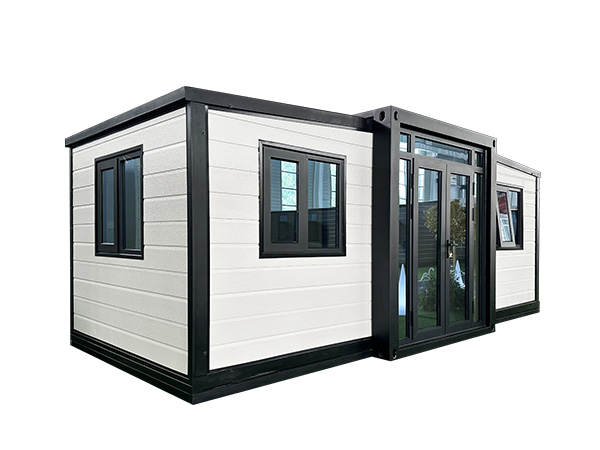
Millions of children and patients live beyond the reach of conventional construction. Building a school or clinic the traditional way in a remote valley or island means importing materials, skilled labor, and months of weather-dependent work—if it happens at all. Prefab container buildings flip that equation: the structure is built in a factory, shipped to the site, and opened as a classroom or health post in days. Organizations working with manufacturers like TLS Integrated Housing are using this approach to close infrastructure gaps that stood for decades.
This guide covers why modular container buildings work off the grid, the specifications that matter for education and healthcare, how deployment actually unfolds, and the design choices that turn a steel box into a space where learning and healing happen.
Why Remote Sites Need a Different Build Method
Remote communities share three constraints: poor road access, scarce local trades, and no existing utilities. Traditional masonry or frame construction fails on all three. A prefab container unit arrives complete, needs only a small local crew to set, and can be specified from the factory with solar power, water tanks, and sanitation built in. The building travels to the problem instead of the problem waiting on a supply chain.
"The first clinic we shipped to a mountain district was treating patients within a week of leaving the factory. A conventional build there would still be a foundation."— Olivia Martin, Sustainability Consultant, TLS Integrated Housing
Container Classrooms: Specs That Matter
A learning space lives or dies on light, air, and acoustics. Classroom containers should specify large windows or skylights for daylight, cross-ventilation or split AC for heat, and acoustic insulation so two adjacent classes do not bleed into each other. Durable, easy-clean finishes survive years of child use.
Multiple units clip together into a school: one for administration, several for classes, and a covered walkway between. Because the modules are identical, expansion is as simple as adding another box when enrollment grows.
Container Clinics: Healthcare-Grade Requirements
A health post demands more than comfort. Clinics need infection-control surfaces, segregated clean and soiled zones, reliable power for refrigeration of vaccines, and sometimes negative-pressure isolation. Prefab container clinics meet these with medical-grade wall panels, dedicated electrical circuits, and pre-plumbed sanitation.
"Vaccine fridges cannot wait for the grid. We specify solar-plus-battery as standard on every remote clinic module so cold chain never depends on a line that may not exist."— Olivia Martin, Sustainability Consultant, TLS Integrated Housing
Off-Grid Systems as Standard
The defining feature of remote deployment is independence. A properly specified container school or clinic arrives with a rooftop solar array, lithium storage, LED lighting, and water harvesting or tanks. This removes the single biggest failure point—utility connection—and makes the building productive from day one.
Deployment Steps in the Field
Factory-build the unit with region-specific insulation and off-grid MEP.
Transport by truck, barge, or helicopter depending on access.
Set on screw piles or pad foundations prepared on arrival.
Connect pre-wired solar, water, and sanitation—no site fabrication.
Stock and commission with local staff trained during handover.
Design Choices That Improve Outcomes
Wide doorways and step-free entries for wheelchair and stretcher access.
Reflective roof coatings to cut cooling load in hot climates.
Modular furniture that arrives with the building, not after.
Local-language signage and durable Wayfinding built into panels.
Conclusion
Prefab container buildings are not a compromise for remote schools and clinics—they are often the only realistic path to them. By moving the construction into a factory and the independence into the design, modular units deliver functioning classrooms and health posts where conventional building cannot. For NGOs, governments, and donors, that is a measurable human outcome, not just a line item.
Plan a Remote School or Clinic Deployment
TLS Integrated Housing designs container classrooms and clinics with off-grid power, water, and healthcare-grade finishes built in. Tell our team your site's access and capacity needs, and we will specify a deployable building that works from day one.