




Modular Home Building Done Right
2026-02-05 10:42:40
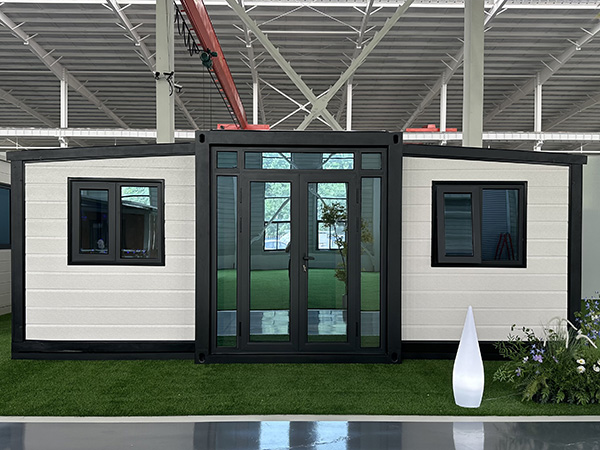
“Modular Home Building Done Right” focuses on the correct ways and key principles of modular home construction. Below are specific implementation directions and relevant academic references and industry guidelines, which can help achieve high-quality, efficient, and sustainable modular home construction:
Doing a good job in early design and planning: Before starting the production of modules, a complete and detailed plan must be formulated. It is necessary to cooperate with architects and engineers to design blueprints that meet local building codes, site conditions and personal needs. For example, use 3D modeling software to ensure that each module can be perfectly connected, and reasonably plan the layout of water, electricity and heating systems to ensure seamless integration after module assembly. Meanwhile, the size of modules should be designed according to road transportation restrictions to avoid transportation difficulties. The MODULAR BUILDING SYSTEMS released by the National Association of Home Builders also emphasizes that modular homes should be built in accordance with local building codes from the design stage to lay a foundation for subsequent construction.
Guaranteeing factory - based refined production: The factory environment is the key to ensuring the quality of modular homes. It can avoid the impact of bad weather on the construction quality faced by traditional on-site construction. In the production process, standardized processes should be adopted to carry out operations such as wall installation, interior decoration and component assembly. For example, MODLOGIQ Housing achieves zero-waste construction through precision engineering, and reduces wood waste by means of off-site framing in multi-family housing projects, which also improves the reuse rate of materials. In addition, before the modules leave the factory, a third-party agency should conduct a comprehensive inspection to ensure that each component meets the quality standards.
Focusing on sustainable and energy-saving design: In the context of the current pursuit of low-carbon development, correct modular home construction must attach importance to sustainability. On the one hand, renewable and low-carbon materials can be selected. For example, cross-laminated timber and laminated veneer lumber are increasingly used in modular construction, which not only have good structural performance but also reduce embodied carbon emissions. On the other hand, design for disassembly can be adopted. As mentioned in the article Lowering Energy and Material Consumption Through Modular Dwelling Design published on MDPI, enhancing modularity and design for disassembly can reduce material waste and improve the sustainability of buildings. Besides, optimizing insulation materials and window layouts in the design can also improve the energy efficiency of modular homes and reduce subsequent use costs.
Ensuring scientific on-site assembly and commissioning: After the modules are transported to the construction site, scientific assembly procedures should be followed. First, a stable and reliable foundation should be built to ensure the overall stability of the modular home. Then, professional equipment is used to accurately place and splice the modules, and special attention should be paid to the tight connection between the modules to prevent problems such as water leakage and air leakage. After the assembly is completed, the integrated commissioning of water, electricity and heating systems should be carried out to ensure that all functions can operate normally. The research on prefabricated concrete modular housing prototypes also points out that a mixed construction system combining panels, columns and beams can be adopted during assembly to improve the flexibility and stability of the building.
Complying with relevant regulations and strengthening cooperation and coordination: There may be differences in modular building codes in different regions. The construction process must strictly comply with local regulations to avoid legal and safety risks. At the same time, it is necessary to strengthen the cooperation and coordination among designers, manufacturers, transporters and constructors. For example, MODLOGIQ Housing relies on the "Build Together" cooperative design and construction model to successfully complete many large-scale projects. Such cooperation can solve problems in a timely manner, ensure the smooth progress of the project, and improve the overall construction efficiency.
References
GB/T 7714:Zohourian M, Pamidimukkala A, Kermanshachi S, et al. Modular Construction: A Comprehensive Review[J]. Buildings, 2025, 15(12): 2020.
MLA:Zohourian, Mohammadamin, et al. "Modular Construction: A Comprehensive Review." Buildings 15.12 (2025): 2020.
APA:Zohourian, M., Pamidimukkala, A., Kermanshachi, S., & Almaskati, D. (2025). Modular Construction: A Comprehensive Review. Buildings, 15(12), 2020.