




Modular Houses for Temporary and Permanent Housing Solutions
2026-02-05 02:30:54
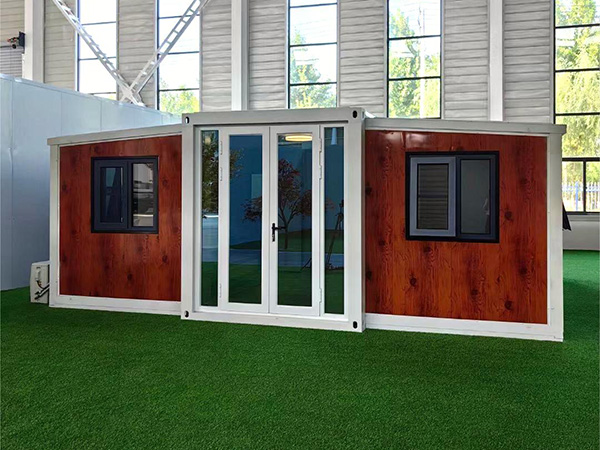
Modular houses are versatile prefabricated buildings, perfectly suitable for both temporary and permanent housing needs, thanks to their standardized production, rapid assembly, and flexible design. They integrate factory precision manufacturing with on-site efficient splicing, balancing practicality, cost-effectiveness, and adaptability.
For temporary housing, modular houses stand out with quick deployment and cost savings. They are widely used in construction site dormitories, disaster relief shelters, temporary offices, and pop-up living spaces. Modules are prefabricated in factories, transported to sites and assembled within days to weeks, significantly shortening the construction cycle. They adopt simple but stable foundations and detachable connections, allowing easy disassembly, relocation, or reuse after the temporary need ends, reducing waste and lowering overall costs. The basic configuration meets daily living needs, with optional simple insulation and ventilation systems for comfort.
For permanent housing, modular houses achieve the same quality and comfort as traditional buildings through optimized design and high-quality materials. They comply with local building codes, with reinforced steel frames ensuring seismic, wind-resistant, and load-bearing performance. The internal and external finishes, MEP systems, and functional layouts can be fully customized—from single-family villas to multi-story residential buildings, they can meet diverse living demands. With sustainable design, such as recyclable materials and energy-saving insulation, they have a long lifespan (30–50 years) and low long-term maintenance costs, becoming an eco-friendly alternative to traditional housing.
The core advantage of modular houses lies in their scalability and adaptability. Temporary modules can be upgraded to permanent housing by adding insulation, improving finishes, and strengthening structures. This versatility makes them a flexible solution for various housing needs, catering to both short-term emergency demands and long-term residential requirements, while promoting low-carbon and efficient building development.
References
GB/T 7714:Guzhova O A, Khairullin M F. Using modular designs for the construction of temporary housing[J]. Urban construction and architecture, 2022, 12(3): 4-10.
MLA:Guzhova, Oksana A., and Marsel F. Khairullin. "Using modular designs for the construction of temporary housing." Urban construction and architecture 12.3 (2022): 4-10.
APA:Guzhova, O. A., & Khairullin, M. F. (2022). Using modular designs for the construction of temporary housing. Urban construction and architecture, 12(3), 4-10.