




Modular Integrated House Solutions for Fast and Efficient Building Projects
2026-04-25 05:52:17
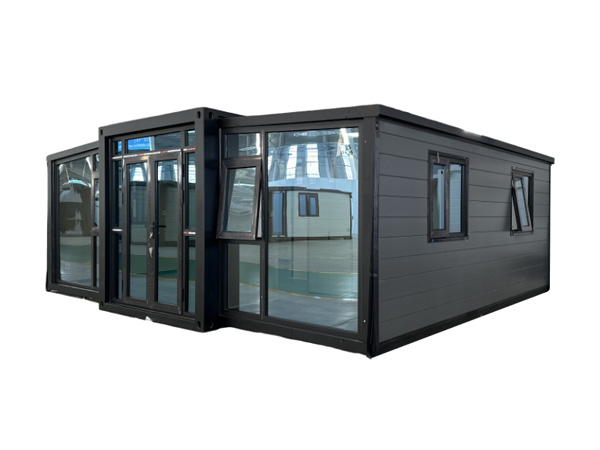
The modern construction industry is evolving rapidly, with developers and project contractors facing growing demands to complete projects at a faster pace, lower costs, and stable quality. As an innovative modern building mode, modular integrated houses perfectly address these industry pain points by integrating standardized factory production and rapid on-site assembly. Widely applied in residential accommodation, commercial spaces and temporary engineering buildings, modular integrated houses are reshaping traditional design and construction modes. This article mainly discusses the core strengths of modular buildings in boosting construction progress and overall engineering efficiency.
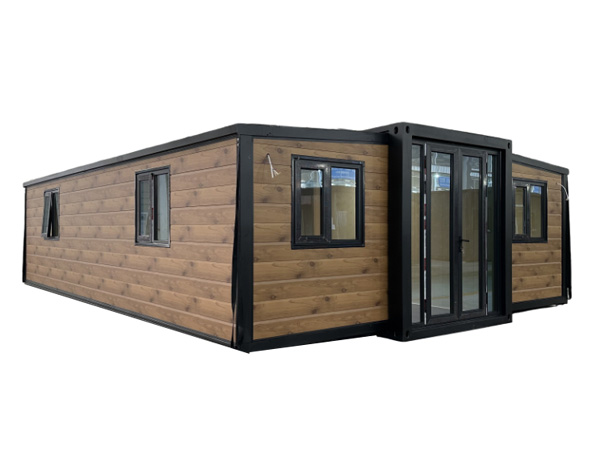
1. Basic Introduction to Modular Integrated Houses
A modular integrated house belongs to the prefabricated building system. Its independent building units are fully manufactured and processed in the factory, then transported to the construction site for unified splicing and combination. Each prefabricated module is equipped with complete structural parts, thermal insulation layers, circuit systems, pipeline layouts and interior decoration components. After being delivered to the site, all modules are connected and fixed to form a complete building. This integrated production and construction mode features high precision and strong controllability, greatly reducing dependence on traditional on-site wet work.
2. Greatly Shorten Project Construction Cycles
Shortening the construction cycle is one of the most prominent competitive edges of modular integrated buildings. Different from traditional sequential on-site construction, modular construction adopts a parallel operation mode. While the site is leveled and the foundation is constructed, the factory can complete mass production of building modules at the same time. This cross-operation mode can cut the overall construction period by 30% to 60%, accelerate project completion and acceptance, and help investors recover investment costs in a shorter cycle.
3. Optimize Overall Construction Efficiency
High operational efficiency runs through the whole process of modular integrated house construction. Centralized factory production realizes standardized processes, streamlined production lines and reasonable material allocation. With the support of automated processing equipment, production speed and component accuracy are further improved. In the on-site stage, complex construction is replaced by simple assembly operations, which greatly cuts on-site labor demand and effectively avoids construction delays caused by human factors or complicated procedures.
4. Stable Quality and High Machining Precision
Factory closed production is more conducive to standardized quality management than scattered outdoor construction sites. All modules are manufactured in strict accordance with unified specifications and inspection standards, ensuring consistent quality of each component. Precision industrial processing effectively avoids structural deviation, installation dislocation and raw material waste caused by manual construction errors. Therefore, modular integrated buildings can always maintain more stable overall quality than traditional buildings.
5. Significant Comprehensive Cost Advantages
Modular integrated houses can create obvious cost-saving benefits for engineering projects of different scales. Factory prefabrication reduces on-site labor input; the compressed construction period lowers the leasing cost of construction equipment and on-site management expenses; scientific material allocation reduces raw material loss. At the same time, the whole process is highly controllable, which can effectively prevent budget overrun and extra hidden costs, and improve the overall economic benefits of the project.
6. Strong Design Flexibility and Scalability
Modern modular integrated building systems support personalized customization and flexible expansion. According to actual usage scenarios, customers can freely adjust the building layout, space size, exterior decoration materials and interior matching styles. It is applicable to multi-family residences, office buildings, staff dormitories and various temporary buildings. In addition, modular units can be added, dismantled or relocated later, meeting the long-term renovation and expansion needs of the project.
7. Green and Sustainable Low-Carbon Construction
Eco-friendly and low-carbon development is a key highlight of modular buildings. Off-site centralized processing greatly reduces construction waste and environmental pollution. Most modular products adopt energy-saving thermal insulation materials and green environmental protection accessories to optimize the building’s energy-saving performance. Meanwhile, the shortened on-site construction time cuts exhaust emissions and noise pollution from construction machinery, conforming to the development trend of green buildings.
8. Stable Structure and Long Service Life
Despite the fast installation speed, modular integrated houses have excellent structural performance and durability. High-strength steel frames and composite thermal insulation wall panels are adopted as the main materials, with strong compression resistance, wind resistance and corrosion resistance. All products are designed in compliance with local building codes and climatic adaptation standards, which can cope with a variety of harsh natural environments and ensure long-term safe and stable operation.
9. Wide Application in Multiple Industries
Modular integrated buildings have strong versatility and can meet the usage needs of multiple industries:
Residential buildings and apartment projects
Commercial offices and public service spaces
Construction site dormitories and living camps
Schools, medical stations and public supporting facilities
Emergency rescue shelters and temporary isolation buildings
It can meet the dual demands of permanent buildings and temporary temporary facilities.
10. Advantages of Our Factory Modular Housing Solutions
As a professional manufacturer focusing on modular building production, we tailor high-quality integrated house products for global customers. Our core strengths are as follows:
Complete production equipment and strict full-process quality inspection
Personalized design and customization according to drawing requirements
Direct factory quotation with high cost performance
Rich global export experience and stable and timely delivery
Complete technical guidance and on-site installation support
We focus on providing customers with one-stop, efficient and cost-effective modular building solutions.
Conclusion
Modular integrated housing is undoubtedly the mainstream development direction of the future construction industry. With short construction cycles, controllable quality, balanced costs, environmental protection and flexible application, it has become the preferred building solution for global engineering projects. If you are looking for stable, innovative and high-efficiency construction products, modular integrated houses will provide you with a reliable and cost-effective solution. Welcome to consult our team to customize exclusive building solutions for your next project.
References
GB/T 7714:Schedule acceleration and construction efficiency of modular integrated buildings. Journal of Building Engineering
MLA:Quality consistency and precision performance of factory prefabricated modular housing. Construction and Building Materials
APA:scalability and multi-industry application of modern modular houses. Architectural Engineering and Design Management