




Top Advantages of Choosing a Prefabricated Integrated House for Your Project
2026-04-22 05:02:02
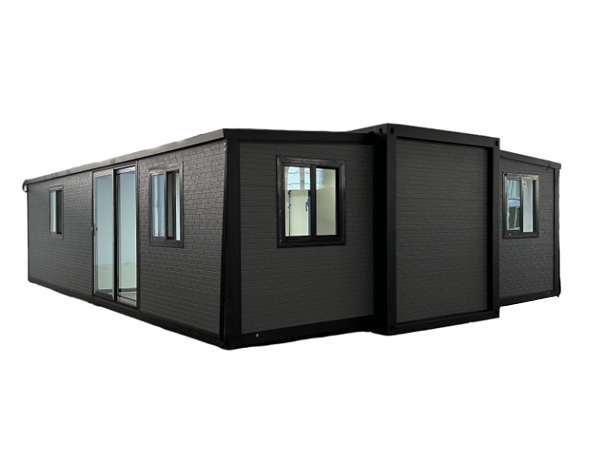
Driven by efficiency upgrades, green development and cost optimization, the global construction industry is experiencing profound changes. Among various innovative building technologies, prefabricated integrated houses have stood out as a modern modular solution, realizing organic collaboration between centralized factory production and rapid on-site assembly. Widely applicable to residential accommodation, commercial spaces and temporary building projects, this modular construction mode boasts outstanding comprehensive strengths that traditional building methods cannot match. This article analyzes the core merits of prefabricated integrated houses and explains their growing popularity in the global construction field.
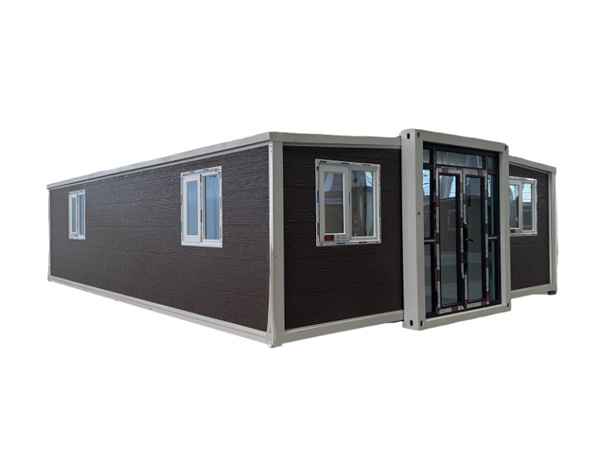
1. Greatly Shortened Construction Cycle
Rapid construction is one of the most prominent features of prefabricated integrated buildings. Different from fully on-site pouring and construction of traditional buildings, most building components of prefabricated houses are mass-produced in standardized factories. While the on-site foundation construction is underway, wall boards, roof components and modular units can be produced synchronously. This parallel working mode greatly compresses the overall construction cycle. Most modular housing projects can complete on-site splicing and installation within several days or weeks, far faster than the months-long construction period of traditional buildings.
2. Significant Cost Control Benefits
Cost control is the core concern of all engineering projects, and prefabricated integrated houses can effectively cut comprehensive construction costs in multiple dimensions. Factory standardized processing reduces manual work on site, lowering labor input; precise customized production greatly cuts raw material waste; the shortened construction period saves expenses on mechanical equipment leasing and on-site management. Meanwhile, it avoids project delays and extra losses caused by bad weather. Thanks to unified production standards and stable processing technology, investors can accurately budget for construction costs and effectively prevent overspending and unpredictable extra expenses.
3. Stable and Reliable Overall Quality
Factory-based standardized manufacturing brings more rigorous quality management for prefabricated buildings. All structural parts and decorative components are processed in a closed and controlled factory environment, with every production link implementing strict industrial standards. High-precision production equipment and complete quality inspection procedures ensure all modules and accessories meet unified technical specifications. It effectively avoids common quality problems in on-site construction, such as uneven construction technology, material aging affected by wind and rain, and human operation errors. Therefore, prefabricated integrated houses feature more stable structure and more consistent overall quality.
4. Eco-Friendly and Green Building Performance
With the rising demand for sustainable architecture, energy-saving and environmental protection have become important evaluation indicators for modern buildings, and prefabricated integrated houses perfectly fit green development concepts. Modular production minimizes construction waste and improves the recycling rate of building materials. Optimized material formulas and processing technology reduce energy consumption in the production process. In addition, the optimized wall insulation and thermal insulation structure can effectively reduce daily building energy consumption. Many products also adopt environmentally friendly raw materials and energy-saving configurations to help construction projects meet green building standards.
5. Diversified Customization and Flexible Design
Many people misunderstand that prefabricated houses have single styles and limited designs. In fact, modern integrated modular buildings support highly personalized customized services. According to actual usage needs, customers can freely match different spatial layouts, building sizes, exterior materials and interior decoration styles. Whether it is mini residential units, office buildings, staff dormitories or commercial supporting facilities, the design scheme can be flexibly adjusted. Moreover, the modular structure allows later expansion, reconstruction and dismantling, with strong long-term application flexibility.
6. Excellent Structural Durability and Safety
Prefabricated integrated houses are designed and manufactured in accordance with international structural safety specifications. All modular components undergo professional mechanical testing and structural optimization in the design stage. Most products adopt high-strength steel frames and composite insulation boards, with strong compression resistance and structural stability. Reasonable structural design enables the buildings to adapt to complex climatic environments, resisting heavy rainfall, strong winds and other severe weather. Custom seismic and wind-resistant designs can also be provided according to regional geographical conditions to ensure long-term safe use.
7. Low On-Site Impact and Higher Adaptability
Traditional construction is often accompanied by noise pollution, dust emissions and traffic congestion, causing great interference to the surrounding environment. In contrast, prefabricated integrated houses focus on off-site processing, with only simple assembly work reserved on site. The on-site construction process is clean, low-noise and highly efficient, which will not affect the life and operation of surrounding facilities. It is especially suitable for urban core areas, remote construction sites and engineering projects with strict environmental and time limit requirements.
8. Convenient Transportation and Simple Installation
All components of prefabricated integrated houses are produced in unified modular specifications, which are convenient for centralized packaging, long-distance transportation and cross-regional deployment. Even in remote areas or regions with inconvenient transportation and insufficient labor resources, modular components can be delivered smoothly. The on-site assembly process is simple and standardized, requiring no complex professional construction equipment and skilled technicians, which greatly lowers the construction threshold of special regional projects.
Conclusion
Prefabricated integrated housing is a revolutionary building form that integrates high efficiency, low cost, high quality and environmental protection. From shortened construction schedules and controlled budgets to stable quality, green performance and flexible design, it provides efficient and reliable solutions for various construction scenarios. Facing the continuous upgrading of the construction industry and the growing demand for green and low-carbon buildings, prefabricated modular houses will become a key development direction of the construction industry. For engineering developers and project investors pursuing high cost performance, fast delivery and sustainable operation, prefabricated integrated houses are a highly worthy building option.
References
GB/T 7714:Construction Efficiency and Sustainable Performance of Prefabricated Modular Buildings. Journal of Building Engineering
MLA: Cost-Benefit Analysis and Quality Control of Prefabricated Housing. Sustainable Cities and Society
APA:Structural Safety and Durability Design of Integrated Prefabricated Houses. Engineering Structures