




Innovation and Digitalization in Modular Housing
2026-02-05 02:36:40
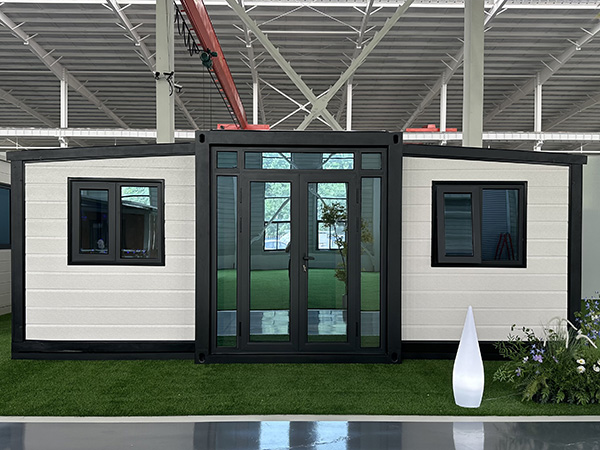
Digitalization and technological innovation are reshaping the modular housing industry,breaking through traditional limitations in design,production,and operation,and driving it from"standardized assembly"to"intelligent,efficient,and customized development."By integrating cutting-edge digital technologies and innovative construction concepts,modular housing is enhancing its competitiveness,sustainability,and adaptability,becoming a key force in the transformation of the global construction industry.
Digitalization has revolutionized the entire lifecycle of modular housing,starting with the design phase.The wide application of BIM(Building Information Modeling)technology enables 3D parametric modeling of modular structures,realizing full-lifecycle information sharing and multi-dimensional performance simulation,including structural safety,energy consumption,and operational maintenance.Combined with VR(Virtual Reality)technology,designers and clients can intuitively experience the internal layout and functional effects of modules,optimizing schemes in advance to avoid rework.AI-assisted design further accelerates the process:machine learning algorithms can quickly generate modular layout schemes that comply with building codes,reducing manual design costs and improving efficiency,while digital twin technology establishes real-time synchronized virtual models,forming a closed loop of design-manufacturing-operation.
In the production phase,intelligent innovation has realized the transformation from manual operation to automated,standardized manufacturing.Leading enterprises such as KUKA have introduced collaborative robots,AGV(Automated Guided Vehicles),and intelligent assembly lines,which accurately complete module cutting,welding,painting,and MEP(Mechanical,Electrical,Plumbing)embedding,greatly improving production precision and efficiency while reducing labor dependence and material waste.Cloud collaboration platforms connect multiple factories across regions,supporting real-time progress monitoring and quality traceability,while digital quality inspection technologies such as 3D laser scanning and CT scanning conduct non-destructive testing of key components,ensuring consistent module quality before leaving the factory.This automated production not only shortens the construction cycle by up to 70%but also reduces the rework rate from 12%to less than 3%.
Digital innovation also optimizes the logistics and on-site assembly links.Based on big data analysis,intelligent logistics networks optimize transportation routes,minimizing module damage during transportation,while smart hoisting systems equipped with IoT sensors monitor hoisting loads in real-time,enhancing on-site safety.Prefabricated connection systems such as precast bolts and embedded joints simplify on-site assembly,reducing construction time by 30%-50%,and modular splicing is more precise and stable with the guidance of digital positioning technology.
In terms of operation and maintenance,digitalization and innovation have improved the sustainability and long-term usability of modular housing.IoT sensors embedded in modules monitor structural status,indoor environment,and energy consumption in real-time,and AI models realize predictive maintenance,issuing early warnings for potential risks such as structural corrosion and pipeline leakage to extend the service life of buildings.The"plug-and-play"modular design,driven by digital standardization,allows for flexible replacement and functional upgrading of modules,reducing later renovation costs,while the application of renewable energy integration technologies(such as solar panels)and green materials further aligns modular housing with low-carbon development goals.
Beyond technological digitalization,model and material innovations are also advancing.The industry is building a shared standard module library,realizing"one-time design,multiple reuse"to improve resource utilization,while the development of new materials such as recycled steel,bamboo composites,and carbon fiber-reinforced concrete reduces the carbon footprint of modules.Modular housing is also expanding into diverse scenarios,including mobile hospitals,modular schools,and smart communities,driven by digital and technological innovation,meeting the personalized needs of different groups.
In summary,innovation and digitalization are the core driving forces for the high-quality development of modular housing.From BIM-assisted design to automated production,from IoT monitoring to digital twin management,every link is being upgraded and optimized.As technologies continue to mature and industrial collaboration deepens,modular housing will further integrate intelligence and sustainability,providing more efficient,eco-friendly,and customized solutions for the global housing crisis and urban-rural construction.
References
GB/T 7714:Parracho D F R, Nour El-Din M, Esmaeili I, et al. Modular Construction in the Digital Age: A Systematic Review on Smart and Sustainable Innovations[J]. Buildings, 2025, 15(5): 765.
MLA:Parracho, Diogo FR, et al. "Modular Construction in the Digital Age: A Systematic Review on Smart and Sustainable Innovations." Buildings 15.5 (2025): 765.
APA:Parracho, D. F., Nour El-Din, M., Esmaeili, I., Freitas, S. S., Rodrigues, L., Poças Martins, J., ... & Guimarães, A. S. (2025). Modular Construction in the Digital Age: A Systematic Review on Smart and Sustainable Innovations. Buildings, 15(5), 765.