




How effective are the thermal and sound insulation features of expandable container houses?
2026-02-05 04:23:34
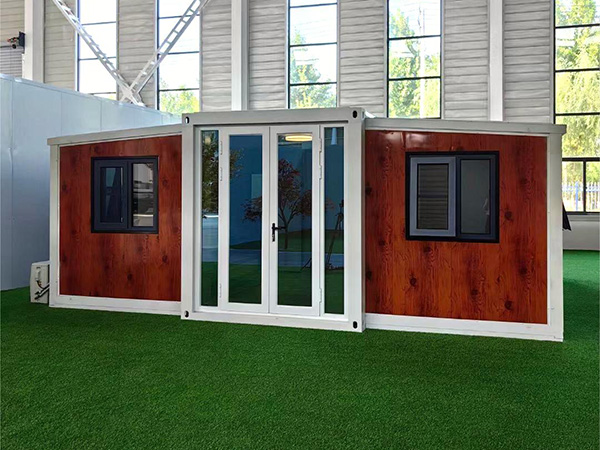
Expandable container houses have better thermal insulation and sound insulation performance than standard container houses overall, and their basic performance can meet daily living and office needs; the actual effect depends on the material configuration of the panels and the sealing of the expansion joints—high-grade customized models can even reach the performance of light prefabricated houses. Their performance characteristics and key influencing factors are as follows (concise version):
1. Thermal Insulation: Better than Standard Containers, Adaptable to Most Climatic Environments
Core material support: The wall/roof/floor adopt high-density composite insulation panels (rock wool, XPS/EPS foam core, thickness 50-100mm as standard, 100-150mm for cold/hot area customization), with far lower thermal conductivity than the thin panels of standard container houses; the frame is filled with insulation cotton at the joints to avoid "cold and hot bridges".
Sealing reinforcement: The expansion and splicing joints are equipped with high-elasticity silicone sealing strips + waterproof pressure strips, which can effectively block air convection; the doors and windows are mostly double-layer hollow tempered glass with sealing rubber strips, further reducing heat loss/gain.
Actual effect: The standard model can keep the indoor temperature difference with the outdoor at 8-15℃ in normal temperature environments (e.g., summer shading, winter basic heating); the thickened panel customized model (matching thermal insulation curtains/ceiling insulation) can adapt to low-temperature areas (above -15℃) and high-temperature areas (below 40℃) without additional heavy insulation measures.
2. Sound Insulation: Meets Basic Daily Needs, Slightly Inferior to Fixed Buildings
Basic sound insulation performance: The composite insulation panels themselves have a sound insulation effect (airborne sound insulation of standard panels is about 30-35dB), which can effectively isolate general outdoor noise (e.g., wind, distant traffic, human voices) and reduce indoor mutual interference of normal conversations; double-layer glass doors and windows can further isolate high-frequency noise (e.g., bird calls, small equipment noise).
Limited points: The expansion joint splicing position and the gap of movable structural parts are the weak links of sound insulation—although sealed with rubber strips, they cannot achieve the integral sound insulation effect of brick-concrete buildings or welded standard container houses, and are slightly sensitive to low-frequency strong noise (e.g., heavy vehicle passing, construction machinery).
3. Key Factors Affecting Thermal & Sound Insulation Effect
Panel material grade: Rock wool/XPS panels have better thermal and sound insulation than ordinary EPS panels; thicker panels mean better performance (customizable according to usage scenarios).
Sealing integrity: Aging, falling off or improper installation of sealing strips at expansion joints/door and window gaps will directly reduce thermal insulation (air leakage) and sound insulation (noise penetration)—this is the most important post-use maintenance point.
Auxiliary configuration: Additional installation of thermal insulation ceiling, sound-absorbing wall stickers, door and window sealing strips can significantly improve the effect; external sunshades/heat insulation coatings can also reduce the impact of extreme temperatures on indoor temperature.
Installation standard: Unlevel installation leading to frame deformation, loose splicing of panels will cause gaps, which will damage the overall thermal and sound insulation performance.
References
GB/T 7714:Pinilla-Melo J, Aira-Zunzunegui J R, La Ferla G, et al. Design of a Shipping Container-Based Home: Structural, Thermal, and Acoustic Conditioning[J]. Buildings, 2025, 15(17): 3127.
MLA:Pinilla-Melo, Javier, et al. "Design of a Shipping Container-Based Home: Structural, Thermal, and Acoustic Conditioning." Buildings 15.17 (2025): 3127.
APA:Pinilla-Melo, J., Aira-Zunzunegui, J. R., La Ferla, G., de la Prida, D., & Navacerrada, M. Á. (2025). Design of a Shipping Container-Based Home: Structural, Thermal, and Acoustic Conditioning. Buildings, 15(17), 3127.