




Future Trends of Modular Housing
2026-02-05 02:35:53
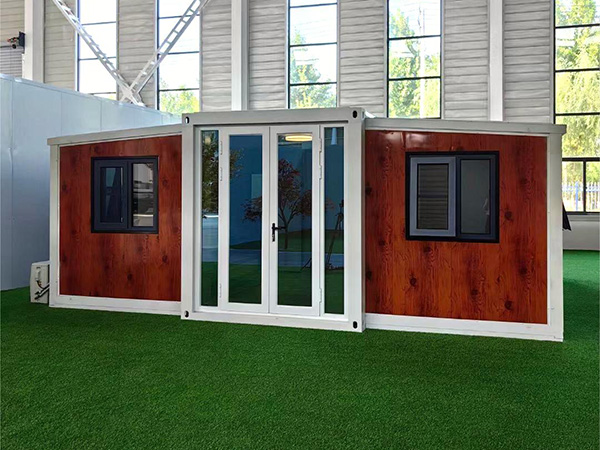
Driven by the global demand for sustainability,efficiency,and affordability,modular housing is poised to enter a new era of growth and innovation.With the global market projected to reach USD 62.35 billion by 2034,this prefabricated construction model is evolving beyond a niche alternative to become a mainstream solution,shaped by technological advancements,policy support,and changing consumer needs.Below are the core future trends that will redefine modular housing development.
First,deep integration of sustainability and eco-friendliness will become the industry norm.As environmental concerns gain traction,modular housing will prioritize green materials such as recycled steel,bamboo composites,and low-emission concrete,while minimizing on-site waste through factory precision production(material utilization rates can reach up to 90%).Passive energy-saving designs,including smart insulation,optimized window placement for natural light,and rainwater harvesting systems,will become standard features,alongside integrated renewable energy solutions like rooftop solar panels.By 2030,green modular buildings are expected to account for over 60%of the market,aligning with global low-carbon development goals.
Second,intelligent upgrading and digital transformation will enhance efficiency and comfort.Technologies such as BIM(Building Information Modeling),AI-driven 3D modeling,and IoT will streamline the entire lifecycle—from design and factory production to on-site assembly and post-occupancy management.Modular homes will integrate smart home systems for energy management,temperature control,and security,while automation in factory production will reduce labor intensity and improve component precision.Nearly 38%of modular builders are already focusing on smart home integration,a trend that will accelerate as technology becomes more accessible.
Third,customization and diversification will meet personalized and multi-scenario needs.Contrary to the misconception of"one-size-fits-all"modules,future designs will balance standardization with customization,allowing flexible layouts,exterior styles,and functional configurations.Modular housing will expand beyond residential use to cover commercial,medical,and educational sectors—including pop-up shops,mobile hospitals,and modular schools—catering to both urban and rural demands.By 2025,modular homes are projected to occupy 70%of the global custom residential market,reflecting growing consumer demand for personalized living spaces.
Fourth,policy support and market expansion will drive large-scale adoption.Governments worldwide will streamline regulatory frameworks,unify building codes,and offer incentives for modular construction to address housing shortages and affordability issues.The Asia-Pacific region,in particular,will emerge as a key growth market,with its rapid urbanization and infrastructure needs fueling modular housing demand—projected to become the world’s largest modular building market by 2030.Meanwhile,improved market perception will boost consumer acceptance,erasing the stigma of modular homes as"temporary structures."
Finally,supply chain optimization and industrial collaboration will overcome existing barriers.The industry will move toward more integrated supply chains,reducing information asymmetry between designers,manufacturers,and constructors.Collaboration between stakeholders will accelerate innovation,while investments in workforce training will address the skilled labor shortage currently facing 41%of firms.This synergy will further reduce costs and shorten construction cycles,solidifying modular housing’s competitiveness against traditional construction.
In summary,the future of modular housing lies in sustainable,intelligent,and customer-centric development.As technology advances and policies evolve,it will play a pivotal role in solving global housing challenges,offering an efficient,eco-friendly,and flexible alternative that adapts to the diverse needs of urban and rural communities alike.
References
GB/T 7714:Kim S. Prefabricated and modularized residential construction: A review of present status, opportunities, and future challenges[J]. Buildings, 2025, 15(16): 2889.
MLA:Kim, Sunai. "Prefabricated and modularized residential construction: A review of present status, opportunities, and future challenges." Buildings 15.16 (2025): 2889.
APA:Kim, S. (2025). Prefabricated and modularized residential construction: A review of present status, opportunities, and future challenges. Buildings, 15(16), 2889.