




Challenges in the Development of Modular Housing
2026-02-05 02:34:18
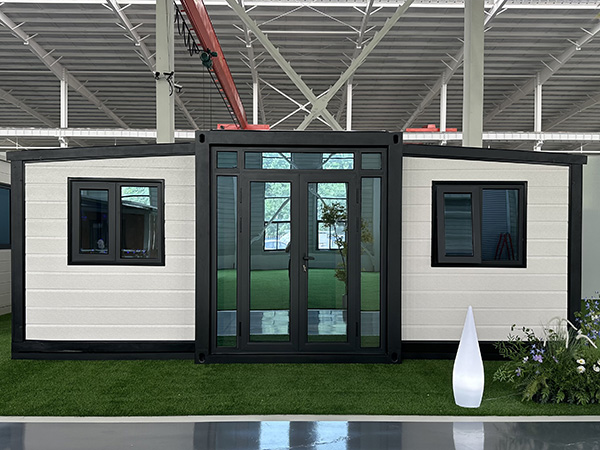
Modular housing has gained growing attention as an efficient,eco-friendly alternative to traditional construction,boasting advantages such as rapid assembly,low waste,and flexibility.However,its large-scale development and widespread adoption are hindered by multiple interrelated challenges,spanning policy,finance,supply chain,perception,and technology.
Firstly,inconsistent policies and regulatory barriers pose a major obstacle.Different regions have varying or ambiguous building codes,permitting processes,and inspection standards for modular housing,especially when modules are manufactured in one area and assembled in another.In some places,modular houses are still mistakenly classified as"temporary structures,"limiting their use as permanent residences and creating legal and market access risks.The lack of unified national or international standards also leads to duplication of inspections and delays,undermining the time and cost advantages of modular construction.
Secondly,financing difficulties and front-loaded cost pressures restrict industry growth.Unlike traditional on-site construction,where material purchases and loan draws are spread out over time,modular projects require a large upfront investment—most materials must be purchased at the start of factory production,and manufacturers often demand substantial deposits upfront.Many lenders are hesitant to provide loans for modular projects due to limited familiarity with the model,making it harder for developers,especially small and medium-sized ones,to secure funding.
Thirdly,supply chain inefficiencies and collaboration gaps affect quality and efficiency.The modular housing supply chain involves multiple stakeholders,including material suppliers,designers,manufacturers,transporters,and constructors,but information asymmetry and fragmented processes are common.This leads to miscommunication,delayed deliveries,and mismatched components.Additionally,reliance on specialized manufacturers means project delays or quality defects may occur if manufacturers face operational issues,and transporting large modules to remote or urban areas with narrow roads adds logistical challenges and costs.
Fourthly,market perception stigma and limited customization hinder consumer acceptance.Many people still associate modular housing with low-quality mobile homes,which impacts resale value and market demand.While modular design offers flexibility,standardized production limits highly personalized or complex architectural styles,and on-site modifications after module delivery are often costly and cumbersome,failing to meet some consumers’unique needs.
Finally,technological gaps and workforce shortages slow innovation.Although technologies like BIM(Building Information Modeling)have improved modular design and production,many small manufacturers still rely on traditional processes,lacking automation and intelligence.Moreover,there is a shortage of skilled workers trained in modular manufacturing,assembly,and maintenance,as the industry’s rapid growth has outpaced workforce development efforts.
These challenges are interrelated,requiring coordinated solutions from governments,industry stakeholders,and consumers.Addressing regulatory inconsistencies,optimizing financing models,enhancing supply chain collaboration,correcting market misconceptions,and investing in technology and workforce training will be key to unlocking the full potential of modular housing.
References
GB/T 7714:Kim S. Prefabricated and modularized residential construction: A review of present status, opportunities, and future challenges[J]. Buildings, 2025, 15(16): 2889.
MLA:Kim, Sunai. "Prefabricated and modularized residential construction: A review of present status, opportunities, and future challenges." Buildings 15.16 (2025): 2889.
APA:Kim, S. (2025). Prefabricated and modularized residential construction: A review of present status, opportunities, and future challenges. Buildings, 15(16), 2889.