




Folding House Design: Space Saving Housing Explained
2026-02-16 01:15:10
What Is a Folding House?
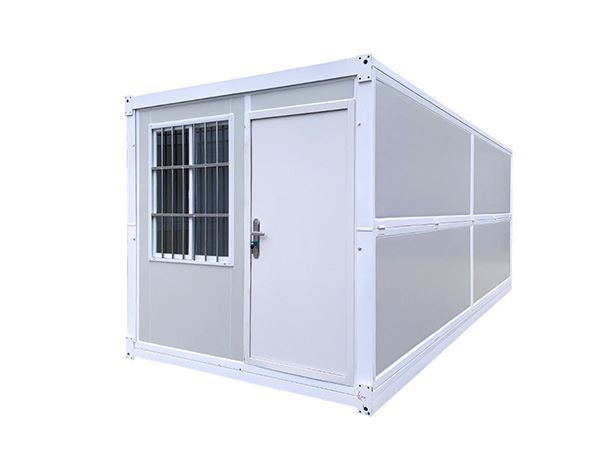
A folding house is a prefabricated modular building that can be folded into a compact form for transport and then unfolded on site to create a full-size usable space. Unlike traditional buildings that require long construction periods, a folding house is produced in a controlled factory environment and delivered almost ready for use.
During transportation, the walls, roof, and sometimes floors are folded inward. Once placed at the project location, the structure expands outward, instantly increasing the interior area. This method reduces logistics costs and allows rapid installation with minimal labor.
Because of its modular nature, a folding house works well for both temporary and permanent housing solutions.
How Folding House Design Works
The design concept of a folding house focuses on efficiency, mobility, and stability:
1. Compact Mode for Transport
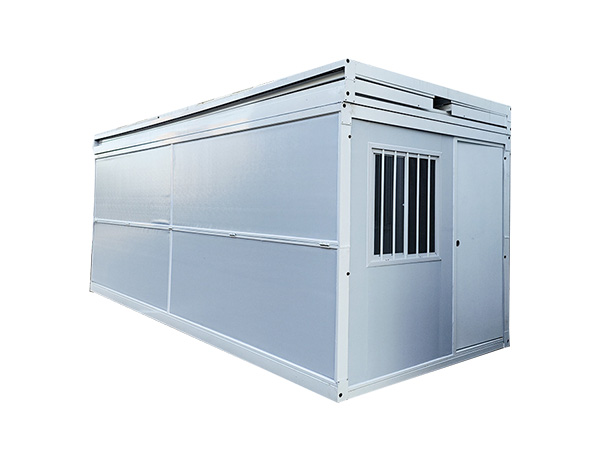
Before delivery, the folding house remains in a compressed shape. This allows more units to be shipped per truck or container, improving logistics efficiency and reducing transportation expenses.
2. On-Site Deployment
After positioning, the folding panels and frames are opened manually or with hydraulic support. The structure expands into its designed layout within hours rather than weeks.
3. System Connection
Electrical, plumbing, and drainage systems are pre-installed during production. On site, only external connections are required before use.
This workflow makes folding house projects faster and more predictable compared to conventional construction.
Structural Components of a Folding House
A high-quality folding house is built from integrated systems:
·Steel Frame Structure: Provides load-bearing strength and long-term durability.
·Foldable Wall Panels: Designed to open and close smoothly while maintaining insulation.
·Roof System: Protects against weather and supports drainage performance.
·Floor Base: Fire-resistant and moisture-proof layers improve safety and comfort.
·Doors and Windows: Enhance lighting, ventilation, and security.
·Electrical and Plumbing Systems: Installed during production for quick deployment.
The folding mechanism is engineered for repeated use without reducing structural performance.
Applications of Folding House Solutions
Folding house systems are used in many scenarios due to their flexibility:
Residential Housing
A folding house can serve as a family home, apartment, villa unit, or temporary accommodation. Fast setup allows housing delivery in short timelines.
Workforce Camps
Infrastructure, mining, and construction projects use folding house layouts to provide comfortable living spaces for staff in remote areas.
Commercial Spaces
Offices, showrooms, shops, and service stations benefit from folding house mobility and rapid installation.
Public and Emergency Use
Schools, clinics, dormitories, and emergency shelters use folding house solutions because of fast deployment and easy relocation.
Because folding houses are modular, multiple units can be combined into large-scale developments.
Advantages of Folding House Design
Space Saving Efficiency
The folding structure reduces transport volume and maximizes interior area after deployment.
Fast Installation
A folding house can be installed within hours or days, greatly reducing project schedules.
Cost Control
Factory production minimizes material waste and labor costs compared to on-site building.
Flexible Layout
Units can be expanded, relocated, stacked, or rearranged according to project needs.
Durability and Safety
Steel frames and insulated panels provide resistance to wind, rain, and seismic forces.
Sustainability
Reduced on-site construction waste and energy-efficient insulation support environmental goals.
These benefits make folding house design attractive for modern modular construction.
Production and Bulk Supply Capability
A folding house is normally produced on standardized assembly lines. During the production stage, steel fabrication, welding, panel installation, and system integration are completed before shipment. Controlled manufacturing improves consistency and reduces defects.
For large projects, batch production ensures that folding house units share the same specifications and performance standards. This approach supports stable delivery for residential developments, workforce housing, and public infrastructure programs that require reliable volume supply.
From a manufacturer perspective, scalable production allows fast response to project demands while maintaining quality inspection throughout the process.
Customization Options for Folding Houses
Modern folding house systems are highly customizable:
·Interior layouts for bedrooms, kitchens, bathrooms, and offices
·Exterior finishes for architectural style matching
·Thermal and acoustic insulation upgrades
·Electrical and smart system integration
·Multi-unit combinations for larger projects
With proper design, a folding house can function like a traditional building while maintaining modular efficiency.
Why Folding Houses Are a Growing Trend
Urban density, housing shortages, and fast project timelines are pushing the demand for flexible building methods. Folding house solutions respond to these challenges by offering mobility, scalability, and cost efficiency.
Developers and project owners value the ability to deploy quickly, relocate when needed, and control budgets without sacrificing quality. With advances in materials and engineering, folding house designs are becoming smarter, safer, and more comfortable for long-term use.
Their combination of industrial production and architectural adaptability positions folding house systems as a major part of modern housing development.
Conclusion
Folding house technology provides a smart, space-saving solution for modern housing and project construction. With compact transportation, rapid deployment, durable structures, and flexible layouts, a folding house meets the needs of residential, commercial, and industrial users alike. Supported by standardized production and scalable manufacturing capability, folding house systems enable efficient deployment for projects of any size.
As demand for fast and adaptable buildings continues to grow, choosing a folding house means investing in efficiency, flexibility, and long-term usability. The future of space-saving housing is increasingly shaped by the innovative design of the folding house.
References
GB/T 7714:Kim S. Prefabricated and modularized residential construction: A review of present status, opportunities, and future challenges[J]. Buildings, 2025, 15(16): 2889.
MLA:Kim, Sunai. "Prefabricated and modularized residential construction: A review of present status, opportunities, and future challenges." Buildings 15.16 (2025): 2889.
APA:Kim, S. (2025). Prefabricated and modularized residential construction: A review of present status, opportunities, and future challenges. Buildings, 15(16), 2889.