




Expandable Container Houses for Modern Living Solutions
2026-02-12 04:52:29
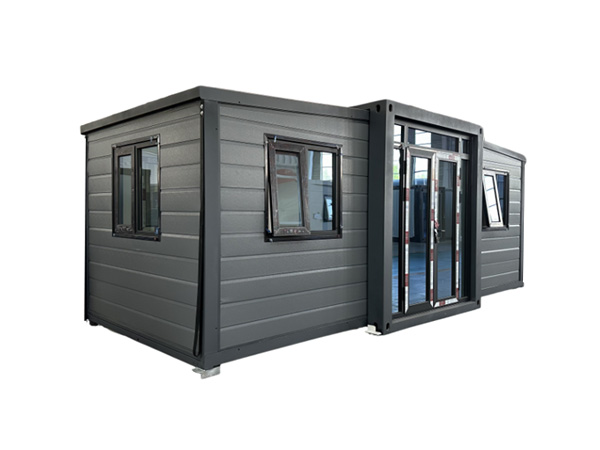
What Are Expandable Container Houses?
Expandable container houses are prefabricated modular units designed to expand after arriving at the project site. Unlike standard container houses, these units are compact during transport and unfold or slide outward to create larger usable space.
They are produced in a factory environment where the main structure, insulation, wiring, plumbing, and finishes are installed before delivery. Once on site, the unit is deployed through a simple mechanical process, transforming a compact module into a spacious living or working area within hours.
Because of this design, expandable container houses significantly reduce shipping costs while maximizing interior space, making them suitable for both temporary and permanent buildings.
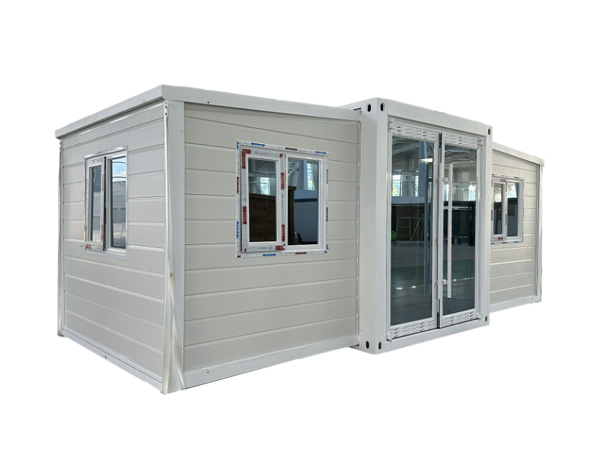
How Expandable Container Houses Work
The operational process of expandable container houses follows a modular production and deployment system:
1. Factory Manufacturing
The steel frame, foldable walls, floors, roofs, and interior systems are assembled under controlled conditions. Insulation, electrical circuits, water systems, and windows are pre-installed to ensure quality consistency. From a manufacturer perspective, standardized production improves efficiency and stability for bulk supply.
2. Transportation in Compact Form
Before expansion, the unit remains in a compressed state. This allows more units to be shipped in one container or truck, reducing logistics costs and time.
3. On-Site Expansion
After placement, the expandable container house is unfolded or slid open using simple tools or hydraulic systems. The space instantly increases, creating full-sized rooms without heavy construction work.
4. Utility Connection and Use
Once expanded, water, power, and drainage are connected. After inspection, the building is ready for occupation within a short period.
This streamlined workflow makes expandable container houses ideal for projects requiring speed, scalability, and reliability.
Structure and Design of Expandable Container Houses
Expandable container houses are engineered for durability and comfort:
·Steel Frame System: Provides structural stability and long-term load resistance.
·Foldable Wall Panels: Allow expansion while maintaining insulation performance.
·Thermal Insulation Layers: Keep indoor temperatures comfortable in different climates.
·Integrated Flooring: Moisture-resistant and fire-rated materials enhance safety.
·Doors and Windows: Improve lighting, ventilation, and security.
·Electrical and Plumbing Systems: Installed during production for fast deployment.
The expandable mechanism is designed to be smooth and repeatable, ensuring that multiple deployments do not affect structural integrity.
Applications for Modern Living
Expandable container houses adapt to many scenarios:
Residential Housing
They are widely used for family homes, villas, apartments, and temporary living spaces. Their fast installation allows housing to be delivered quickly without sacrificing comfort.
Workforce Accommodation
In construction, mining, and infrastructure projects, expandable container houses provide reliable living quarters for workers in remote locations.
Commercial Spaces
Expandable container houses are used for offices, retail units, showrooms, and service centers where flexibility and quick setup are required.
Public and Emergency Use
Schools, clinics, dormitories, and disaster relief shelters benefit from the rapid deployment and mobility of expandable container houses.
Because of their modular layout, these units can be combined into large-scale developments with consistent quality and appearance.
Advantages of Expandable Container Houses
Efficient Transportation
Compact shipping reduces logistics costs and allows large volumes to be transported efficiently.
Fast Installation
Projects can be completed in days instead of months, minimizing labor requirements and disruption.
Flexible Layout
Expandable container houses can be configured into different floor plans, including multi-room and multi-level designs.
Cost Control
Factory production reduces material waste and on-site labor, helping keep budgets predictable.
Durability and Safety
Steel structures resist weather, corrosion, and seismic activity better than many traditional materials.
Sustainability
Reduced on-site construction waste and energy-efficient insulation support environmentally responsible building practices.
These advantages explain why expandable container houses are widely adopted in modern modular construction projects.
Production Capacity and Bulk Supply Capability
Expandable container houses are typically produced in standardized factory lines to ensure stable quality and scalable output. During the production stage, steel cutting, welding, panel installation, and system integration are completed before delivery.
For projects requiring large quantities, batch production allows consistent specifications, faster turnaround times, and controlled quality inspection. This manufacturing approach supports global distribution and large project deployment without compromising performance.
From a supply perspective, expandable container houses are designed for repeatable production, making them suitable for residential developments, workforce camps, and public infrastructure programs that need dependable volume delivery.
Customization Options
Modern expandable container houses offer wide customization potential:
·Interior layouts for bedrooms, kitchens, bathrooms, and offices
·Exterior finishes to match architectural styles
·Insulation upgrades for hot or cold climates
·Electrical and smart system integration
·Multi-unit combinations for large developments
With proper design planning, expandable container houses can function like traditional buildings while maintaining modular efficiency.
Why Expandable Container Houses Are a Future Trend
Urban growth, housing shortages, and fast project timelines drive demand for flexible construction methods. Expandable container houses respond to these needs by providing scalable, mobile, and efficient structures.
They allow developers and project owners to react quickly to market changes, relocate buildings when necessary, and reduce overall construction risks. With continuous improvements in materials and engineering, expandable container houses are evolving into smarter and more comfortable living solutions.
Their ability to combine industrial production with architectural adaptability positions them as a key part of modern building systems.
Conclusion
Expandable container houses provide a practical and innovative solution for modern living and project development. With compact transportation, rapid expansion, durable structures, and flexible layouts, they meet the needs of residential, commercial, and industrial users alike. Supported by standardized manufacturing and efficient production processes, expandable container houses enable scalable deployment for projects of any size.
As construction demands continue to grow, choosing expandable container houses means investing in speed, efficiency, and long-term adaptability. Expandable container houses are no longer just an option — they are becoming a smart foundation for modern modular living solutions.
References
GB/T 7714:Kim S. Prefabricated and modularized residential construction: A review of present status, opportunities, and future challenges[J]. Buildings, 2025, 15(16): 2889.
MLA:Kim, Sunai. "Prefabricated and modularized residential construction: A review of present status, opportunities, and future challenges." Buildings 15.16 (2025): 2889.
APA:Kim, S. (2025). Prefabricated and modularized residential construction: A review of present status, opportunities, and future challenges. Buildings, 15(16), 2889.