




Folding Container House Manufacturer: A Comprehensive Guide for Global Buyers
2026-10-18 04:32:12
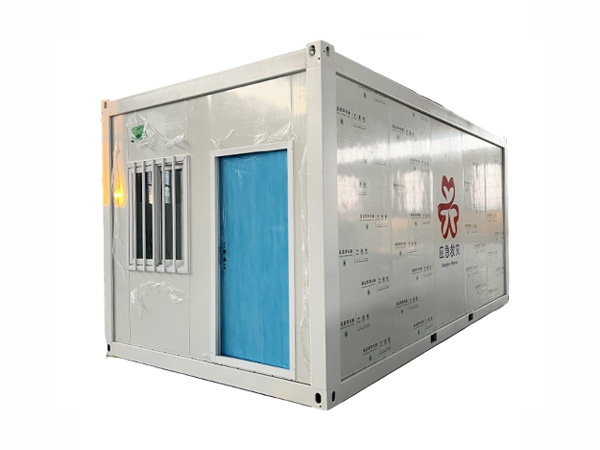
A folding container house is the fastest way to put a finished, insulated building on a remote site. It ships flat, unfolds in minutes and needs no concrete foundation in most cases. Hebei Telaosi Integrated Housing Co., Ltd. is a source manufacturer of folding houses, expandable folding houses, prefabricated packing boxes and folding packing boxes, exporting to projects across Asia, Africa, Europe, Oceania and the Americas. This guide shows you what to check before choosing a folding house supplier.
Understanding the Folding Container House
A folding container house is built around a hinged steel base and roof frame. In transport mode the wall panels fold down onto the floor and the roof lowers over them, reducing the packed height to a fraction of the erected height. On site, a crane lifts the roof, the end walls swing up and pin in place, and the unit becomes a rigid box in a matter of minutes.
There are two common families. The roof-lift folding house is the classic model used for site accommodation: extremely fast, very compact in transit, and typically 20ft. The folding packing container uses a more robust frame with thicker panels and is preferred where the unit will be re-erected many times or used as semi-permanent accommodation. Both share the same material system: galvanised light-steel frame, colour-coated steel sandwich panels with glass wool or rock wool core, integrated floor and factory-fitted electrics.
Portable Folding House Installation: Step by Step
1. Pre-installation planning and site preparation
Confirm local permits for temporary or modular structures, then level and compact the ground. Depending on the model and local code, a concrete slab, pier-and-beam system or well-compacted gravel pad may be sufficient. Plan water, power and sewage routes in advance; off-grid solar and composting toilet options exist for remote sites.
2. Unloading and positioning
Use a crane or forklift rated for the unit weight and lift only at the marked lifting points. Once positioned, level the base with shims so doors, windows and folding panels operate correctly — poor levelling is the single most common cause of folding-panel misalignment.
3. Unfolding and securing
Release the transport locks, lift the roof (crane or integrated hydraulic assist), raise and pin the end walls, then bolt the structure to the foundation to resist wind uplift and seismic forces. Anchor type, spacing and embedment depth must follow the manufacturer's specification.
4. Utilities and finishing
Plumbing and electrics are pre-installed in the factory; final connection to site services is done by licensed professionals to local code. Add base skirting, exterior cladding if not factory-applied, appliances and cabinetry, then do a full systems inspection before handover.
5. Post-installation maintenance
Inspect roof, walls, windows and doors periodically, keep the folding joints clean and lubricated, re-apply sealant in harsh climates, and keep permits, warranty and maintenance records together for future relocation or resale.
Key Benefits of a Foldable Packing Container
| Benefit | Practical Impact |
|---|---|
| Logistics saving | Up to 4–6 folded units per 40HQ container versus 1–2 assembled units |
| Deployment speed | Minutes per unit instead of days of on-site building |
| Reusability | Designed for repeated fold-and-erect cycles across multiple projects |
| Labour saving | No wet trades, no scaffolding, small crew |
| Site impact | Minimal ground works and fully removable foundation |
| Consistent quality | Factory-controlled wiring, insulation and finishing |
Typical Applications
Construction and infrastructure camps — dormitories, offices, canteens, gatehouses.
Mining and oilfield accommodation — relocatable as the work face moves.
Emergency housing and disaster relief — stockpile folded units and deploy within hours.
Events and temporary retail — pop-up shops, ticket booths, first-aid posts.
Agriculture and tourism — farm stays, seasonal worker housing, glamping pods.
How to Choose a Reliable Folding Container House Supplier
| Check | Why It Matters | What a Good Factory Shows You |
|---|---|---|
| Source factory vs trader | Price, lead time and accountability | Workshop photos, production line video, business licence |
| Hinge and lock hardware | Determines cycle life | Galvanised heavy-duty hinges, replaceable pins |
| Panel specification | Thermal comfort and fire safety | Stated panel thickness and core density, fire-retardant core |
| Surface treatment | Corrosion resistance | Galvanising plus electrostatic spraying, zinc filling at welds |
| Export experience | Compliance and packing | Export-standard packing, loading plans, destination references |
| MOQ and lead time | Project cash flow | Flexible MOQ, clear schedule, OEM & ODM accepted |
What Drives the Price of a Folding House?
Six variables explain almost every quotation difference: steel frame gauge and galvanising thickness; sandwich panel thickness and insulation core; window and door grade; interior fit-out level (bare shell to full hotel standard); electrical and plumbing specification for the destination country; and order quantity, which changes both material purchasing and container loading efficiency. Always compare quotes against a written specification sheet, not against a headline price.
Conclusion
The right folding container house supplier is judged on hinge hardware, panel specification and honest documentation, not on photos. Hebei Telaosi Integrated Housing Co., Ltd. operates its own production base with 3000+ m² of manufacturing space, strict process management and 1000+ delivered cases, providing complete housing solutions from design through export.