




Structural Systems and Materials Used in Modular Housing
2026-02-05 02:24:14
Structural Systems and Materials Used in Modular Housing
Modular housing relies on engineered structural systems and carefully selected materials to ensure strength,durability,transportability,and fast assembly.Compared with traditional construction,modular housing places greater emphasis on standardization and prefabrication while meeting the same structural and safety requirements.
1.Structural Systems in Modular Housing
1.1 Load-Bearing Modular System
In load-bearing systems,the modules themselves carry vertical and lateral loads.Walls,floors,and ceilings are designed as structural elements,allowing modules to be stacked or arranged horizontally.
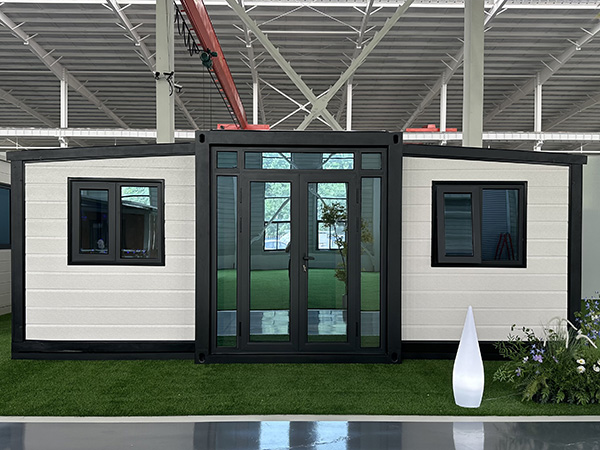
Typical applications:low-to mid-rise residential buildings,container-based modular houses.
1.2 Frame-Supported Modular System
This system uses a primary structural frame(steel or reinforced concrete)on-site,while modular units act as infill components.Loads are transferred through the main frame rather than the modules alone.
Typical applications:high-rise modular housing,urban apartment buildings.
1.3 Hybrid Structural System
Hybrid systems combine modular units with traditional construction methods.For example,modular rooms may be integrated with cast-in-place concrete cores or steel frames.
Typical applications:mixed-use buildings,projects requiring high structural flexibility.
2.Structural Materials Used in Modular Housing
2.1 Steel
Steel is one of the most common materials in modular housing due to its high strength-to-weight ratio and dimensional stability.
Used in frames,columns,beams,and container modules
Suitable for long-distance transportation
Excellent seismic and wind resistance
2.2 Timber(Wood)
Engineered timber systems are widely used in residential modular housing.
Light-frame wood construction
Cross-laminated timber(CLT)panels
Sustainable and renewable material
Advantages:good thermal performance,lightweight,environmentally friendly.
2.3 Reinforced Concrete
Reinforced concrete is mainly used in foundations,cores,or hybrid systems.
High durability and fire resistance
Good sound insulation
Often combined with steel or modular units
2.4 Composite Materials
Composite materials combine steel,concrete,timber,or lightweight panels to enhance performance.
Steel–concrete composite floors
Structural insulated panels(SIPs)
Fiber-reinforced panels
3.Envelope and Non-Structural Materials
Insulation:mineral wool,polyurethane foam,EPS/XPS panels
Exterior cladding:metal panels,fiber cement boards,composite panels
Interior finishes:gypsum boards,plywood,modular wall panels
Floor systems:steel deck,timber joists,precast concrete slabs
4.Performance Considerations
Structural systems and materials in modular housing must address:
Transportation stresses and lifting forces
Structural connections between modules
Fire resistance and acoustic performance
Thermal insulation and energy efficiency
5.Conclusion
The structural systems and materials used in modular housing are designed to balance strength,efficiency,and adaptability.Steel,timber,and hybrid systems dominate modern modular construction,enabling modular housing to meet diverse functional and environmental requirements.
References
GB/T 7714:Ye Z,Giriunas K,Sezen H,et al.State-of-the-art review and investigation of structural stability in multi-story modular buildings[J].Journal of Building Engineering,2021,33:101844.
MLA:Ye,Zhihang,et al."State-of-the-art review and investigation of structural stability in multi-story modular buildings."Journal of Building Engineering 33(2021):101844.
APA:Ye,Z.,Giriunas,K.,Sezen,H.,Wu,G.,&Feng,D.C.(2021).State-of-the-art review and investigation of structural stability in multi-story modular buildings.Journal of Building Engineering,33,101844.