




Flexibility and Expandability in Modular House Design
2026-02-05 02:25:36
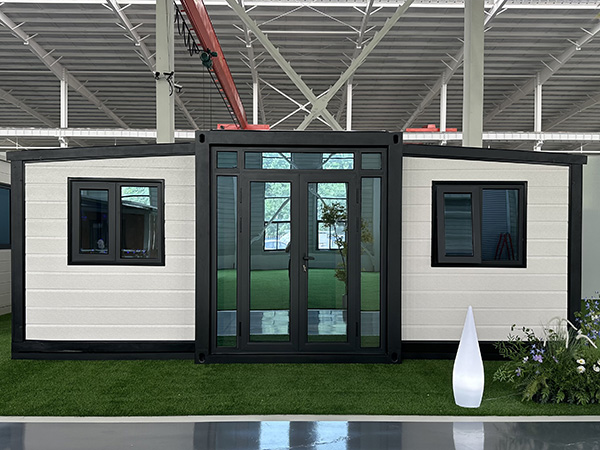
Flexibility and Expandability in Modular House Design
Flexibility and expandability are core design tenets of modular houses, distinguishing them from traditional fixed-structure buildings and enabling them to adapt to changing user needs, evolving usage scenarios, and long-term lifecycle extension. This design concept runs through the entire process of module splitting, structural design, interface standardization, and space planning—its core goal is to achieve "modular combination, flexible adjustment, and scalable expansion" without damaging the original structure, while minimizing rework costs and material waste.
Below is a detailed breakdown of the design logic, key implementation strategies, structural considerations, and practical application examples for flexibility and expandability in modular house design:
Core Connotations of Flexibility & Expandability
The two concepts are complementary and interrelated, covering both short-term functional adjustment and long-term space expansion:
Flexibility: Focuses on adaptability of the existing space and functional modules—it allows for quick reconfiguration of internal layouts, replacement of single functional modules, or temporary adjustment of usage scenarios (e.g., converting a home office into a guest room, or a commercial module into a service station). It emphasizes detachable, replaceable, and reconfigurable features of modules and internal components.
Expandability: Focuses on scalable growth of the building’s overall space and functionality—it supports horizontal extension (adding adjacent modules), vertical stacking (building 2-3 story modular structures), or functional upgrading (adding smart systems, energy-saving equipment, or special functional modules like a gym/study). It emphasizes pre-reserved interfaces, load-bearing redundancy, and modular compatibility in the original design.
Together, they ensure modular houses can adapt to changes in family size, living habits, business needs, or policy requirements over 10–50 years of use, avoiding the need for full demolition and reconstruction and maximizing the building’s economic and environmental value.
Key Design Strategies for Flexibility
Flexibility design is mainly reflected in internal space reconfiguration, single module replacement, and scenario adaptation, with the core of non-destructive adjustment and quick rework.
1. Standardized Internal Partition Design
Adopt lightweight, detachable partition walls (e.g., aluminum alloy frame partition walls, modular gypsum board partitions) instead of load-bearing concrete or brick walls. These partitions can be disassembled, moved, or reassembled at any time to adjust the size of rooms (e.g., merging two small bedrooms into a large master bedroom, or dividing a large living room into a living room + home office).
Reserve universal installation points on the partition walls and main frames for shelves, lighting, and smart home devices, avoiding secondary drilling and structural damage during functional adjustment.
2. Functional Module "Plug-and-Play" Design
Split the building into independent, replaceable functional modules with complete structural and functional integrity—each module can be produced, transported, and installed separately, and faulty or outdated modules can be replaced without affecting the rest of the building.
Residential scenario: Independent kitchen modules, bathroom modules, and storage modules—if the kitchen layout is outdated, the entire kitchen module can be removed and replaced with a new one with modern appliances and layout.
Commercial scenario: Retail modules, service counter modules, and office modules in a commercial street—modules can be rearranged according to seasonal promotions or business adjustments.
Unify the installation dimensions and connection interfaces of functional modules (e.g., the same bolt spacing, water/electricity quick connectors) to ensure interchangeability of modules of the same type.
3. Adaptable Space for Multi-Scenario Use
Design open core spaces (e.g., a large living room in a residential house, an open hall in a commercial building) with no fixed partitions, which can be flexibly divided using movable screens, folding doors, or modular furniture to adapt to different scenarios:
A residential open space can be used as a daily living room, a party venue for gatherings, or a temporary children’s play area.
A modular office open space can be converted into an office area, a meeting room, or a training room as needed.
Select multi-functional building materials and furniture that match the modular design (e.g., foldable tables and chairs, wall-mounted foldable beds, and retractable awnings) to further enhance the space’s scenario adaptability.
4. Scalable MEP (Mechanical, Electrical, Plumbing) Systems
Adopt a branch-type MEP pipeline design instead of a one-piece rigid pipeline layout—main pipelines are laid in centralized pipe wells or floor interlayers, and each functional module is connected to the main pipeline via flexible hoses, quick connectors, and detachable valves.
This design allows for quick disconnection and reconnection of pipelines when adjusting modules or partitions, avoiding pipeline damage and reducing the difficulty of water/electricity modification. At the same time, reserve spare pipeline interfaces in the main pipeline for future functional expansion.
Key Design Strategies for Expandability
Expandability design focuses on long-term space and functional growth, with the core of pre-reservation, structural redundancy, and modular compatibility. It needs to be considered at the initial design stage to avoid rework due to insufficient load-bearing, missing interfaces, or non-standard module sizes in later expansion.
1. Horizontal Expansion Design: Adjacent Module Connection
Standardize the external connection interfaces of the main building (structural connection points, MEP pipelines, waterproof sealing details) on all sides of the original modular building—ensure the same interface specifications as the extended modules, enabling "side-by-side" splicing of extended modules with the original building without structural modification.
Optimize the site layout in the initial design: reserve empty land around the original building for horizontal expansion (e.g., a single-module small apartment reserves space on one side for adding a bedroom module, a small modular store reserves the front area for adding a display module).
Unify the structural and aesthetic design of extended modules: ensure the extended modules have the same frame strength, insulation performance, and exterior cladding as the original building, maintaining the overall structural stability and aesthetic consistency of the building after expansion.
2. Vertical Expansion Design: Multi-Story Stacking
Design the original building frame with load-bearing redundancy—the first-floor module frame and foundation are designed to bear the weight of 1–2 additional floors (even if only a single floor is built initially), complying with local multi-story building seismic, wind resistance, and load-bearing codes.
Standardize vertical connection interfaces: set unified upper and lower structural connection points (e.g., embedded steel plates, high-strength bolt bases) on the top of the first-floor module frame and the bottom of the upper-floor module frame, and reserve vertical MEP pipeline wells (for water supply, drainage, and electrical wiring) in the original design.
Adopt a modular floor system: the floor of the upper module serves as the roof of the lower module, with integrated waterproof and insulation layers—avoid independent roof construction for the first floor to reduce the difficulty of vertical expansion and ensure structural tightness.
3. Functional Expansion Design: Adding Special Modules & Upgrading Systems
Reserve installation space and interfaces for special functional modules in the original design—these modules are not installed initially but can be added as user needs change, such as:
Residential: solar photovoltaic modules (reserved roof brackets and wiring), outdoor terrace modules (reserved structural connection points on the side of the building), storage room modules (reserved small space at the back of the building).
Commercial/industrial: charging pile modules (reserved power interfaces and ground installation points), cold storage modules (reserved refrigeration pipeline interfaces and load-bearing points), office meeting room modules (reserved sound insulation and wiring interfaces).
Design the building’s main systems with upgrade redundancy:
Electrical system: Reserve spare circuits and distribution box capacity for adding smart home systems, energy storage equipment, or additional electrical appliances.
HVAC system: Design the air duct and outdoor unit installation space to be compatible with larger-capacity equipment or multi-split air conditioning systems.
Energy system: Pre-embed wiring and support structures for renewable energy systems (solar, wind, geothermal) to facilitate later installation without damaging the building envelope.
4. Relocability as a Form of "Spatial Expansion"
Treat relocation as an extension of the building’s usage space and scenario—design the entire modular building with disassembly and relocation in mind, which is a unique expandability feature of modular houses compared to traditional buildings.
Key design points for relocability:
Use detachable structural connections (bolts, connectors) instead of permanent welding or concrete pouring for all module connections.
Control the single module weight and size to be compatible with transportation and hoisting equipment (e.g., single module weight ≤20 tons, width ≤3.5m) to avoid disassembly into small components during relocation.
Adopt integrated MEP quick connectors to enable quick disconnection and reconnection of water/electricity pipelines during relocation, reducing relocation time and cost.
Critical Structural & Technical Considerations
To ensure the safety and practicality of flexibility and expandability, design must be based on structural stability and technical standardization—avoid blind pursuit of adjustability at the cost of structural safety or construction feasibility.
1. Maintain the Integrity of the Main Load-Bearing Frame
The main load-bearing frame (steel/wood/concrete) of the modular building is a fixed structure and cannot be modified, cut, or disassembled during flexibility adjustment or expansion. All detachable partitions, functional modules, and extended modules must be connected to the non-load-bearing parts of the main frame or pre-reserved connection points.
Mark the load-bearing frame and reserved connection points clearly in the design drawings and on the actual building to prevent incorrect modification by users or construction parties.
2. Unified Standardization of All Interfaces
Interface standardization is the prerequisite for realizing flexibility and expandability—unify the specifications of all structural connection points, MEP pipeline interfaces, waterproof sealing details, and even exterior cladding installation dimensions (e.g., adopting national/international modular building standards such as ISO 16158).
Avoid custom non-standard interfaces—they will lead to incompatibility of extended modules, increase production and maintenance costs, and lose the advantages of modular industrialization.
3. Seismic & Wind Resistance Verification for Expanded Structures
After horizontal or vertical expansion, the overall building structure must be re-verified for seismic, wind resistance, and load-bearing performance to ensure compliance with local building codes.
For vertical expansion (multi-story stacking), a professional structural engineer must be invited to calculate the overall load-bearing capacity, design the vertical connection reinforcement measures, and ensure the foundation can bear the increased weight.
4. Waterproof & Sealing Design for Connection Joints
Flexibility adjustment and expansion will generate new module connection joints (horizontal/vertical splicing seams)—these are the key points of waterproof and sealing design to avoid water leakage, air infiltration, or heat loss.
Adopt multi-layer waterproof and sealing measures for connection joints: use high-elasticity polyurethane sealant + metal pressure strips for structural sealing, and add waterproof membranes or insulation strips for the building envelope to ensure the thermal and waterproof performance of the expanded building is consistent with the original.
References
GB/T 7714:Djukanovic M,Alegre A,Bastos FT.Prefabricated Solutions for Housing:Modular Architecture and Flexible Living Spaces.Buildings,2025,15(6):862.DOI:10.3390/buildings15060862.
MLA:Djukanovic,Mina,Alexandra Alegre,and Francisco Teixeira Bastos.“Prefabricated Solutions for Housing:Modular Architecture and Flexible Living Spaces.”Buildings,vol.15,no.6,2025,article 862,doi:10.3390/buildings15060862.
APA:Djukanovic,M.,Alegre,A.,&Bastos,F.T.(2025).Prefabricated solutions for housing:Modular architecture and flexible living spaces.Buildings,15(6),862.