




Prefabrication Technologies in Modular Housing Construction
2026-02-05 02:28:22
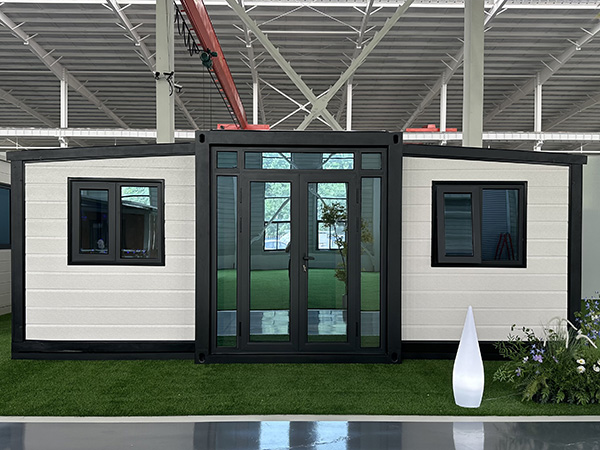
Prefabrication Technologies in Modular Housing Construction
Prefabrication technologies are the foundation of modular housing construction,enabling buildings to be produced efficiently,accurately,and sustainably.By transferring construction activities from the site to a controlled factory environment,these technologies improve quality control,reduce construction time,and lower environmental impact.
1.Digital Design and Planning Technologies
1.1 Building Information Modeling(BIM)
BIM is widely used in modular housing to integrate architectural,structural,and MEP(mechanical,electrical,and plumbing)systems into a single digital model.It allows precise coordination,clash detection,and optimization before production begins.
1.2 Parametric and Modular Design
Parametric design tools enable standardized modules to be customized through adjustable parameters,supporting mass customization while maintaining production efficiency.
2.Factory-Based Manufacturing Technologies
2.1 Volumetric Modular Fabrication
Entire three-dimensional modules are manufactured in factories,including structural frames,insulation,finishes,and building services.This technology allows high levels of completion before on-site assembly.
2.2 Panelized Prefabrication Systems
Wall panels,floor panels,and roof panels are prefabricated and assembled on-site.Advanced CNC(Computer Numerical Control)machinery ensures precision cutting and assembly.
2.3 Structural Insulated Panels(SIPs)
SIPs consist of insulating foam cores bonded between structural boards.They provide high thermal performance and are commonly used in modular housing envelopes.
3.Automation and Advanced Manufacturing
3.1 CNC Machining
CNC machines are used to cut steel,timber,and composite materials with high accuracy,reducing errors and material waste.
3.2 Robotic Assembly and Welding
Robotic systems are increasingly used for welding steel frames,assembling panels,and handling repetitive tasks,improving consistency and worker safety.
4.Prefabricated Building Systems Integration
4.1 Prefabricated MEP Systems
Plumbing,electrical,and HVAC components are pre-installed within modules or panels,minimizing on-site work and installation errors.
4.2 Modular Façade Systems
Prefabricated façade panels integrate insulation,cladding,and windows,enabling rapid enclosure of buildings.
5.Transportation and On-Site Assembly Technologies
Lifting and rigging systems designed for modular units
Precision alignment and connection systems
Bolted and dry connections for rapid assembly
6.Benefits of Prefabrication Technologies
Reduced construction time
Improved quality and accuracy
Lower labor dependency on-site
Enhanced sustainability and waste reduction
7.Conclusion
Prefabrication technologies play a critical role in modular housing construction by combining digital design,factory manufacturing,and efficient on-site assembly.Continuous advancements in automation and digitalization are further expanding the potential of modular housing as a modern construction solution.
References
GB/T 7714:Zohourian M,Pamidimukkala A,Kermanshachi S,et al.Modular Construction:A Comprehensive Review.Buildings,2025,15(12):2020.DOI:10.3390/buildings15122020.
MLA:Zohourian,Mohammadamin,et al.“Modular Construction:A Comprehensive Review.”Buildings,vol.15,no.12,2025,article 2020,doi:10.3390/buildings15122020.
APA:Zohourian,M.,Pamidimukkala,A.,Kermanshachi,S.,&Almaskati,D.(2025).Modular construction:A comprehensive review.Buildings,15(12),2020.