




Design Principles of Modular Houses
2026-02-05 02:22:10
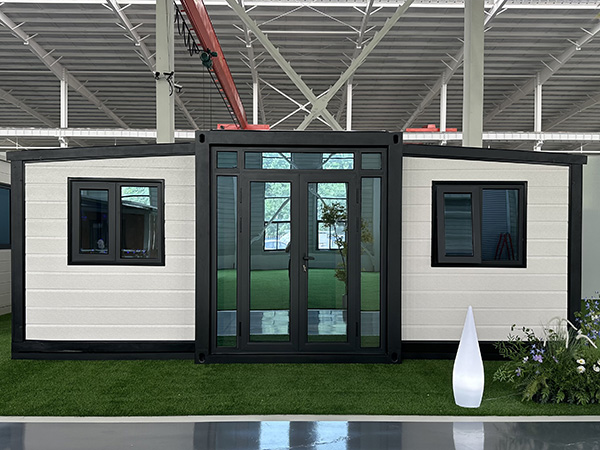
The design principles of modular houses are centered on standardization, manufacturability, sustainability, and usability, integrating the entire lifecycle requirements of design, production, transportation, assembly, use, and recycling. These principles ensure the building’s quality, efficiency, cost-effectiveness, and flexibility. Below are the core design principles with detailed explanations:
1. Standardization & Modularization Principle
The foundational principle for realizing industrialized production and efficient assembly, emphasizing "unified specifications and interchangeable components."
Module Standardization: Adopt industry-unified or customized standardized module sizes (e.g., derived from 20ft/40ft container dimensions, or width ≤3.5m, length ≤12m for transportation compatibility). Ensure consistent module cross-sections, connection interfaces, and component specifications (e.g., steel frame profiles, bolt models) to enable mass production and flexible combination.
Interface Unification: Standardize structural connection points (e.g., bolted joints, tenon-and-mortise structures), water/electricity/hvac pipeline interfaces (e.g., quick connectors for water pipes, unified cable terminals), and waterproof sealing details. Avoid custom non-standard interfaces to reduce production complexity and maintenance costs.
Component Modularization: Split the building into functional modules (e.g., bedroom modules, kitchen-bath modules, living room modules) with independent structural integrity and functional completeness. Modules can be independently produced, inspected, and transported, enabling "plug-and-play" assembly.
2. Manufacturability & Constructability Principle
Ensure design schemes are compatible with factory production processes and on-site assembly requirements, avoiding "design-production disconnection."
Factory Production Adaptability: Design module structures and processes based on factory equipment capabilities (e.g., cutting precision, welding technology). For example, avoid overly complex structural nodes that are difficult to process, and ensure components can be assembled in a streamlined workflow (frame welding → wall installation → pipeline embedding → interior/exterior finishing).
Simplified On-Site Assembly: Minimize on-site construction work (e.g., no on-site concrete pouring for main structures). Design lightweight, easy-to-hoist modules (control single module weight within crane capacity) and optimize assembly sequences (e.g., sequential hoisting by module number) to shorten on-site construction time (typically days to weeks).
Transportation Compatibility: Consider transportation constraints during module design—avoid oversized/overweight modules that exceed road transportation limits (e.g., height ≤4.5m to pass under bridges/tunnels). Optimize module packaging and lifting points to prevent deformation or damage during transportation.
3. Structural Safety & Integrity Principle
Guarantee the structural stability of individual modules and the overall building, meeting local building codes (seismic, wind resistance, load-bearing).
Module Structural Independence: Each module must have a self-supporting frame (steel, wood, or concrete structure) that can withstand transportation, hoisting, and temporary storage loads without deformation. Key nodes (e.g., column-beam connections) are reinforced to ensure structural rigidity.
Overall Structural Cohesion: After assembly, modules must form a rigid integral structure. Design cross-module connection systems (e.g., inter-module steel tie rods, floor slab splicing) to transfer loads (e.g., vertical gravity, horizontal wind/seismic forces) evenly across the entire building. Avoid structural weak points at module joints.
Compliance with Safety Standards: Strictly adhere to local seismic intensity, wind pressure, snow load, and fire protection requirements. For example, use fire-resistant materials for module enclosures, and design smoke exhaust channels and fire escape routes that meet fire codes.
4. Flexibility & Expandability Principle
Adapt to diverse functional needs and future changes, extending the building’s service life.
Flexible Combination: Design modules with compatible dimensions and interfaces to enable multi-scenario combinations (e.g., single-module small apartments, multi-module villas, or commercial complexes). Support horizontal expansion (adding adjacent modules) and vertical stacking (2-3-story modular buildings with reinforced load-bearing structures).
Functional Adaptability: Reserve space and interfaces for future functional upgrades (e.g., additional bedrooms, home offices, or smart systems). For example, pre-embed wiring for solar panels, smart home devices, or extra sockets to avoid secondary renovation damage.
Relocability: Ensure modules can be disassembled and relocated to new sites. Use detachable connections instead of permanent welding, and design modules to be reusable after disassembly (e.g., steel frames can be repurposed for new modules).
5. Sustainability & Energy Efficiency Principle
Align with low-carbon and environmental protection goals, reducing the building’s lifecycle environmental impact.
Green Material Selection: Prioritize renewable, low-carbon, and recyclable materials (e.g., cross-laminated timber (CLT), recycled steel, non-toxic insulation materials). Avoid materials with high embodied carbon (e.g., excessive concrete) or harmful substances (e.g., formaldehyde-containing adhesives).
Energy-Saving Design: Integrate passive and active energy-saving measures. Factory-prefabricated high-performance enclosures (e.g., double-layer Low-E glass, rock wool insulation) reduce heat loss; optimize building orientation to maximize natural lighting and ventilation; reserve interfaces for renewable energy systems (e.g., solar photovoltaic panels, geothermal heat pumps).
Waste Reduction & Recycling: Design for disassembly and recycling—ensure modules can be split into recyclable components (e.g., steel frames, aluminum panels) at the end of their service life. Improve material utilization in factory production (targeting ≥90% utilization rate) to minimize construction waste.
6. Usability & Humanization Principle
Balance functionality, comfort, and aesthetics to meet users’ living/working needs.
Functional Layout Rationality: Optimize module internal space based on usage scenarios. For example, in residential modules, ensure reasonable flow between living rooms, kitchens, and bedrooms; in office modules, design open workspaces with sound insulation. Avoid space waste caused by unreasonable module splitting.
Comfort Enhancement: Pay attention to thermal comfort (insulation, temperature regulation), acoustic performance (sound insulation between modules and within spaces), and indoor air quality (low-VOC materials, ventilation systems). Ensure natural lighting (suitable window-to-wall ratio) and avoid stuffiness or glare.
Aesthetic Diversity: While adhering to standardization, allow for personalized exterior and interior designs. For example, use interchangeable exterior cladding (metal panels, wood, stone veneer) or flexible interior decoration schemes (detachable partitions, customizable finishes) to meet different style preferences.
7. Cost-Optimization Principle
Under the premise of meeting quality and functional requirements, minimize the total lifecycle cost (design, production, transportation, operation, maintenance).
Material & Process Cost Control: Prioritize cost-effective, readily available materials and simplify production processes (e.g., avoiding complex custom components). Use modular integration to reduce the number of parts (e.g., integrated kitchen-bath modules reduce on-site installation costs).
Transportation & Assembly Cost Reduction: Optimize module size and weight to reduce transportation vehicle numbers and fuel consumption. Simplify on-site assembly processes to reduce labor and equipment rental costs.
Operation & Maintenance Cost Savings: Design easy-to-maintain structures (e.g., centralized pipeline layout for convenient inspection) and select durable materials to reduce long-term maintenance and replacement costs. Energy-saving designs (e.g., high-efficiency insulation, solar energy utilization) lower operational energy consumption costs.
8. Compliance Principle
Strictly adhere to local building codes, industry standards, and relevant regulations to ensure legal compliance and market access.
Code Compliance: Comply with local regulations on building height, floor area ratio, setbacks, and fire protection. Meet national/international standards for modular buildings (e.g., ISO standards for prefabricated buildings, local seismic design codes).
Certification Adaptability: Design with consideration for green building certifications (e.g., LEED, BREEAM) or modular building-specific certifications. For example, optimize energy efficiency and material sustainability to meet certification requirements, enhancing market competitiveness.
These principles are interrelated and mutually restrictive—for example, standardization must balance flexibility, and manufacturability must not compromise structural safety. In practice, designers need to comprehensively optimize based on project objectives (e.g., residential vs. temporary construction), budget, and regional conditions to achieve the best balance between quality, efficiency, and sustainability.
References
GB/T 7714:Luo X, Zheng X, Liao C, et al. Research on the modular design method and application of prefabricated residential buildings[J]. Buildings, 2024, 14(9): 3014.
MLA:Luo, Xiaoyong, et al. "Research on the modular design method and application of prefabricated residential buildings." Buildings 14.9 (2024): 3014.
APA:Luo, X., Zheng, X., Liao, C., Xiao, Y., Deng, C., Liu, S., & Chen, Q. (2024). Research on the modular design method and application of prefabricated residential buildings. Buildings, 14(9), 3014.