




Design process of modular house
2026-02-05 02:03:57
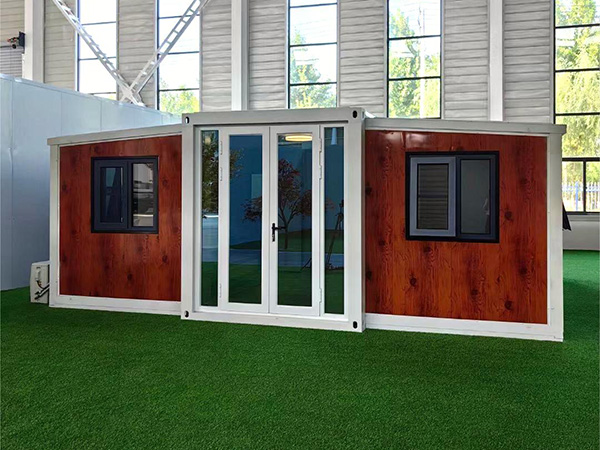
Design process of modular house
The design process of modular houses is centered on standardization,factory production and assembly,and the whole process of"demand analysis-scheme design-deepening design-production adaptation-site landing"needs to be connected in series,which not only meets the functional and aesthetic needs,but also ensures the feasibility of module production,transportation and splicing.The specific detailed process is as follows:
1.Pre-research and demand definition(design starting point,lay the direction)
Core tasks:define the project objectives and constraints,and output the Requirements Specification.
Key work:
Demand interview:confirm with the owner/Party A the use scenario(residential/office/temporary building),the number of people living/using,functional zoning(bedroom,kitchen and bathroom,public space,etc.),style preference,budget range and special needs(such as barrier-free design and intelligent system integration).
Site investigation:field investigation of site topography,geological conditions(determine foundation type),climatic environment(such as wind speed and rainfall,which affect thermal insulation/waterproof design),surrounding facilities(access point of hydropower pipe network)and transportation routes(limit module size and weight).
Code study:sort out local building codes(floor area ratio,height limit),structural safety standards(seismic and wind-resistant grades),environmental protection and energy-saving requirements(thermal insulation coefficient,energy consumption index)and special provisions for modular buildings.
2.Conceptual design and scheme optimization(creative landing,balancing function and feasibility)
Core tasks:output the preliminary design scheme,determine the architectural form and module splitting logic.
Key work:
Functional layout planning:divide functional areas based on demand,and preliminarily determine the area and dynamic relationship of each area(such as the linkage layout of living room-dining room-kitchen)to ensure the maximum space utilization.
Modular split design:
Split principle:split according to"independent function,standardized size and balanced weight"(for example,split the house into"bedroom module","kitchen and bathroom module"and"living room module"),and the module size should be adapted to the transportation restrictions(common width≤3.5m,length≤12m and height≤4.5m).
Interface standardization:unify the connection mode of modules(such as bolt connection and tenon-mortise structure)and interface specifications of hydropower pipelines,so as to lay the foundation for later splicing.
Architectural form and aesthetic design:determine the architectural appearance style(modern simplicity,industrial style,etc.),facade material(metal plate,wood,real stone paint),door and window layout(taking into account lighting and structural safety to avoid damaging the main frame of the module),and present the scheme through 3D renderings and SU models.
Scheme review:organize the owner,structural engineer and the person in charge of factory production to jointly review and select the best scheme from the dimensions of function,cost,production feasibility and transportation convenience.
3.Deepening design(core link,linking design and production)
3.1 Building deepening design
Output the Building Deepening Construction Drawing,including:
Detailed dimensions of the module(length×width×height),wall thickness,exact positions and dimensions of doors and windows openings(to be avoided from the structural frame).
Facade refinement:determine the model of doors and windows,glass specifications(such as Low-E double-layer insulating glass),the thickness of external wall insulation layer and the layout of decorative lines.
Interior decoration scheme:define the floor(wood floor/tile),wall surface(paint/wallpaper),ceiling material and installation method,and reserve furniture placement space and home appliance installation points.
3.2 Structural deepening design
Core objective:to ensure the structural safety(earthquake resistance,wind resistance and load bearing)of the module and the overall stability after splicing.
Key work:
Module structure design:steel structure(mainstream,such as square tube frame),wood structure or concrete structure are selected,the dead weight and bearing capacity of the module(such as floor live load and roof snow load)are calculated,and the frame nodes(such as the connection between columns and beams)are designed to ensure that the module is not deformed during transportation and hoisting.
Checking calculation of overall structure:simulate the overall stress situation after the modules are spliced,and check the lateral stiffness and foundation bearing capacity(the foundation type is usually strip foundation and independent foundation,which meets the requirements of rapid installation of modular buildings).
Issue"Structural Construction Drawing",including module frame detail drawing,node connection drawing and foundation layout drawing.
3.3 electromechanical deepening design(pipeline integration to avoid later conflicts)
Core principle:"Centralized pipelines,reserved interfaces and easy maintenance".
Key work:
System planning:design water supply and drainage(cold water/hot water/sewage pipe),strong electricity(lighting,socket,air conditioning circuit),weak electricity(network,TV,security)and HVAC(air conditioning,fresh air)systems.
Pipeline layout:Concentrate the pipelines on the tube well,ceiling or floor interlayer in the module to avoid crossing the main frame of the module;Reserve pipeline interfaces(such as water pipe quick connectors and cable butt terminals)on the module splicing surface,and mark the interface position and specifications.
Equipment selection:choose miniaturized and integrated household appliances/equipment(such as embedded refrigerator and wall-mounted air conditioner),and reserve equipment installation space and power interface.
Issue the Mechanical and Electrical Construction Drawing,including the pipeline route diagram,interface details and equipment list.
3.4 Energy Saving and Environmental Protection Design(Adapting to Sustainable Demand)
Thermal insulation design:select efficient thermal insulation materials(such as rock wool and polyurethane foam)to fill the module wall,roof and floor to ensure that the thermal insulation coefficient meets the local energy-saving standards;Optimize the sealing performance of doors and windows to reduce cold and heat exchange.
Waterproof design:focus on the joint of module(using waterproof sealant and metal batten),the joint between door and window frame and wall,and design roof drainage slope and floor drain to avoid water seepage.
Natural lighting and ventilation:rationally plan the location and size of doors and windows to maximize the use of natural light;The design can open the vent,promote indoor air circulation and reduce energy consumption.
4.Production adaptation design(connecting factory production to ensure prefabrication)
Core task:Transform the design scheme into technical documents that can be produced by the factory,and output the Module Production Drawing.
Key work:
Standardization of components:define the steel model,plate thickness and connector specifications of the module frame to ensure that components can be purchased and processed in batches.
Production process adaptation:design module prefabrication process(such as frame welding→wall assembly→pipeline embedding→interior and exterior decoration),and reserve hoisting points and machining allowance in the production process.
Quality control node:mark the inspection requirements of key processes(such as frame welding seam quality and waterproof test standard)in the drawings.
Cooperate with the factory to communicate:confirm the production equipment capabilities(such as cutting accuracy and welding process)with the factory technical team,and adjust the design details to avoid the disconnection between design and production.
5.Joint review and optimization of construction drawings(missing and filling gaps,reducing risks)
Organize design review meeting:convene architects,structural and electromechanical designers,factory production leaders,construction units and owners'representatives to jointly review the construction drawings.
Key audit contents:
Design compliance:whether it meets local codes and safety standards;
Production feasibility:whether the component size and connection mode are suitable for the processing capacity of the factory;
Transportation convenience:whether the module size and weight meet the transportation route restrictions;
Feasibility of splicing:whether the module interface and pipeline docking are accurate and whether there is any conflict;
Cost controllability:whether the material selection and process complexity are within the budget.
Optimize the drawings according to the review opinions,and form the final version of construction drawings(including architectural,structural,electromechanical,production and installation details).
6.On-site installation scheme design(guiding landing to ensure efficient splicing)
Output the site installation construction organization design,including:
Foundation construction scheme:define the process of foundation excavation and pouring,and reserve embedded parts for module positioning(such as anchor bolts).
Hoisting scheme:determine the type of hoisting equipment(such as truck crane and crawler crane),hoisting sequence(hoisting in turn according to module number)and hoisting point(matching with module structure design to avoid hoisting deformation).
Splicing process:specify the operation steps and quality standards of module positioning,connection and fixation(such as bolt tightening torque),pipeline docking and waterproof sealing.
Closing scheme:including indoor decoration joint repair(module splicing),facade decoration,hydropower system debugging,environmental protection testing,etc.
7.Design disclosure and post-service(ensuring landing effect)
Design disclosure:explain the design intention,drawing details,key process requirements and precautions to the factory production team and the site construction team in detail.
Process tracking:provide technical support during module production and field installation,and solve sudden problems(such as module size deviation and pipeline docking conflict).
Completion acceptance:participate in project acceptance,check the consistency between actual effect and design scheme,and provide rectification suggestions;Issue as-built drawings and file design documents.
Core principles of design process
Standardization priority:adopt industry standards for module size,interface and components as far as possible to reduce production and splicing costs;
Collaborative penetration:the whole design process needs to be linked with the factory and the construction party to avoid"design is out of touch with production and drawings are inconsistent with the site";
Variability reservation:reserve space for module expansion interface and pipeline upgrade to meet the requirements of later functional adjustment;
Life cycle consideration:give consideration to the feasibility and environmental protection of the whole process of design,production,transportation,use,disassembly and recycling.
References
GB/T 7714:Kim I, Shin J, Shah S H, et al. Client-centered detached modular housing: Natural language processing-enabled design recommender system[J]. Journal of Computational Design and Engineering, 2024, 11(3): 137-157.
MLA:Kim, Inhan, et al. "Client-centered detached modular housing: Natural language processing-enabled design recommender system." Journal of Computational Design and Engineering 11.3 (2024): 137-157.
APA:Kim, I., Shin, J., Shah, S. H., & Rehman, S. U. (2024). Client-centered detached modular housing: Natural language processing-enabled design recommender system. Journal of Computational Design and Engineering, 11(3), 137-157.