




What Is the Lifespan of a Container House?
2026-02-05 10:19:33
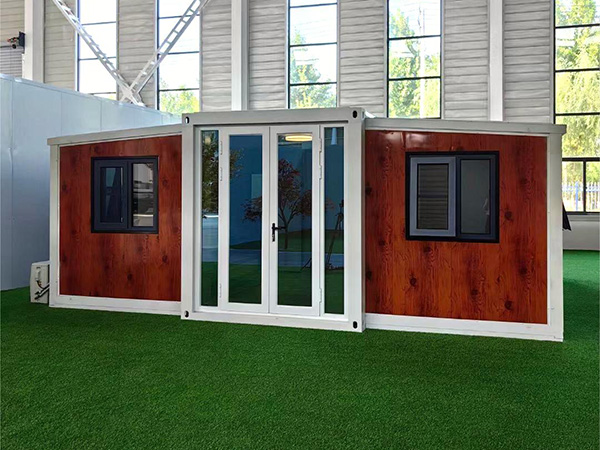
The lifespan of a container house typically ranges from 15 to 30 years for regular use, and can even exceed 50 years with high-quality materials, professional modification, and proper maintenance. Its actual service life is mainly determined by three core factors: container base quality, modification process, and daily use & maintenance conditions, with the original shipping container’s material and anti-corrosion treatment being the foundational factor.
1. Key factor 1: Quality of the original shipping container
Shipping containers are made of Q235B carbon steel (standard) or SS400 steel (Japanese standard) for the main structure, and their inherent anti-corrosion and structural strength directly affect the base lifespan:
One-trip new containers: Never used for sea transportation, with intact original anti-corrosion paint and no structural damage. As the base of a container house, their lifespan can reach 30–50+ years with proper modification.
Used sea containers: Experienced long-term sea transportation, with paint peeling, rust spots, or slight structural wear on the surface (caused by salt spray, humidity, and cargo loading/unloading). After professional derusting, re-spraying anti-corrosion paint, and structural reinforcement, their usable lifespan is 15–25 years.
Damaged/overused containers: With serious deformation, large-area rust, or frame cracks, they are only suitable for temporary simple modification, with a lifespan of 5–10 years (mostly for temporary construction sites, pop-up stores).
2. Key factor 2: Professionalism of the modification process
Improper modification will directly reduce the structural stability and corrosion resistance of the container house, which is a major "short board" affecting the lifespan:
High-quality modification: Includes full derusting (shot blasting/derusting machine), multi-layer anti-corrosion treatment (zinc-rich primer + intermediate paint + topcoat), sealed waterproofing of wall/roof joints, reinforced load-bearing for floor/ceiling renovation, and rational opening of doors/windows (without damaging the main frame). Such modification can extend the lifespan by 10–20 years.
Shoddy modification: Simple painting without thorough derusting, random cutting of the steel frame for doors/windows, poor waterproofing (easy to seep water and cause internal rust), and thin floor panels. This will lead to large-area rust and structural loosening in 3–5 years.
3. Key factor 3: Use environment & daily maintenance
The service life of a container house has a significant correlation with the use environment, and regular maintenance can effectively delay aging:
Mild environment: Indoor, dry areas with low humidity (e.g., northern inland China, Europe and America). With basic cleaning and occasional paint touch-up, the lifespan can reach the upper limit of the base material.
Harsh environment: Coastal areas (salt spray corrosion), southern rainy and humid areas (mildew + steel rust), industrial areas (acid rain, chemical gas). Without enhanced anti-corrosion treatment (e.g., galvanizing, stainless steel cladding), the steel structure will rust at an accelerated rate, reducing the lifespan by 30–50%.
Daily maintenance: Timely cleaning of roof drainage (to avoid water accumulation and seepage), touch-up of paint for scratched/rusted parts, regular inspection of frame joints and waterproof layers. Even in harsh environments, proper maintenance can extend the lifespan by more than 10 years.
4. Additional factors: Structural reinforcement & secondary decoration
If the container house is designed as a multi-layer structure (2–3 floors), professional steel frame reinforcement and load-bearing calculation are required. Unreinforced multi-layer stacking will cause frame deformation and shorten the lifespan by 50% or more.
Secondary decoration (e.g., internal thermal insulation and moisture-proof treatment, external cladding with color steel plates/wood panels) can not only improve comfort but also form a protective layer for the steel structure, extending the lifespan by 5–15 years.
References
GB/T 7714:Islam H, Zhang G, Setunge S, et al. Life cycle assessment of shipping container home: A sustainable construction[J]. Energy and buildings, 2016, 128: 673-685.
MLA:Islam, Hamidul, et al. "Life cycle assessment of shipping container home: A sustainable construction." Energy and buildings 128 (2016): 673-685.
APA:Islam, H., Zhang, G., Setunge, S., & Bhuiyan, M. A. (2016). Life cycle assessment of shipping container home: A sustainable construction. Energy and buildings, 128, 673-685.