




Green Building with Container Homes: The Complete Sustainability Guide 2026
2026-08-14 05:24:32
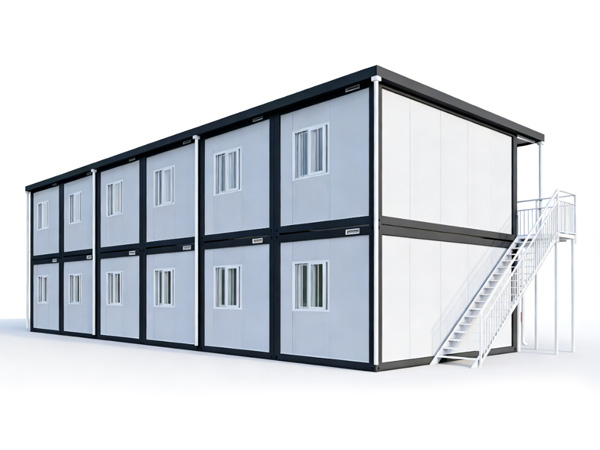
The sustainability claims made for container homes range from entirely accurate to wildly exaggerated, sometimes in the same article. Sorting through them requires understanding what the actual environmental benefits are, where the real trade-offs lie, and which choices in the design and manufacturing process determine whether a specific project is genuinely sustainable or just using green marketing language.
The Core Environmental Case: Why It's Real
The starting point is steel — specifically, Cor-Ten steel, which is what shipping containers are made from. Steel is the most recycled material on Earth by tonnage, with a global recycling rate above ninety percent. When a shipping container reaches the end of its cargo service life, it goes to scrap — unless someone buys it for a building project. Using that steel as a structural building frame saves approximately 3,500 kilograms of steel from potential landfill, and manufacturing from recycled steel uses roughly seventy-five percent less energy than producing it from virgin ore.
That re-use — taking an existing asset with decades of structural life remaining and redirecting it into a new application — is the core of the container home's environmental argument. It's not an abstract or theoretical benefit. It's a concrete redirection of real materials from one use to another.
Container steel is engineered for fifteen to twenty-five years of cargo service, and it remains structurally viable for fifty or more additional years in a building application. The framing material that would otherwise be scrapped after two decades of cargo service instead serves for seventy years. That extended service life is a genuine environmental benefit.
Factory Prefabrication and Material Waste
Factory-controlled production changes the waste equation substantially. On-site conventional construction generates seven to fifteen percent material waste — lumber cut wrong, drywall damaged by weather, packaging materials from dozens of different product deliveries. Factory prefabrication with computer-controlled cutting generates less than three percent material waste. Every sheet of insulation, every panel, every length of framing is cut precisely because it's measured once by a machine rather than estimated and cut by hand in variable conditions.
For a typical 20ft container home project, this represents roughly two to four tonnes of materials that don't end up in landfill. Scaled across a development of fifty or one hundred units, it becomes a meaningful environmental impact — and a meaningful cost saving, since waste disposal isn't free.
Land Use and Site Impact
Container homes have a substantially smaller site impact than conventional buildings. Most installations require only point footings or ground screws, disturbing less than five percent of the building footprint area. Unlike conventional foundations, these are largely reversible: ground screws can be removed, and the site returns to near-original condition. For projects on sensitive land, in flood-prone areas, or where planning conditions require minimal site disturbance, this is a genuine advantage.
Water management is also different. Container foundations allow water to drain naturally around and under the building rather than running off large impervious surfaces. Combined with rainwater collection from the roof — entirely feasible with the flat or slightly pitched roof profiles common on container homes — this creates genuinely sustainable water management that conventional buildings require more complex engineering to achieve.
Where the Real Trade-offs Are
The quality of the container you start with matters enormously. One-trip containers — shipped once from the manufacturer and essentially unused — carry minimal risk of hidden environmental costs. Retired containers require careful inspection for chemical contamination from whatever they carried, structural damage from cargo handling, and pest contamination. The remediation required to make a heavily contaminated retired container livable can consume more resources than starting with a cleaner unit.
The insulation decision is where long-term sustainability is won or lost. A steel box without quality insulation requires constant heating and cooling — and in a building that might be occupied for fifty years, that ongoing operational energy use typically far exceeds the embodied carbon of the initial construction. Quality insulation is the single most important sustainability investment in any container home. The payback period for upgrading from budget insulation to high-performance insulation is typically five to ten years in most climate zones — well within the building's operational life, and a clear net positive for the environment.
Energy Systems and Long-Term Carbon
A well-designed container home with quality insulation, high-efficiency HVAC, and solar generation can approach net-zero operational carbon — meaning it generates as much energy as it consumes over a year. This is not an exotic or experimental configuration; it's an engineering specification that is achievable with current technology and current component costs.
The flat roof of a container home is an ideal solar platform. Panels can be flush-mounted with minimal mounting hardware, and factory pre-wiring makes the electrical installation clean. A three to five kilowatt solar system paired with battery storage covers a substantial portion of a residential container home's energy needs in most climate zones.
The payback calculation for solar on a container home is more favorable than on a conventional building because the building's energy demand is typically lower — the smaller floor area and better-insulated envelope mean less energy is needed to heat and cool.
Dispelling the Myths Worth Dispelling
The claim that container homes are automatically zero-carbon is false, and anyone making it is overselling the case. A container home with poor insulation running on fossil-fuel-generated electricity has a significant carbon footprint. The environmental benefit depends entirely on the design choices made — it is not inherent in the container itself.
The claim that container homes produce no construction waste is also overstated. The reduction is real and significant compared to conventional building, but it's not zero. Additional materials — insulation, finishes, fittings — all contribute some waste during installation. Factory-controlled production dramatically reduces waste; it does not eliminate it.
The claim that all container homes are equally sustainable is perhaps the most misleading. A container home built with poor insulation, sourced from a manufacturer with high-energy production processes, and connected to a fossil-fuel-heavy grid is not meaningfully sustainable regardless of what the marketing says. The quality of the engineering and the manufacturing determines the outcome, just as with any other building type.
What Happens at End of Life
Unlike conventional buildings, which generate demolition waste that goes largely to landfill, a container home can be fully dismantled and relocated for reuse. If a unit reaches the end of its useful life as a building, the steel frame is recycled at greater than ninety percent recovery rate. There is no demolition waste in the conventional sense — the primary structural material returns to the industrial supply chain from which it came.
This end-of-life pathway — reuse first, then full recycling — is genuinely better than conventional demolition. It's one of the underappreciated environmental advantages of container construction, and it's worth factoring into any honest assessment of the overall sustainability picture.