




How Long Do Prefab Container Homes Last? A Practical Durability Guide 2026
2026-08-21 05:04:27
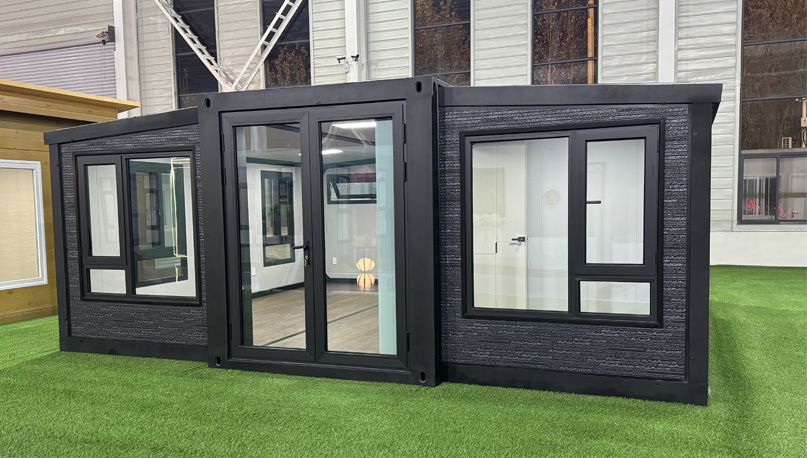
The first question most first-time buyers ask after "how much does it cost?" is "how long will it last?" It's a fair question, and I've been asked it enough times to know that the answers people find online are all over the place — some wildly optimistic, some unnecessarily pessimistic. Here's the honest version, based on what I've seen in the field over the past decade.
What the Numbers Actually Look Like
A shipping container is engineered to last fifteen to twenty-five years as a cargo unit. That engineering standard — Cor-Ten steel, designed for repeated stacking, salt air, and ocean conditions — is the baseline. When that container enters a building application, it inherits that durability, and the factors that limit its cargo lifespan are substantially reduced: no salt air, no repeated stacking stress, no cargo handling impacts.
In a residential or commercial building application, a well-maintained container home lasts fifty to seventy-five years. That is not a marketing claim — it is a reasonable engineering estimate based on what we know about Cor-Ten steel performance in permanent applications. The frame of the container will outlast the fit-out, the insulation, and most of the components inside it by a significant margin.
The qualification "well-maintained" matters. A container home neglected at the coast, with drainage ignored and surface coating allowed to fail, will rust through in ways that compromise structural integrity within fifteen to twenty years. A container home maintained in a temperate climate with periodic surface inspection and repair will easily reach seventy-plus years.
What Corrosion Actually Looks Like in Practice
Cor-Ten steel — the weathering steel used in shipping containers — forms a protective oxide layer on its surface that slows corrosion dramatically once the initial layer has developed. This is different from regular steel, which corrodes continuously. In a building application, Cor-Ten's self-protecting properties are an advantage, not a concern.
Where containers fail is at cut edges, weld points, and areas where the protective coating has been damaged or worn through. When you cut an opening for a window or door, you expose bare steel. When you weld attachments, you burn through the coating. These areas need proper treatment — primer, touch-up coating, and ongoing inspection — or they become the starting points for more significant corrosion.
In coastal environments, the risk profile changes. Salt air accelerates corrosion at any point where the protective surface is compromised. Hot-dip galvanization under the paint system is the mitigation — it provides a secondary layer of protection even if the surface coating fails. If you're specifying a container home for a coastal deployment, galvanization is not optional.
The Components That Age Faster Than the Frame
The container frame is the most durable part of a container home. Most other components have shorter service lives, and understanding this helps with maintenance planning.
Exterior coatings typically last ten to fifteen years before needing reapplication. The specific product matters: a high-quality industrial coating system lasts longer than a standard paint system. Budget coatings applied as a cost-saving measure are a false economy — the reapplication cost comes sooner and the protection is weaker in the interim.
Insulation degrades over time, particularly if it gets wet. EPS insulation, if it gets damp, can lose a portion of its R-value permanently. Rock wool is more tolerant of occasional moisture. Spray foam, once cured, is relatively immune to moisture damage but can degrade under sustained high temperatures. Budgeting for insulation replacement at the twenty-five to thirty-year mark is prudent for long-term planning.
Roofing materials — whether the container's original corrugated steel roof or a modified roof system — typically need replacement every twenty to thirty years. The flat or near-flat profile of container roofs means water pooling is a risk in heavy rainfall areas, and the roof coating is the primary defense.
Windows and doors — the mechanical components, hinges, seals, and locking hardware — wear out faster than the frame and typically need significant attention around the fifteen to twenty-year mark.
Maintenance: What Actually Needs Doing
The maintenance requirements for a container home are lower than for a conventional wood-frame building, but they are different in kind. A conventional house needs regular attention to the roof, the cladding, the windows, and the structure. A container home shifts more of that maintenance burden to the coating system — painting, rust inspection, touch-up — and less to the structural components.
The annual maintenance checklist I recommend to buyers is straightforward: inspect all exterior coating for chipping, scratches, or rust spots — especially around cut edges, welds, and fastener points — and touch up any exposed steel immediately; check drainage around the perimeter of the unit to ensure water is flowing away from the base, not pooling against the steel; inspect window and door seals for wear, and replace weatherstripping as needed; and check roof coating and any penetrations (vents, skylights, solar mounts) for signs of leakage.
This takes a couple of hours once a year. Skipping it for two or three years allows problems to develop that are more expensive to fix. Staying on top of it keeps maintenance costs modest and extends the building's life substantially.
How This Compares to Conventional Buildings
A well-built conventional wood-frame house, maintained properly, lasts seventy to one hundred years. A poorly maintained one shows structural problems within thirty. The range is similar for container homes — the difference is where the maintenance effort goes.
The comparison that matters more is cost over time. A container home's maintenance costs over fifty years are typically lower than a wood-frame building's — there is no cladding to replace, no roof truss to worry about, no brick pointing to maintain. The steel frame doesn't rot, warp, or attract termites. What you spend on coating inspection and touch-up is offset by what you don't spend on the ongoing repairs that conventional buildings require.