




Modular Container Construction for Remote Work Camps
2026-07-11 01:31:09
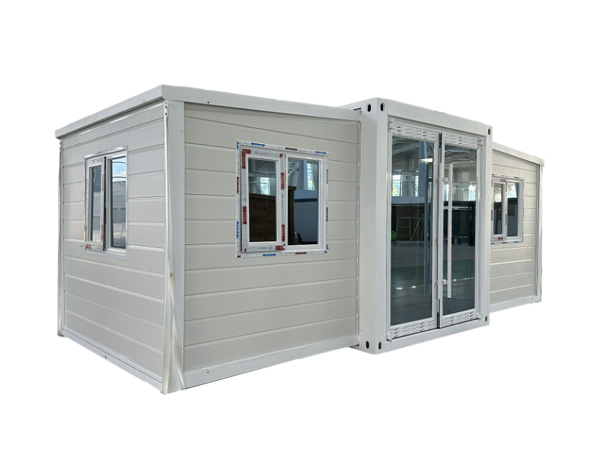
When you're operating in the middle of nowhere—literally—the last thing you want to worry about is whether your crew has a safe place to sleep tonight. Remote work camps for mining, oil, and gas operations face challenges that would make most traditional construction methods throw in the towel. Extreme temperatures, zero infrastructure, and the need to relocate at a moment's notice? That's where modular container construction steps in and absolutely crushes it.

Why Remote Industries Are Switching to Container-Based Camps
The numbers don't lie. Mining companies reported a 40% reduction in accommodation setup time after switching to container-based solutions. But it's not just about speed—though that matters when you're burning money every day your crew isn't productive. It's about durability. When your worksite is 200 kilometers from the nearest town and temperatures swing from -30°C to +45°C, you need housing that can take a punch and keep standing.
Shipping containers were literally engineered to survive ocean voyages stacked nine high in hurricane conditions. That's the kind of resilience remote operations need. A manufacturer who understands these demands can customize containers with reinforced insulation, heavy-duty HVAC systems, and structural modifications that would be prohibitively expensive with traditional building methods.
Off-Grid Solutions That Actually Work
Here's the thing about remote camps—you can't exactly call an electrician when the power goes out. Modern container accommodations come equipped with solar panel arrays, battery storage systems, and water recycling units that make traditional "roughing it" look prehistoric. Some setups even include greywater treatment systems that let you reuse water for irrigation or secondary cleaning purposes.
The factory-direct approach means these systems are pre-installed and tested before the units ever leave the factory. No discovering on deployment day that your solar inverter isn't compatible with your battery bank. Everything's been rack-tested, vibration-tested, and weather-tested in controlled conditions.
Durability That Survives Harsh Environments
Let's talk corrosion. If your camp is near the coast or in a high-humidity region, standard steel containers might struggle. But specialized suppliers apply marine-grade coatings and cathodic protection systems that extend container lifespan to 30+ years even in salt-spray environments. We're talking about housing that outlasts the mine itself in some cases.
Then there's the wind. Container homes can be engineered to withstand wind loads up to 150 mph when properly anchored. For tornado-prone regions or areas with extreme seasonal storms, that's not just a nice-to-have—it's a regulatory requirement. Manufacturers who serve the remote camp market understand these codes intimately and can provide documentation proving compliance with local building standards.
The Factory-Direct Advantage
Working directly with a supplier rather than going through multiple intermediaries changes the game entirely. First, you get cost transparency. No mystery markups from distributors who've never set foot in a worksite. Second, customization happens faster. Need blast-resistant modifications for an oil field? A factory-direct manufacturer can engineer that solution in-house rather than outsourcing to three different contractors.
There's also the logistics advantage. Container camp modules are designed to stack efficiently on standard flatbed trucks or shipping containers. A manufacturer experienced in remote deployments will optimize the load configuration to minimize shipping costs—sometimes fitting 20% more units per shipment compared to traditional prefab buildings.
Real-World Case: The Australian Outback Deployment
Consider a recent project in Western Australia's Pilbara region. A mining company needed to house 150 workers in an area where ambient temperatures regularly exceed 50°C (122°F). Traditional dongas (portable cabins) were failing within 18 months due to thermal stress. The solution? Double-insulated container modules with reflective roofing, 3-ton air conditioning units, and thermal breaks that prevented heat transfer from the exterior walls.
Three years later, those units are still performing within specification. The mining company calculated their cost-per-bed-night dropped by 62% compared to their previous accommodation strategy. That's the kind of real-world validation that makes CFOs sit up and take notice.
Customization Options for Industry-Specific Needs
Not all remote camps are created equal. A fly-in/fly-out (FIFO) camp for executive staff has different requirements than a 24/7 operational base camp. Leading manufacturers offer modular configurations that can include:
Blast-resistant panels for explosive environments
Negative pressure rooms for medical isolation
Commercial kitchens rated for continuous operation
Reinforced flooring for heavy equipment storage
EMI-shielded rooms for sensitive communications equipment
The modular nature means you can start with basic accommodation and add specialized modules as your camp expands. It's like building with Lego blocks, except each block is a fully outfitted living or working space.
Future-Proofing Your Remote Operations
The remote work camp industry is evolving rapidly. New insulation materials, smarter energy management systems, and improved corrosion protection are hitting the market every year. By partnering with an innovative manufacturer, you're not just buying yesterday's technology—you're positioning your operation to adopt tomorrow's solutions.
Some suppliers now offer "smart container" packages with IoT sensors that monitor everything from air quality to structural integrity. Imagine getting an alert on your phone that Unit 47's air filter needs replacement before anyone complains about dust. That's the level of operational intelligence modern container camps can deliver.
References
International Organization for Standardization. (2018). ISO 1496-1: Series 1 freight containers — Specification and testing — Part 1: General cargo containers for general purposes. Geneva: ISO.
Australian Building Codes Board. (2019). National Construction Code 2019: Volume Two — Housing provisions. Canberra: ABCB.
U.S. Department of Energy. (2020). Building energy efficiency standards for modular construction. Washington, DC: DOE Publications.
Mining Safety and Health Administration. (2021). Remote camp accommodation standards for extreme environments. Technical Report MS-2021-04. Pittsburgh: MSHA.
International Maritime Organization. (2017). Guidelines for the structural maintenance of shipping containers reused for habitation. London: IMO Maritime Safety Committee.