




From Shipping Container to a Finished Home: The Complete Journey in 2026
2026-09-04 10:36:27
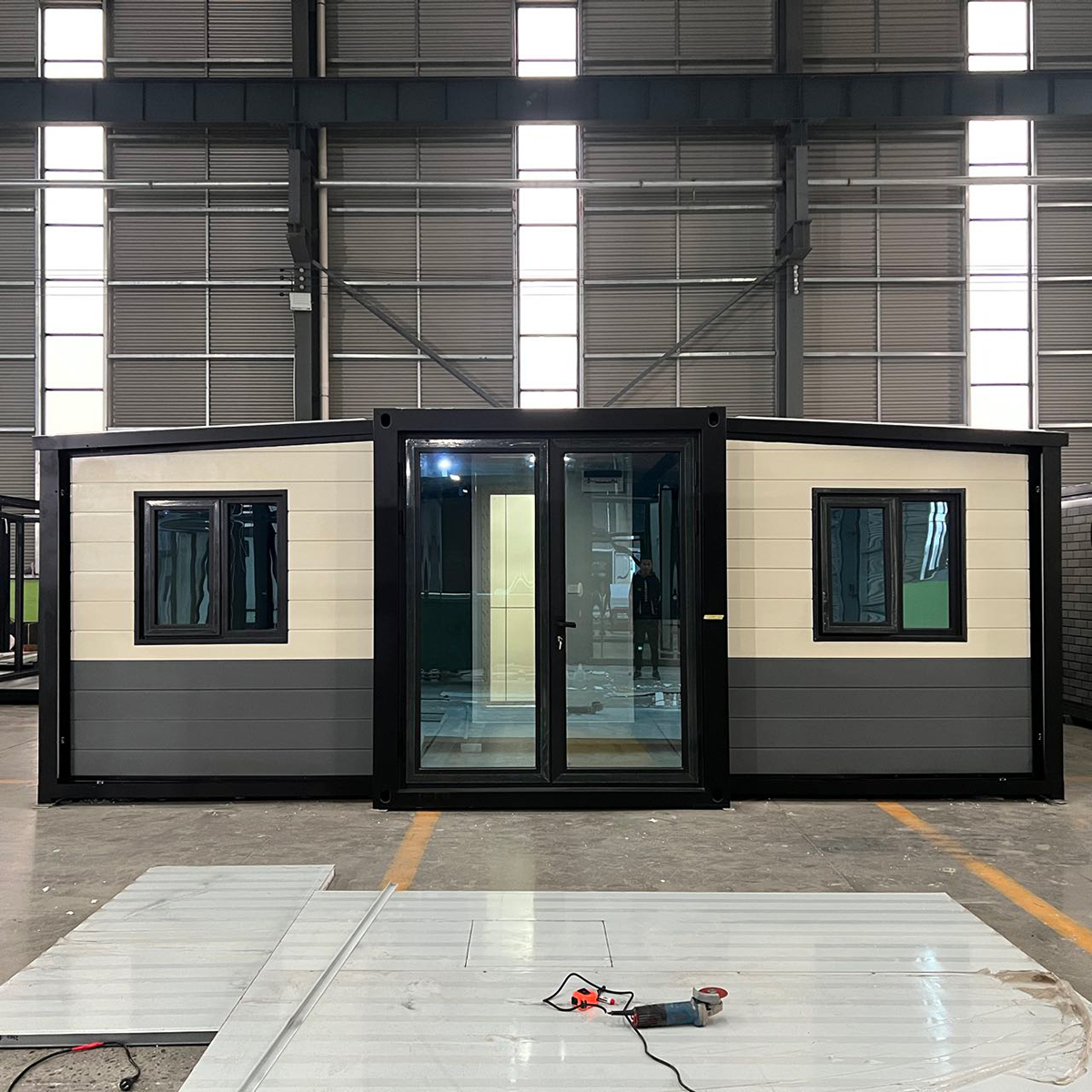
I've had enough first-time buyers ask me what actually happens to a shipping container between when they place an order and when it arrives at their site that I decided to write this article. The process is less mysterious than it might seem, but understanding the stages helps buyers ask better questions, recognize quality when they see it, and avoid the surprises that come from not knowing what to look for at each step. Here's the complete journey as I've seen it from the factory floor to the finished product.
Stage One: Finding the Right Container
The journey begins with finding and selecting the right container for the project — or, in many cases, specifying a new-manufactured container rather than a retired cargo unit. This decision has more implications than most buyers realize at the outset.
One-trip containers are manufactured in China and shipped to their first destination — typically North America, Europe, or Australia — loaded with cargo, and then sold. They arrive essentially new: structurally sound, free of contamination, with no cargo history that might have left chemical residue or pest infestation. For buyers who want maximum quality assurance, one-trip containers are worth the premium over retired cargo units. The price difference is typically fifteen to thirty percent, which in the context of a total project budget is often a small additional investment for significant additional certainty.
Retired cargo containers come with a history that needs to be assessed carefully. The floor boards are the first thing to inspect: dark staining, odor, or soft spots indicate cargo that leaked or spilled. The walls and ceiling show cargo impact damage — dents, holes, repaired sections. The structural corner posts and floor framework are usually sound, but floor boards are commonly the component that determines whether a retired container is worth buying. The inspection process is straightforward but requires someone who knows what they're looking at — a 15-minute inspection by an experienced inspector is a worthwhile investment before purchasing retired containers.
New-manufactured structural shells — containers built specifically for building applications rather than cargo use — are an option offered by some manufacturers. These have the structural characteristics of a shipping container but without the cargo service history. They cost more than either one-trip or retired containers but offer the cleanest starting point for a high-specification residential project.
Stage Two: Manufacturing and Modification
For most buyers, the container arrives at the factory already selected and sourced. The factory manufacturing process for a prefab container home involves several parallel workstreams that come together in the final assembly.
Structural modification — cutting window and door openings, reinforcing cut edges with steel channel sections, installing additional structural framing — happens first. This is the most technically demanding stage, and it's where the quality difference between suppliers is most visible. Cut edges should be treated with rust-inhibiting primer immediately after cutting. Reinforcement channel sections should be welded, not just bolted — welded connections are significantly stronger under load. The quality of the structural modification work determines how well the container holds up over time, particularly under the stress of transportation and in areas with wind loads.
Insulation installation runs in parallel with structural work. For spray foam, the application happens after the structural work is complete and before any interior finishing. For batt or board insulation, a stud frame or mounting system is installed first, then the insulation is fitted. Quality of installation matters more here than most buyers anticipate: gaps around batt insulation, compression of insulation by fasteners, and voids in spray foam all reduce effective thermal performance in ways that are hard to detect after the interior finish is applied.
Electrical rough-in — conduit runs, junction boxes, outlet and switch positions — happens before the interior finish is applied. The wiring should be in conduit where it passes through steel, properly grounded, and the circuit design should reflect the intended use of each space. For buyers specifying solar pre-wiring or smart home systems, this is the stage where that work happens.
Plumbing rough-in — waste pipe runs, water supply lines, and any penetrations through the container floor or walls — runs alongside electrical work. The positioning of bathroom fixtures, kitchen fixtures, and any external water connections needs to be finalized before this stage is complete; changing it later is expensive and disruptive.
Stage Three: Interior and Exterior Finishing
Interior finishing — wall panels, ceiling panels, flooring, fixtures, and fittings — is where the container stops looking like a steel box and starts looking like a building. The quality range here is enormous, and it shows in the final result.
Wall panel options include PVC panels (the most cost-effective, easy to clean, and available in a range of colors and finishes), laminated panels (more design flexibility, better visual quality, moderate cost), timber cladding (warm aesthetic, requires more maintenance), and steel panel systems (consistent with the container aesthetic, durable, increasingly popular in commercial applications).
Flooring installation follows the wall finishing. Vinyl plank flooring is the most practical choice for most container home applications — it handles the slight flex of the container floor better than rigid flooring materials, is waterproof, and comes in convincing wood-look and stone-look finishes. Laminate flooring works well if the container floor is very level. Ceramic tile can be used but requires a proper decoupling membrane to handle the thermal movement of the steel floor.
Exterior finishing — cladding, painting, or coating — is the final production stage before shipping. Timber cladding, composite panel cladding, brick slips, and painted coating systems all produce different aesthetic results. The choice depends on the desired look, the budget, and the climate: in wet climates, timber cladding requires more maintenance; in dry, sunny climates, painted coatings need UV-resistant formulations to prevent rapid degradation.
Stage Four: Quality Control and Testing
A quality factory operates quality control checkpoints throughout the production process. The most important ones from the buyer's perspective are: structural inspection after modification work (confirming that welds are sound, reinforcement is properly installed, and the frame hasn't been compromised); insulation inspection before wall finishing (confirming no gaps, voids, or compression); electrical testing after rough-in and again after finishing (confirming all circuits are properly connected, grounded, and functional); plumbing pressure testing after rough-in (confirming no leaks under pressure); and final inspection before shipping (a room-by-room walkthrough confirming everything matches the specification and nothing has been damaged during the finishing process).
For buyers who can arrange it, a factory inspection visit — or a video walkthrough if travel isn't practical — before the final payment is one of the best investments in quality assurance you can make. Seeing the actual production process and the actual unit being built, rather than sample units in a showroom, reveals more than any documentation can.
Stage Five: Shipping and Delivery
The container units are secured for shipping — either in their folded configuration for folding houses, or as standard containers for non-folding units — and transported to port. Loading at the factory involves careful securing to prevent movement during road transport. At port, containers are loaded into containers ships and secured for ocean transit.
The shipping timeline varies by destination but is typically three to eight weeks. The final leg — from destination port to site — requires coordination between the buyer, the shipping line or freight forwarder, and the local transport company. Unloading at site requires a crane or forklift with adequate capacity and access for the equipment. For multiple units, planning the arrival sequence in advance — which unit goes where, and how the crane positions for each — prevents costly delays on delivery day.
Stage Six: On-Site Installation and Commissioning
On-site, the units are positioned — lifted from the truck by crane and set onto the prepared foundation. For folding units, unfolding happens next. For standard containers, stacking and connecting follows. Once positioned, the units are leveled, secured to the foundation, and the connections between multiple units — structural connections, electrical inter-connects, and plumbing connections — are completed.
Commissioning is the final stage: HVAC startup and thermostat calibration, electrical circuit verification and switchboard labeling, plumbing pressure test and hot water system commissioning, and a final walkthrough confirming everything is operational and matches the specification. This is also when any damage that occurred during shipping is identified and addressed.