




Container Home Plumbing and Electrical Systems: What You Need to Know 2026
2026-08-31 08:06:41
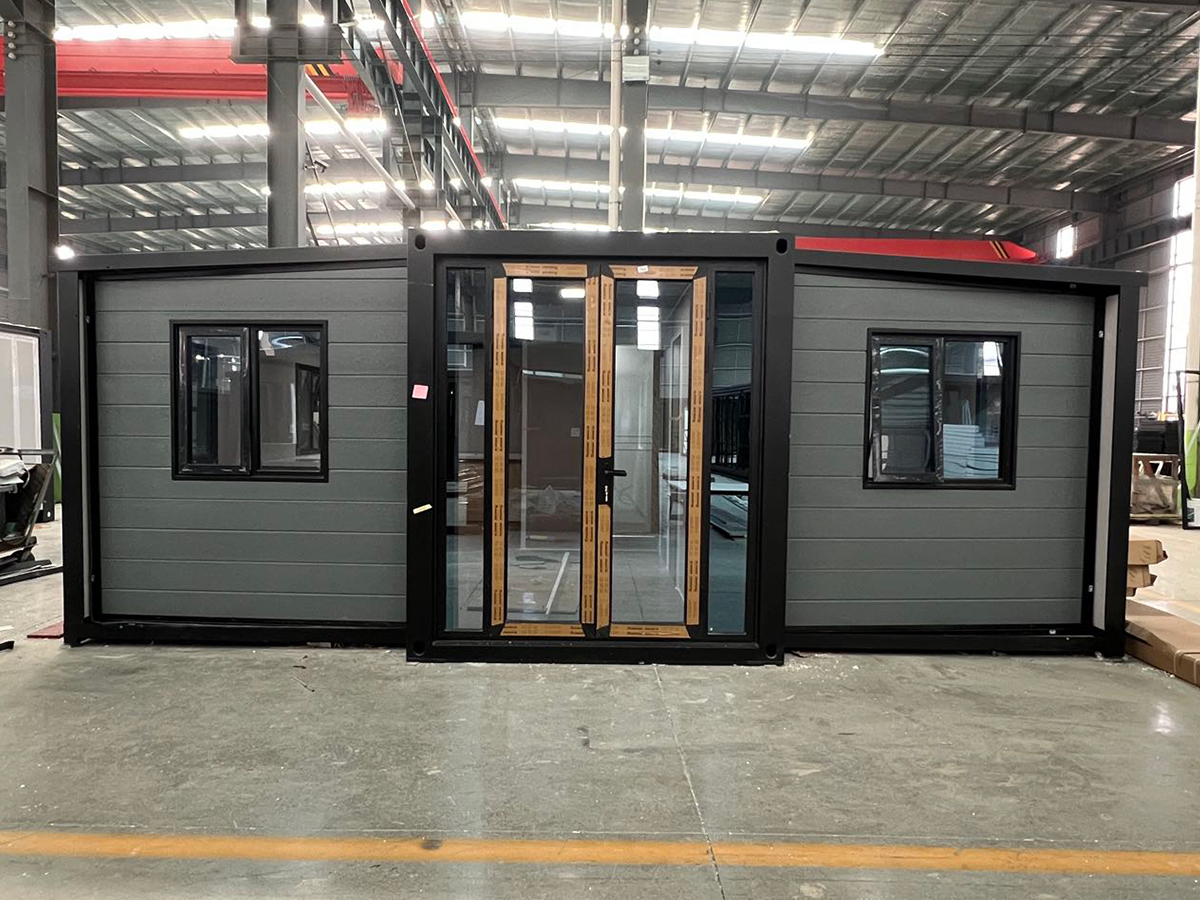
When people ask me what they underestimate most in a container home project, plumbing and electrical systems come up more than almost anything else. These are the systems that determine whether your home is genuinely comfortable or just technically habitable, and getting them right requires more attention than most buyers expect going in. This guide covers the key decisions and how to approach them.
Water Supply: Connection Types and What Each Means
Most container home deployments connect to a municipal water supply — a standard connection to the local water main, with a pressure reducing valve to protect the internal plumbing from pressure spikes. This is the simplest approach and works well where a municipal supply is available and reliable.
Where municipal supply isn't available, the options are borehole water or rainwater collection. Borehole water requires a pump, a filtration system, and testing to confirm potability. The installation cost is significant — typically $5,000 to $15,000 depending on depth and local geology — but the ongoing cost is low if the borehole yield is adequate. Borehole water typically requires treatment for mineral content that affects taste and can affect plumbing fixtures over time.
Rainwater collection is increasingly popular in regions with adequate rainfall. A 40ft container roof collects approximately 500 liters of rainwater per inch of rainfall across its surface area. With proper first-flush filtration, UV treatment, and a storage tank, this is sufficient for non-potable uses — toilet flushing, irrigation, laundry — and after additional treatment, for drinking. The cost of a complete rainwater system is typically $3,000 to $8,000 and the water is free thereafter. In dry climates, it's a supplement rather than a primary source.
For off-grid container homes — remote sites, developing-world deployments — the practical choice is usually a combination of rainwater collection with a borehole backup or a large storage tank with municipal or borehole fill capability for dry season coverage.
Drainage and Waste Water
Container homes use standard residential drainage systems — the waste water flows by gravity to a connection point, from where it goes to a municipal sewer, a septic system, or a packaged treatment plant. The key consideration is the location of the drainage exit point on the container and its relationship to the site's topography.
For sites with municipal sewer access, the drainage installation is straightforward: connect the container's waste outlets to the sewer connection point, typically through a sealed penetration in the container floor or wall. P-traps and vent stacks are the same as conventional residential plumbing.
For off-grid sites, a septic system or packaged biological treatment plant is required. The specific type and size depends on the number of occupants and the site conditions — soil percolation rate, available area, and local regulations. A packaged treatment system — essentially a compact biological treatment plant that treats effluent to a standard suitable for irrigation discharge — is often the most practical option for container home sites. It requires power (a small amount, typically 20 to 50 watts continuously) but handles all waste water to a standard that meets most regulatory requirements.
Grey water — waste water from showers, sinks, and laundry — can be separated from black water (toilet waste) and used for irrigation after simple filtration. This reduces the volume requiring treatment and provides free water for garden irrigation. The cost of a grey water system is modest and the savings on water bills are measurable over time.
Electrical Systems: What to Specify
For container homes shipped internationally, electrical systems need to be specified for the destination country's standards. The main variables are socket types (US NEMA, European Schuko, UK BS 1363, Australian AS/NZS 3112), voltage and frequency (110V at 60Hz or 220V at 50Hz), and circuit protection standards. A quality supplier will configure the electrical system to the destination country's standards; this needs to be specified clearly at the order stage.
For residential container homes, the electrical load is similar to a conventional house of equivalent size. A 20ft container home typically requires a 32 to 50 amp main supply; a 40ft unit, 50 to 80 amps. Split-circuit design — separate circuits for high-load appliances, lighting, and general outlets — is standard in quality prefab units.
Solar integration is the most impactful electrical upgrade available. A three to five kilowatt solar system with battery storage can cover seventy to ninety percent of a container home's electricity needs in most temperate climate zones, and can approach one hundred percent in optimal conditions. Factory pre-wiring for solar — specifying this at the order stage rather than retrofitting it — costs substantially less and produces a cleaner installation. If solar is in your plans, tell the factory upfront.
Off-Grid Electrical Systems
For genuinely remote deployments — research stations, remote work camps, off-grid residential — the electrical system needs to be designed around the power source rather than around grid connection.
Solar with battery storage is the most common approach. System sizing depends on daily energy consumption, available solar resource (which varies by latitude and climate), and the desired autonomy level — how many days of battery storage in case of poor solar conditions. A typical off-grid container home with a 5kW solar system and 10kWh battery storage provides sufficient power for lights, refrigeration, phone charging, laptop work, and a efficient HVAC system, with three to five days of autonomy under typical conditions.
Generators are typically used as a backup for off-grid systems rather than a primary power source, due to fuel cost and maintenance requirements. A diesel or propane generator sized to cover peak demand rather than average load — running for an hour or two each day to top up batteries — is more efficient than sizing it for continuous operation.
Wind power supplements solar in regions with consistent wind resources. It adds complexity and maintenance requirements, and is generally worth considering only where solar resource is limited — high-latitude sites with long winters, for example, or coastal sites with consistent wind.
Hot Water: Systems Compared
Hot water is one of the highest energy-consuming systems in a residential container home, and the choice of hot water system affects both comfort and operating cost significantly.
Instantaneous electric hot water heaters — which heat water on demand rather than maintaining a tank — are the most energy-efficient option for container homes with moderate hot water use. They eliminate standby heat loss from a storage tank, are compact enough to fit in a small plant room or cupboard, and deliver hot water at consistent temperature as long as the flow rate stays within the heater's capacity.
Heat pump water heaters are more expensive to install but use significantly less energy — approximately two to three times less electricity than a conventional electric tank. They work by extracting heat from the surrounding air and transferring it to the water, which makes them very efficient in temperate to warm climates. In cold climates, their efficiency drops substantially.
Solar thermal hot water — using the sun to heat water directly through solar thermal panels — is an excellent complement to electrical hot water systems in sunny climates. The installation cost is moderate, and the energy is completely free once installed. In sunbelt regions — southern Europe, Australia, the Middle East, southern US — a solar thermal system provides most of a household's hot water needs for eight to ten months of the year.