




Will repeatedly unfolding and folding expandable container houses affect their structural safety?
2026-02-05 04:20:06
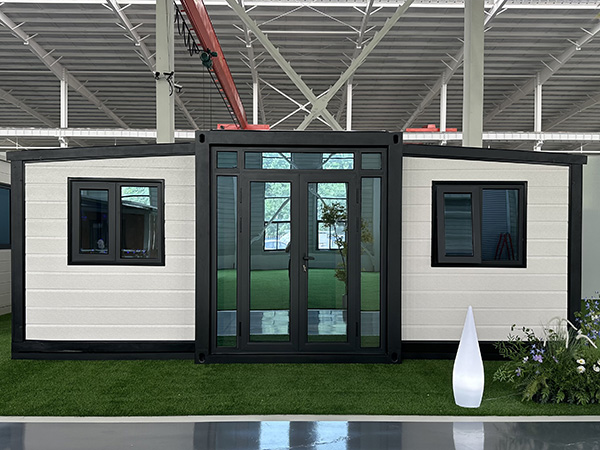
Under normal operation and regular basic maintenance,the expandable container house can be repeatedly unfolded and folded without affecting its structural safety.Its core moving structures,such as the telescopic frame,hinges,and locking components,have undergone repeated fatigue testing during the design phase(≥5000 cycles of routine testing),far exceeding the frequency of folding during daily use.Only under conditions of improper operation,prolonged lack of maintenance,or unrepaired damaged components will safety hazards such as structural loosening and jamming occur.The following are specific explanations and key safety points:
I.The design itself is adapted to repeated folding,ensuring basic structural safety.
The core moving components of the expandable container house(telescopic guide rails,stainless steel hinges,hydraulic push rods,and mechanical locking pins)are all made of industrial-grade high-strength materials and undergo rigorous repeated telescopic/folding fatigue testing before leaving the factory,simulating years of daily use to ensure that components will not deform or break due to regular folding.Simultaneously,the stress points of the telescopic frame are reinforced,and after unfolding,it is rigidly connected to the main container body through multiple locking points,forming a stable stress structure.After folding,it returns to the overall shape of a standard container,with impact resistance and deformation resistance consistent with ordinary container houses.
II.The real factors affecting structural safety are these three types of non-design factors:
Improper Operation:Failure to level the cabinet during unfolding/folding,resulting in unilateral stress;forcefully stretching/retracting the frame(forcibly pushing or pulling a hydraulic model manually,or excessively prying a manual model);forcibly pulling or folding without unlocking all limit pins,directly causing guide rail deformation,hinge breakage,and frame weld cracking;
Lack of Maintenance:Rust and jamming at movable guide rails and hinges,hydraulic oil leaks,and aging and detaching sealing strips can cause uneven stress on the frame during folding due to component jamming,leading to structural loosening;
Failure to Repair Damaged Components:Continuing to use damaged locking pins,limit blocks,or leveling components for the support legs will prevent the structure from locking completely after unfolding,resulting in cabinet wobbling and reduced load-bearing capacity.
III.Three Simple Maintenance Tips to Ensure Structural Safety After Multiple Folds
Basic maintenance is all that's needed in daily use to avoid most structural problems.The operation requires no professional expertise and is quick:
Must-Do After Folding/Unfolding:Apply anti-rust lubricant to the telescopic guide rails,hinges,and locking pins(every 10-20 folds/or every 3 months)to prevent rust and jamming;
Regular Inspection:Before each operation,check the locking pins,limit blocks,and hydraulic connectors(hydraulic type)for damage,deformation,or loosening.Replace any damaged parts with original factory parts(standardized,readily available);
Proper Storage:After folding,tighten the external master lock to completely secure the telescopic frame to the main body,preventing wear and tear from shaking or collisions of internal moving parts during transport or storage.
Additional information:If the following situations occur,use must be stopped immediately and the device inspected:If the guide rail is jammed,the frame makes abnormal noises,the weld is cracked,the locking parts cannot be fully fastened,or the box is tilted on one side after unfolding,it indicates that there is a hidden danger in the structure.Operation must be stopped immediately,and the device must be inspected and repaired before it is used again to avoid subsequent safety accidents such as collapse or deformation.
References
GB/T 7714:Fenci G E, Currie N G R. Deployable structures classification: A review[J]. International journal of space structures, 2017, 32(2): 112-130.
MLA:Fenci, Giulia E., and Neil GR Currie. "Deployable structures classification: A review." International journal of space structures 32.2 (2017): 112-130.
APA:Fenci, G. E., & Currie, N. G. (2017). Deployable structures classification: A review. International journal of space structures, 32(2), 112-130.