




How Are Folding Houses Used in Remote or Temporary Settlements?
2026-02-05 03:45:44
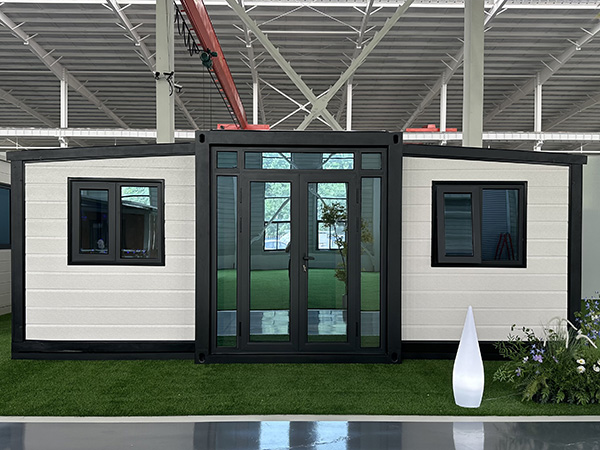
How Are Folding Houses Used in Remote or Temporary Settlements?
Folding houses are a core temporary housing and functional space solution for remote and temporary settlements,perfectly matching the core characteristics of these scenarios—unpredictable sites,limited professional resources,urgent space demand,and potential mobility needs.Their use in such settlements is highly flexible and scenario-oriented,covering basic living accommodation,on-site functional services,and supporting infrastructure construction,and is deployed in a standardized,scalable way to adapt to the sparse population,harsh environments,and lack of fixed construction conditions in remote areas,as well as the temporary,dynamic nature of temporary settlements(e.g.,disaster resettlement,construction camps,expedition bases).Below is a detailed breakdown of their specific applications,deployment methods,and adaptive optimizations in these settlements:
1.Core Application:Basic Living Accommodation for Residents/Workers
This is the most common use in remote and temporary settlements,addressing the fundamental demand for safe,livable closed space—far superior to simple tents in terms of comfort and durability,and more practical than modular/container houses in terms of transport and installation.
Remote area settlements:For permanent or semi-permanent remote settlements(e.g.,border guard posts,mountain village relocation,pastoral nomad fixed points,polar/ocean expedition bases),folding houses are deployed as individual living units(10–20㎡)for single or family use.They are pre-equipped with basic living fittings(lighting,sockets,ventilation fans,simple beds/storage)and upgraded with thickened thermal insulation panels,anti-corrosion frames,and solar power systems(for off-grid remote areas)to adapt to extreme temperatures,high wind,and no grid power supply.
Temporary resettlement camps:For disaster relief(earthquakes,floods,landslides)or urban construction temporary resettlement,folding houses are batch-deployed to form centralized living zones.Units are arranged in rows with simple walkways between them;basic shared facilities(e.g.,public restrooms,water supply points)are set up with customized larger folding house units(20–30㎡),meeting the collective living needs of displaced persons with fast batch deployment.
Long-term construction camps:For remote infrastructure projects(highways,railways,hydropower stations,mining),folding houses serve as dormitories for construction workers—deployed in small clusters near the construction site,with each unit accommodating 2–4 people,and matched with functional units(canteens,rest rooms)to form a complete temporary living camp.When the construction section moves,the units can be quickly folded,relocated,and redeployed,matching the dynamic construction schedule.
2.Key Supporting Use:On-Site Functional Service Spaces
Remote and temporary settlements lack basic public services and on-site operational support;folding houses are customized into special functional units to fill this gap,with no need for complex on-site renovation—realizing"unfold and use"for professional services.
Basic public services:Customized as temporary clinics(equipped with simple medical beds,disinfection cabinets,first-aid kits),rural post stations,mobile police offices,and civil affairs service points,providing medical treatment,logistics,public security,and administrative services for remote settlement residents.For example,in mountainous remote areas with no fixed medical facilities,a 15㎡folding clinic can meet the daily diagnosis and treatment needs of nearby villages.
On-site operational support:For construction,exploration,and rescue teams in temporary settlements,deployed as site offices(equipped with desks,file cabinets,communication equipment),material storage rooms(with anti-theft locks and moisture-proof panels),and command posts(with integrated wiring for communication and monitoring).These functional units are placed close to the operation area,enabling real-time on-site command and material management.
Daily life supporting services:Customized as small canteens,grocery stores,and public restrooms for centralized temporary settlements(e.g.,disaster resettlement camps,construction worker villages),solving the daily life needs of residents/workers.Shared functional units are usually larger(20–30㎡)or formed by splicing 2 small folding house units,with pre-laid water and drainage pipes(for canteens/restrooms)in the factory.
3.Scalable Deployment:Splicing&Cluster Layout for Large Space Demands
For remote/temporary settlements that need larger integrated spaces(e.g.,a collective activity room,a large medical aid station,a multi-person office),folding houses realize modular splicing and cluster layout on the premise of retaining their mobility advantage—no need for special connecting structures,and the spliced units can still be folded and relocated separately.
Single-unit splicing:Two or more standard folding house units are spliced side by side/end to end with dedicated detachable connecting parts(sealing strips,fixed buckles)to form a larger open space(30–50㎡),which is used as a collective activity room for disaster resettlement camps,a multi-person meeting room for construction site offices,or a large treatment room for temporary medical stations.The connecting parts ensure waterproofing and windproofing between units,and the overall structure remains stable.
Cluster layout with functional zoning:In large-scale temporary settlements(e.g.,a disaster resettlement camp with hundreds of people,a large construction worker village),folding houses are divided into living zones,service zones,and operation zones according to functions,with simple gravel or wooden walkways built between zones for traffic.This zoning layout makes the settlement orderly,and each zone can be independently relocated or expanded as needed—for example,adding more living units when the number of resettled persons increases,or moving the operation zone to a new construction section.
4.Adaptive Optimization:Customization for Remote/Temporary Settlement Environments
Remote areas often have harsh natural environments(low temperature,strong wind,high salt spray,no grid power,water shortage),and temporary settlements have dynamic use needs;folding houses are targetedly customized and upgraded in the factory to adapt to these special conditions,ensuring stable use without relying on on-site professional modification.
Environmental adaptability upgrades:Use marine-grade aluminum alloy/stainless steel frames for coastal remote areas(anti-salt spray corrosion);upgrade to thickened rock wool/XPS thermal insulation panels and add indoor electric heaters for high-altitude/cold remote areas(low temperature resistance);install reinforced wind bracing and anti-tip devices for open remote areas with strong winds(structural stability);use anti-UV and anti-abrasion panel coatings for high-altitude areas with strong sunlight(slow material aging).
Off-grid energy and water supply:Pre-install solar panels+energy storage batteries on the roof for remote areas without grid power,meeting the power demand of lighting,sockets,and small electrical appliances;configure rainwater collection systems(roof gutters+water storage tanks)and moisture-proof floor panels for water-scarce remote areas,realizing simple self-sufficiency in water use.
Simplified maintenance and durability:Use standardized,detachable components for all parts,and match the settlement with a small number of spare parts(hinges,sealing strips,fasteners);the structure is designed for simple daily maintenance(e.g.,lubricating hinges,tightening fasteners)that can be completed by ordinary staff,adapting to the lack of professional maintenance personnel in remote settlements.
5.Post-Use Disposal:Flexible Recycling&Relocation
A key advantage of folding houses over traditional fixed buildings in remote/temporary settlements is their recyclability and mobility—solving the problem of"waste of fixed buildings after the settlement is disbanded".
Temporary settlement disbandment:When the emergency(disaster relief)or project(construction,exploration)is completed and the settlement is disbanded,folding houses can be quickly folded,inspected,and transported back to the warehouse for storage with ordinary trucks—no on-site demolition,no construction waste,and no damage to the original site(critical for ecologically fragile remote areas such as grasslands and high mountains).
Secondary redeployment:Stored folding houses can be taken out and redeployed to other remote/temporary settlements when needed(e.g.,another disaster relief site,a new construction project),realizing the recycling of housing resources and reducing the cost of building temporary settlements multiple times.
Permanent reservation for remote small settlements:For remote small settlements with long-term but small-scale space needs(e.g.,a border guard post with only 2–3 people,a mountain village service point),folding houses can be permanently placed on-site with regular maintenance(lubrication,seal replacement)and material upgrades,serving as a low-cost fixed space solution for decades.
Core Advantages of Folding Houses in These Settlements(vs.Other Housing Solutions)
Compared with tents,modular houses,container houses,and traditional brick-and-concrete buildings,folding houses have irreplaceable advantages in remote/temporary settlements:
Faster than modular/container houses(30 mins–5 hours setup vs.days of installation/splicing);
More comfortable and durable than tents(closed structure with thermal insulation/waterproofing vs.poor weather resistance);
Lower cost and more mobile than traditional buildings(no foundation construction vs.high construction cost and non-relocatable);
More adaptable to remote harsh environments than all above(customizable upgrades for extreme conditions,off-grid energy support).
In short,folding houses are not just a"temporary housing"product in remote and temporary settlements—they are a flexible,scalable,and environment-friendly space solution that integrates living,service,and operation functions.Their use fully adapts to the unique characteristics of remote/temporary settlements,solving the core pain points of difficult construction,high cost,poor adaptability,and resource waste of other housing solutions,and has become the first choice for temporary space construction in such scenarios worldwide.
References
GB/T 7714:Farrokhsiar P, Mirhosseini H, Saeedfar A. Proposing a deployable post-disaster modular temporary shelter using vernacular materials[J]. 2020.
MLA:Farrokhsiar, Paniz, Homeira Mirhosseini, and Arian Saeedfar. "Proposing a deployable post-disaster modular temporary shelter using vernacular materials." (2020).
APA:Farrokhsiar, P., Mirhosseini, H., & Saeedfar, A. (2020). Proposing a deployable post-disaster modular temporary shelter using vernacular materials.