




Are there any safety regulations or standards for folding houses?
2026-02-05 03:35:29
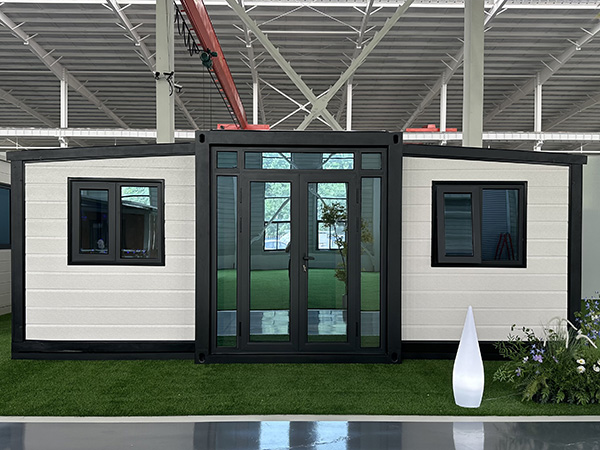
Yes,folding houses are subject to specific safety regulations and standards that vary by region,falling under the category of prefabricated or temporary buildings.These norms cover structural integrity,fire safety,weather resistance,installation and operational safety,with both universal framework requirements and local adaptive rules to ensure occupant safety and market compliance.Below is a detailed breakdown of the core global and regional standards,key mandatory safety requirements and compliance certification norms,with no tabular presentation for clearer narrative.
Core Safety Standards in Major Regions
Folding houses follow the unified technical specifications for prefabricated/temporary buildings in each region,and some areas have also introduced targeted technical standards for their foldable structural characteristics.
China:There are targeted industry standards such as the proposed T/CBMF Technical Standard for Folding Buildings and Technical Specification for Folding Buildings.Meanwhile,they must comply with national mandatory standards including GB 50016(Fire Code of China),GB 50009(Load Code for the Design of Building Structures)and JGJ 147(Code for Demolition of Building Structures).Factory production requires type tests every 5 years,and a full factory inspection must be completed before each product shipment to ensure compliance.
US:Folding houses are regulated by 24 CFR Part 3280(HUD Manufactured Home Construction and Safety Standards)and the International Residential Code(IRC);wheeled mobile folding house models also need to meet the standards of the Recreation Vehicle Industry Association(RVIA).In particular,foldable components such as hinged roofs and eaves must comply with the detailed requirements of 24 CFR Part 3285.
EU:The core compliance standards are EN 14362(specifications for temporary buildings and semi-permanent buildings)and EN 12519(technical requirements for prefabricated steel structures),and they also need to follow local building codes(e.g.,UK Building Regulations Part B for fire safety).The EU has clear time limits for the use of temporary folding houses,with a default maximum of 2 years for temporary placement,which can be extended with official permits.
Australia:Compliance is required with AS 1530.4(fire safety for building materials and structures),AS/NZS 1170(structural design load standards for wind,earthquake and other natural factors)and the National Construction Code(NCC).For folding houses used in public scenarios,there are higher mandatory requirements for fire resistance and structural safety.
Non-Negotiable Core Safety Requirements
All folding house products,regardless of region,must meet the following core safety requirements,which run through the whole process of design,production,installation and use:
Structural integrity and stability
Comply with local building load codes to bear the weight of occupants,simple furniture and additional loads such as snow and rain.Core foldable components including hinges,self-locking buckles and telescopic braces must use corrosion-resistant materials such as stainless steel and marine-grade aluminum alloy,and pass professional fatigue tests to ensure no damage or failure after repeated folding and unfolding.The whole structure is equipped with wind bracing,adjustable support legs and anti-tipping devices to adapt to the local wind zone grade and ensure no tilting or collapse under normal weather conditions.
Fire safety
Wall,roof and floor panels as well as internal insulation materials must reach the local fire resistance grade,with the flame spread index generally not exceeding 25(Class A)and the smoke development index not exceeding 450;fire blocking measures must be set at the joints of walls and ceilings to prevent fire spread.Unobstructed emergency escape passages are reserved,with a minimum width of 75cm in most regions,and mandatory configuration of smoke and carbon monoxide detectors in enclosed models.Internal electrical wiring,sockets and switches must comply with national electrical safety standards to avoid fire hazards caused by short circuits.
Weather and environmental resistance
According to the local natural environment,the structure is designed to resist the corresponding wind speed and seismic intensity,for example,coastal areas need to be able to withstand wind speeds of not less than 120 km/h.Adopt high-performance waterproof and sealing measures,priority use of silicone sealing strips(more anti-aging than ordinary rubber)and reasonable roof drainage design to prevent water seepage;all external panels are coated with anti-UV coating to slow down material aging caused by long-term outdoor exposure.Frames are treated with galvanizing or electrostatic powder spraying for anti-corrosion,and stainless steel hardware is used in high-humidity and coastal salt spray areas to avoid structural damage caused by corrosion.
Installation and operational safety
On-site installation must follow the manufacturer's standardized instructions,the installation site requires flat ground with a slope of not more than 3°,and all folding joints and telescopic braces must be fully locked before use.Folded products must be fixed with standard transport straps during transportation to comply with local road transport over-limit and over-weight regulations,without the need for special equipment but to ensure no loosening during transit.Foldable moving parts are equipped with anti-pinch mechanisms to avoid operational injuries;the product is affixed with clear and eye-catching operation labels for unfolding,locking and folding steps.Regular maintenance is mandatory,including lubricating hinges every 3-6 months and inspecting sealing and structural parts annually.
Compliance and Certification Norms
To be put on the market and used legally,folding houses must complete the corresponding testing and certification,and follow the local post-installation inspection requirements:
Factory testing:For new product models or products with design changes,third-party authoritative institutions must complete type tests to verify compliance with all safety standards;for mass-produced products,a full inspection of appearance,dimensions,load-bearing capacity and folding performance must be completed before each shipment,and unqualified products are not allowed to leave the factory.
Third-party certification:Products sold in different regions need to obtain the corresponding official certification marks,such as HUD label in the US,CE mark in the EU,and CCC certification for internal electrical components in China.Some regions also require the manufacturer to provide a product conformity declaration.
On-site inspection and use permits:In some countries and regions,after the on-site installation of folding houses,a qualified structural inspector is required to conduct on-site inspection and issue an inspection report;for long-term placement of folding houses,it is necessary to apply for a temporary building use permit to the local urban construction department in accordance with zoning laws,and follow the local regulations on the maximum use time limit.
Key Takeaway
Folding houses have clear and standardized safety regulations and technical standards in all major regions of the world,and non-compliant products not only face the risk of structural failure and safety accidents,but also will be restricted in market sales and on-site use due to violation of local laws and regulations.When selecting and using folding houses,it is necessary to first verify the applicable safety standards in the local region,select manufacturers with complete third-party certification qualifications,and strictly follow the standardized installation,operation and maintenance guidelines to ensure the whole-process safety and compliance of the product.
References
GB/T 7714:Aarif A, Hussain S, Juby K S, et al. Folding house. Sustainability Agri Food and Environmental Research, 2022, 10(1): Art. 2519. DOI: 10.7770/safer-V10N1-art2519.
MLA:Aarif, A., et al. “Folding house.” Sustainability Agri Food and Environmental Research, vol. 10, no. 1, 2022, article 2519, doi:10.7770/safer-V10N1-art2519.
APA:Aarif, A., Hussain, S., Juby, K. S., Karthika, C., & Anupama, S. (2022). Folding house. Sustainability Agri Food and Environmental Research, 10(1), Article 2519.