




Are folding houses suitable for long-term use?
2026-02-05 03:33:36
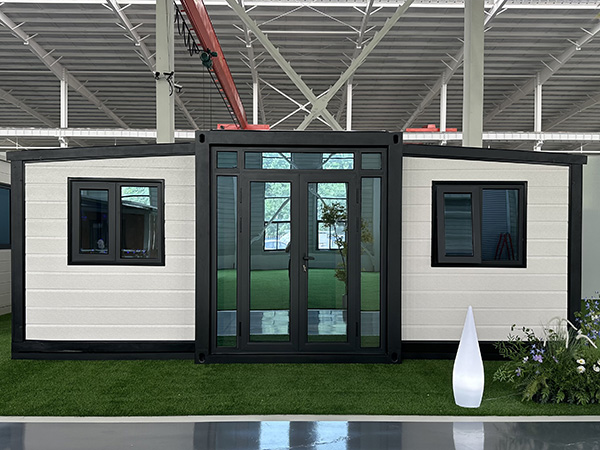
Folding houses are not designed for permanent long-term use(e.g.,decades of fixed occupancy),but they are fully suitable for medium-to-long-term temporary use(1–5 years)with proper maintenance and environmental protection—their core design prioritizes mobility and quick deployment,so structural durability and long-term performance are compromised compared to modular/container houses or traditional buildings.However,with targeted upgrades and regular care,their service life can be extended to meet the needs of long-term temporary scenarios(e.g.,long-term construction camps,remote area service stations).Below is a detailed analysis of their suitability for long-term use,including limitations,improvement methods,and applicable long-term scenarios:
Core Conclusion
Not for permanent fixed use:Structural design(hinged joints,telescopic braces,snap locks)and lightweight materials are not engineered to withstand decades of continuous load,environmental erosion,and repeated thermal expansion/contraction—long-term fixed use will lead to accelerated wear of key components and reduced structural stability.
Suitable for medium-to-long-term temporary use(1–5 years):With standard maintenance,folding houses can maintain good performance for 3–5 years in normal outdoor environments;with material upgrades and reinforced protection,this can be extended to 5–8 years for specific long-term temporary scenarios.
Far more durable than disposable temporary structures:They outperform simple prefab shacks or tent houses in long-term use,with better windproof,waterproof,and thermal insulation performance,and can be relocated if needed during the long-term use cycle.
Key Limitations for Long-Term Fixed Use
The inherent design and material characteristics create unavoidable limitations for permanent long-term use,mainly focusing on structural wear and environmental resistance:
Accelerated wear of movable components:Hinges,telescopic braces,and snap locks—the core foldable components—are subject to slow wear even in fixed use(due to environmental vibration,thermal expansion/contraction).Over time,this causes loose joints,reduced locking tightness,and minor structural shaking,affecting stability.
Lightweight material constraints:The aluminum alloy/light steel frames and composite panels are optimized for light weight(to ensure portability),so their load-bearing capacity and resistance to extreme weather are lower than heavy-duty modular/container houses.Long-term exposure to strong winds,heavy rain,snow accumulation,or high salt spray(coastal areas)will accelerate corrosion,deformation,or panel aging.
Sealing performance attenuation:Rubber sealing strips at panel joints will harden and crack over time due to UV radiation and temperature changes,leading to reduced waterproofing and windproofing—requiring regular replacement to maintain performance(a hassle for permanent fixed use).
Limited load-bearing capacity:The unfolded frame is designed for daily light loads(human activity,simple furniture).Long-term heavy load(e.g.,permanent storage of heavy materials)will cause slow deformation of the frame and floor panels,affecting folding performance if relocation is needed later.
How to Extend Service Life for Medium-to-Long-Term Use(1–8 Years)
Folding houses can be adapted for long-term temporary use with targeted material upgrades and regular simple maintenance—manufacturers offer customized enhancement solutions for this demand,with no impact on the core foldable/relocatable features:
Material and component upgrades(factory customization):
Upgrade to high-strength corrosion-resistant alloy frames(e.g.,marine-grade aluminum alloy)and stainless steel hardware components(hinges,locks,braces)to resist rust and wear in harsh environments(coastal,humid mountainous areas).
Replace standard composite panels with thickened,high-density insulation panels(rock wool/XPS core)with anti-UV,anti-aging surface coatings to slow panel degradation from long-term outdoor exposure.
Install reinforced wind bracing and load-bearing support legs to enhance structural stability and load-bearing capacity for fixed long-term use.
Use high-temperature resistant,anti-aging silicone sealing strips(instead of ordinary rubber)to extend the service life of sealing components and reduce replacement frequency.
Regular simple maintenance(on-site operation,no professional skills):
Lubricate hinged joints and telescopic braces every 3–6 months with anti-rust lubricant to reduce wear and prevent jamming.
Tighten loose bolt fasteners and snap locks monthly to maintain structural tightness.
Inspect sealing strips and waterproof coatings every 6–12 months;replace damaged strips and touch up peeling waterproof coatings in a timely manner.
Clean the roof and drainage grooves regularly to avoid water accumulation and reduce structural corrosion.
Add a sunshade/rain cover for the house in hot,sunny,or rainy areas to reduce direct environmental erosion.
Long-Term Scenarios Where Folding Houses Are Fully Applicable
Despite the above limitations,folding houses are highly suitable for long-term temporary fixed scenarios(1–8 years)where mobility may still be needed,filling the gap that permanent buildings cannot cover:
Long-term construction projects:3–5 year infrastructure construction camps(highways,railways,hydropower stations)where the project site is fixed but relocation is needed after project completion.
Remote area service stations:Long-term fixed service points in mountainous,rural,or border areas(postal stations,power maintenance stations,traffic guard posts)where permanent building construction is costly and impractical.
Temporary resettlement:Medium-to-long-term resettlement housing for disaster-stricken areas or urban renovation projects(1–3 years)where residents need temporary accommodation and the site may be redeveloped later.
Scenic spot supporting facilities:Fixed service points,ticket offices,or rest rooms in scenic spots(3–5 years)where the planning may change and mobility is required for layout adjustment.
Scenarios Where Folding Houses Are Not Recommended for Long-Term Use
Folding houses are not suitable for permanent fixed use scenarios where structural durability and long-term performance are the core requirements:
Permanent residential/office use:Fixed communities,commercial offices,or family housing that require decades of stable use and high load-bearing/weather resistance.
Extreme environment fixed use:Long-term use in areas with frequent extreme weather(typhoons,heavy snow,sandstorms)or severe environmental erosion(high salt spray,strong acid rain)where lightweight structures cannot withstand continuous damage.
Heavy load use scenarios:Permanent storage of heavy materials,industrial production workshops,or other scenarios that require long-term heavy load-bearing capacity.
Key Takeaway
Folding houses are a temporary building solution with extended service life potential,not a permanent building alternative.They excel in medium-to-long-term temporary fixed scenarios(1–5 years)that balance long-term use needs and mobility,and with material upgrades and regular maintenance,this can be extended to 5–8 years.For permanent long-term use,modular houses,container houses,or traditional buildings are more suitable due to their superior structural durability and environmental resistance.
In short,the suitability of folding houses for long-term use depends on use scenario definition and maintenance level:for temporary long-term needs with possible relocation,they are a cost-effective,flexible choice;for permanent fixed use,they are not the optimal solution.
References
GB/T 7714:Cambier C, Galle W, De Temmerman N. Expandable Houses: An Explorative Life Cycle Cost Analysis. Sustainability, 2021, 13(12): 6974. DOI: 10.3390/su13126974.
MLA:Cambier, Charlotte, Waldo Galle, and Niels De Temmerman. “Expandable Houses: An Explorative Life Cycle Cost Analysis.” Sustainability, vol. 13, no. 12, 2021, article 6974, doi:10.3390/su13126974.
APA:Cambier, C., Galle, W., & De Temmerman, N. (2021). Expandable houses: An explorative life cycle cost analysis. Sustainability, 13(12), 6974.