




Shipping Container Homes Applications 2026: Real Uses Changing How the World Builds
2026-08-10 04:54:56
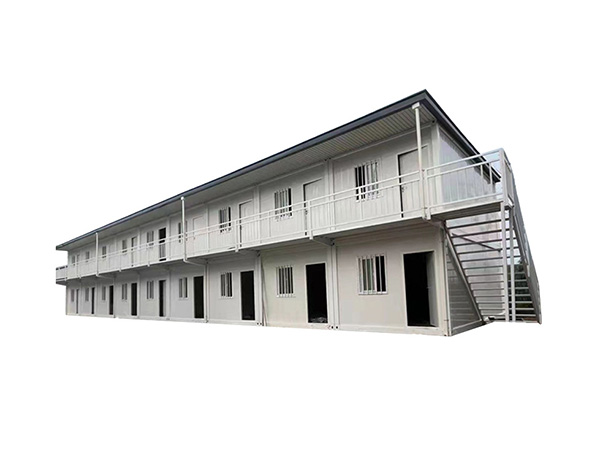
About eight years ago, I started noticing something shifting in the inquiries we were getting. The questions changed from "can you actually live in one of these?" to "we need twelve units delivered to a mining site in Mauritania by next March." Container homes had crossed a threshold — from a concept people were curious about to a solution procurement officers and project managers were specifying by name. This is what that shift looks like in practice, across the sectors where it's happening most visibly.
Why the Shift Happened
The practical case was always there, but it took time for the market to trust it. What changed was that enough projects had been completed successfully that the approach stopped being novel and started being normal. When a construction company in Western Australia can point to three projects where container camp accommodation performed as specified and was redeployed on time and on budget, the conversation with the next client shifts from "is this reliable?" to "how do we configure it for our site?"
The logistics infrastructure is the other half of the story. The global shipping container network is one of the most efficient logistics systems ever built. Using it to transport buildings isn't a workaround — it's leveraging existing infrastructure that already reaches every inhabited coast and most inland ports. That meant the shipping cost problem that had kept container homes regional for years was effectively solved for anyone willing to work with international logistics.
Remote Mining and Work Camps
This is still the largest market by volume, and it makes intuitive sense once you understand the economics. Remote resource extraction projects face a specific construction problem: the cost of getting conventional building materials and skilled tradespeople to site is extraordinary, the project timeline is fixed and often deadline-driven, and when the project ends, the permanent structures have limited residual value because they're designed for that specific location.
Modular container accommodation solves all three. Factory production in China, Vietnam, or wherever manufacturing happens efficiently — the cost of production is the cost of production regardless of where the project is. Standard international shipping handles transport to within truck distance of any site with a port nearby. On-site installation is mechanical, not constructed — a crew unfolds and connects rather than builds from scratch. And when the project moves or ends, the units move too.
The trend over the past several years has been toward higher specifications. Early mining camps were utilitarian by necessity. Today's best operators treat accommodation quality as a retention and productivity investment, not a cost center. That shift has driven demand for better-insulated units, better-finished interiors, and designs that workers find genuinely comfortable rather than merely tolerable.
Disaster Relief and Humanitarian Response
The humanitarian sector's experience with container homes has been instructive. After a major earthquake or flood, the immediate need is shelter that provides weatherproof protection, security, and basic dignity for displaced families. Tent camps deliver the first of those imperfectly and the other two poorly. Container units deliver all three from the moment they're installed.
What has been particularly valuable is their suitability for long-term displacement. After a major natural disaster, reconstruction of permanent housing typically takes three to seven years. Families housed in container units through that period have a fundamentally different quality of life compared to those in tent camps. The units are secure, weatherproof, vermin-resistant, and large enough for family life. They're not a permanent home, but they're a livable one.
The logistics advantage is also significant for humanitarian operations. Units can be pre-positioned at regional staging areas, deployed rapidly when a disaster occurs, and re-purposed or returned when no longer needed. That flexibility matters when humanitarian budgets are tight and every dollar needs to go as far as possible.
Glamping and Hospitality
The hospitality sector has been one of the more interesting adopters. When glamping first emerged as a travel category, tent-based accommodation dominated. Container units changed the calculus by offering something that tent-based glamping couldn't: a genuinely structural building with hotel-level comfort, in a form factor that carries the aesthetic appeal guests are looking for.
The economics have been compelling. A ten-unit glamping site built from container accommodation can be operational in three to four months versus twelve or more for conventional lodge construction. That six to nine month head start on revenue generation often covers a significant portion of the capital cost of the development. And the distinctive aesthetic — the industrial character of the container, the way it reads as intentional rather than improvised — is genuinely differentiating in a market where guests are paying premium prices for memorable experiences.
The sites I've seen do best are the ones that lean into the container aesthetic rather than hiding it. The places that try to make their containers look like conventional buildings tend to end up with the worst of both approaches. The ones that use the steel frame, the corrugated profile, the honest material character — those are the ones guests photograph and recommend.
Residential Homeowners
In the countries where housing affordability has become acute — Australia, parts of the United States, the UK, Canada — container homes have found genuine traction as primary residences rather than just lifestyle projects. The buyers I've spoken with consistently cite the same three things: the cost relative to conventional building, the speed relative to the conventional building timeline, and the sense that they're building something with character rather than a conventional house that looks like every other house on the street.
The regulatory environment is still catching up in many places. But in regions where the pathways are established and building officials are familiar with container construction, the approval process has become routine rather than adversarial.
Education, Healthcare, and Community Infrastructure
This is an underappreciated application area. In remote and underserved communities where conventional construction takes years due to procurement complexity, contractor availability, and budget cycles, container-based modular buildings are delivering functioning infrastructure in months.
Classrooms, health clinics, community centers — these applications benefit from everything container construction offers: speed, durability, relocatability, and the ability to deploy functioning facilities while longer-term infrastructure planning proceeds in parallel. A container-based primary school that serves a community for five years while a permanent school is planned and built is delivering real value, not a compromise.
Commercial and Retail
Urban container architecture has matured beyond pop-up novelty into genuine commercial real estate applications. Cafes, restaurants, retail spaces, offices, co-working spaces — each benefits from the distinctive aesthetic, the rapid deployment, and the flexibility to relocate as markets shift. Some of the most interesting urban spaces I've seen in the past several years have been container-based, and the operators who use them tend to understand the marketing value of the form factor as well as its practical economics.