




Container Home Sizes: 10ft, 20ft, 30ft, 40ft — Which Is Right for You?
2026-08-08 04:37:31
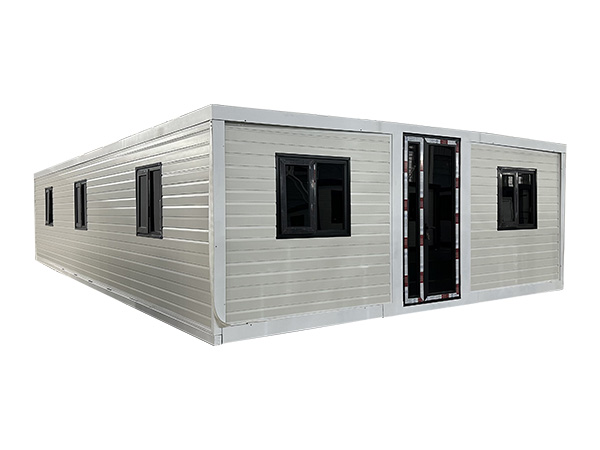
Size is where a lot of first-time container home buyers get stuck. Catalogues list dimensions in ways that don't always translate to real-world understanding of what the space actually feels like. A 20ft container sounds like it might work, but is it big enough for what you have in mind? This guide explains each standard size in practical terms — what the numbers mean in actual living space, and which applications each size serves well.
Standard vs. High Cube: The Detail That Changes Everything
Before getting into sizes, there's one specification distinction that matters more than most buyers realize: standard versus high cube height.
Standard containers have an external height of 8.6 feet; high cube versions are 9.5 feet. The interior height difference is about one foot: 7.8 feet in a standard cube, 8.9 feet in a high cube. That sounds like a small difference, and it is — until you've insulated the interior and lined the walls. In a standard cube, you're left with a ceiling that feels uncomfortably low. In a high cube, you have a space that feels genuinely comfortable.
The additional shipping cost of high cube is small relative to the total project cost. We recommend high cube as the default for every residential application, and we've yet to encounter a scenario where the standard cube made more sense.
10ft Container: When It Works, and When It Doesn't
The 10ft container provides approximately 71 square feet of floor area. In practical terms, that's about the size of a large bedroom — or a small one-bedroom apartment's entire living space.
It's genuinely useful for a dedicated home office. A desk, shelving, a comfortable chair, and enough room to move around makes a functional workspace. Add a small bathroom pod alongside, and it becomes an occasional guest suite with genuine privacy from the main house. What it isn't, despite what catalogue photos sometimes suggest, is a meaningful living space for more than a few hours of daytime use.
If you're trying to house even one person overnight on a long-term basis, a 10ft container falls short of comfortable. There's no room for a kitchen of any kind, and the overall scale makes extended occupation feel claustrophobic. It's an excellent tool for specific applications; it's not a home.
20ft Container: The Workhorse of Container Living
The 20ft container is the most commonly ordered size, and it earns that position honestly. In high cube format, it provides approximately 149 square feet — comparable to a well-designed studio apartment.
As a solo residence, it works well. A sleeping area, a functional kitchen, a proper bathroom, and enough circulation space to move without bumping into furniture. One person can live here comfortably for years.
As a couple's residence, it requires adjustment — but people who are comfortable with modest living spaces find it workable. Think of it as the container equivalent of a well-designed studio: everything is there, it just requires some compromise.
As a rental unit, the 20ft container performs exceptionally well. On platforms like Airbnb, it commands strong nightly rates in the right locations, gets consistently positive reviews for its distinctive character, and costs little to maintain. The fact that it can be relocated between properties or markets adds genuine investment flexibility.
30ft Container: The Comfort Threshold
The 30ft container crosses what I think of as the genuine comfort threshold for residential use. At around 226 square feet, there's enough space to have a real bedroom separate from the living area, a kitchen that doesn't feel like a galley, and a bathroom that doesn't require acrobatic maneuvering.
A family with one child can function genuinely well in a well-designed 30ft container home. Two adults and a child in 226 square feet requires some discipline and organization, but it's entirely workable — and far more comfortable than equivalent conventional apartment spaces in many urban markets.
For two adults without children, this is close to ideal at the container scale: separate sleeping and living areas, a kitchen that accommodates two people cooking together, and a bathroom that provides real privacy.
40ft Container: Where Container Living Gets Genuinely Spacious
The 40ft container offers approximately 303 square feet — the floor area of a small one-bedroom apartment. In a high cube version with thoughtful design, it achieves a level of livability that rivals conventional residential space.
This is where container homes stop feeling improvised and start feeling intentional. Full-size appliances fit comfortably. Furniture choices expand considerably. There is enough space for a proper dining area, a generous living room, and a bedroom with actual closet space. For buyers who want a container home as their primary residence and have the budget for it, this is the starting point.
For hospitality applications — glamping sites where guests expect hotel-level comfort, boutique accommodation where the distinctive container aesthetic is part of the appeal — the 40ft container is the preferred specification. The additional cost over a 20ft unit is significant in absolute terms but modest as a percentage of the total investment in the site.
Multi-Container Configurations
The most effective way to get more living space is to combine multiple containers. This isn't a workaround — it's how most of the most successful container home projects are designed.
Two 20ft containers side-by-side, connected by a doorway cut through the shared wall, creates nearly 300 square feet with genuine separation between a bedroom and a living area. This is more affordable than a single 40ft unit with equivalent layout flexibility, and the two-unit configuration allows for more interesting architectural arrangements.
Three 20ft containers can create a proper two-bedroom layout with a central shared living space. Four or more containers can form larger configurations for families, small communities, or commercial applications.
Making the Decision
The framework I find most useful is to start with how the space will actually be used — not what the catalogue says it should be used for. A home office doesn't need a kitchen or a bathroom in the same unit. A primary residence for a family needs both and more. An Airbnb rental needs to feel like a destination, not just a place to sleep.
The second question is how many people will use the space regularly. One person, two people, a small family — each has a different minimum viable size.
Budget is the third constraint, but it's less binary than buyers often expect. At most price points, a slightly larger unit costs only modestly more than a smaller one, and the additional livability is worth it. It's worth sitting with the numbers before assuming that the smallest viable option is the right one.