




Prefab vs Traditional Construction: An Honest Cost Comparison for 2026
2026-08-06 04:10:20
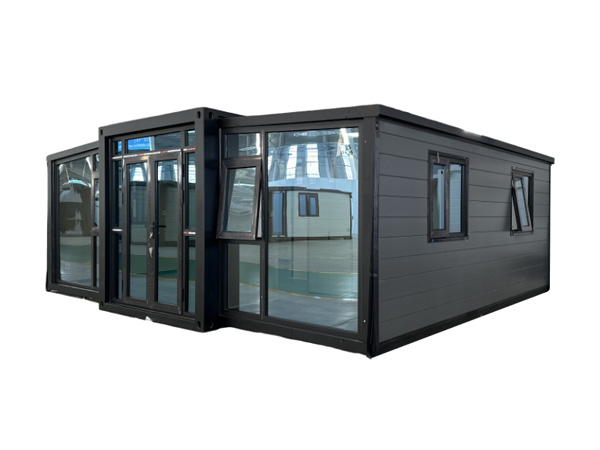
Cost comparisons between prefab and traditional construction are everywhere, and most of them are incomplete. They focus on the headline number — the price of the building itself — and miss the costs that, added together, often determine whether a project makes financial sense. After working through dozens of these comparisons for clients and for my own projects, I've come to think that the five-category framework below is the only honest way to do it.
The Five Cost Categories That Actually Matter
Direct construction costs cover materials, labor, and equipment. This is where most comparisons stop, and where they get into trouble.
Indirect costs include architecture and engineering fees, permits and regulatory approvals, legal costs, land preparation that isn't part of the building itself, and site surveys. These are consistently underestimated in conventional construction and frequently overlooked entirely in prefab comparisons.
Timeline costs are the most invisible until they bite. Finance carrying costs — interest on construction loans — accumulate every month a project takes to complete. Rental costs continue if the project is replacing existing accommodation. Revenue is deferred if the project is income-producing. These costs are real and can be substantial: on a $200,000 project, six months of delay at seven percent interest adds $7,000 in finance charges alone, before considering lost rental income.
Logistics costs cover transport to site, site access preparation, foundation work, and the specialized equipment needed for installation. For remote locations, this is often the largest variable between prefab and conventional approaches.
Long-term costs include maintenance requirements, insurance premiums, and energy efficiency. These deserve far more weight than they typically receive. A poorly insulated building costs far more to run over twenty years than the marginal saving on construction cost would cover.
Where Prefab Construction Actually Wins
On direct construction costs, prefab container homes consistently come out ahead — typically twenty to forty percent lower than comparable conventional construction. The reasons are factory production economics: bulk purchasing of materials, efficient workflow, low material waste, and quality control that doesn't depend on the skill of whoever happens to be on-site that day.
The gap is widest in remote locations. When conventional construction requires transporting skilled tradespeople to a site with limited infrastructure, labor costs can run three to ten times urban rates. Factory production happens regardless of where the building ends up, so the remote location premium largely disappears.
Premium-specification builds narrow the gap considerably. A Passive House-level prefab container with high-end finishes can cost as much as a conventional home of the same quality. The prefab advantage is largest at mid-range quality levels — which is also where most buyers operate.
The Timeline Advantage and What It's Actually Worth
A typical prefab project takes twelve to twenty-eight weeks from order to occupancy. A comparable conventional build takes thirty-two to fifty-eight weeks. That four to six month difference sounds abstract until you put numbers to it for your specific situation.
For a financed project at current interest rates, six months of carrying costs adds a meaningful sum. For a rental property generating weekly income, six months of deferred opening costs significantly. For a commercial operation — a glamping site, a hospitality venue, a work camp — the revenue impact of faster opening is usually the largest single financial variable in the entire project.
In most scenarios, the timeline advantage is worth five to fifteen percent of total project cost. That makes it the second-largest source of prefab's financial advantage, after direct construction savings.
The Hidden Costs That Skew the Comparison
Weather delays are the most significant hidden cost in conventional construction. I've watched projects add four to eight weeks and tens of thousands of dollars because rain delayed concrete pours, roof installations, and exterior finishes. Factory prefab production doesn't stop for rain.
Material waste is consistently underestimated. On-site conventional construction generates seven to fifteen percent material waste that gets hauled away and paid for. Factory-controlled production generates one to three percent. For a project using $50,000 in materials, that's $2,000 to $6,000 in avoidable waste.
For prefab, the hidden costs to account for are international shipping if importing, customs duties and taxes in the destination country, and crane hire for unloading and positioning. None of these apply to conventional construction but they do apply to prefab projects that involve importing from overseas manufacturers.
When Conventional Construction Makes More Sense
There are legitimate scenarios where conventional construction is the better choice, and pretending otherwise would be dishonest.
For large custom homes exceeding 2,500 square feet where architectural flexibility is the primary priority, conventional construction offers more freedom. For sites inaccessible by standard transport — requiring helicopter delivery of every component — the economics shift substantially. And in jurisdictions where zoning or building codes effectively prohibit non-traditional construction, conventional building may be the only viable path, however frustrating that is.
The Bottom Line
Prefab container homes deliver a genuine cost advantage in most scenarios — typically twenty to forty percent lower direct construction cost, plus the additional value of a faster timeline and more predictable costs. The advantage is largest for projects in remote locations, mid-range quality specifications, and applications where speed to occupancy translates directly into revenue or savings.
The cases where conventional construction makes more sense are real but relatively specific. For most buyers evaluating their options honestly, prefab deserves serious consideration — and the five-category framework above is the right tool for making that evaluation rigorously rather than relying on incomplete comparisons.