




Flat-Pack & Quick-Assembly Container Houses: Benefits for Fast Projects
2026-09-30 01:48:26

When a project is measured in weeks, not seasons, the way a building travels decides whether it finishes on time. Flat-pack and quick-assembly container houses answer that pressure directly: they ship as compact panel kits and bolt together on site, turning freight volume and setup labor into controllable line items. For contractors and developers working with manufacturers like TLS Integrated Housing, these formats are the pragmatic choice when speed and shipping density matter more than architectural novelty.
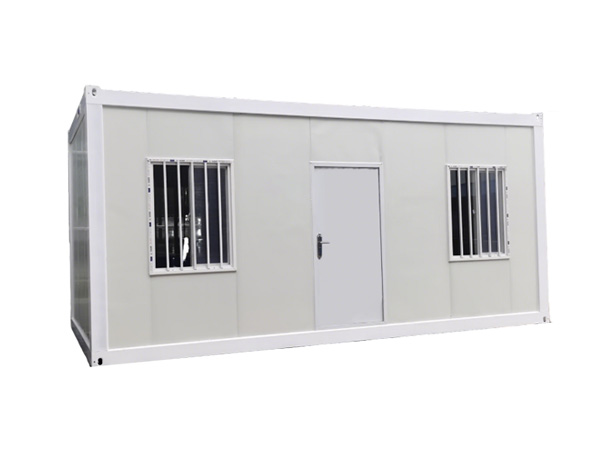
This guide explains how flat-pack and quick-assembly units work, where they save the most money and time, and how to decide between them and their folding or expandable cousins.
What "Flat-Pack" and "Quick-Assembly" Mean
A flat-pack container house ships as panels—walls, floor, and roof—nested into a slim package, then assembled on site like a precise kit. A quick-assembly (or rapid-assembly) packing container arrives closer to complete, often as a unit that opens or clips together in hours with minimal tools. Both trade factory labor for shipping density, but at different points on the spectrum.
"Flat-pack moves the work from the factory floor to the site. Done well, you save more on freight than you spend on assembly—and you ship three times as many units per load."— Laura Evans, Client Success Manager, TLS Integrated Housing
Shipping Density: The Core Advantage
This is the headline benefit. A folded or flat-packed unit occupies a fraction of a traditional container's volume, so a single shipment carries far more homes. For export projects or sites reached by expensive last-mile transport, that density can be the difference between a viable budget and an impossible one.
On-Site Assembly Speed
Quick-assembly units open in hours; flat-pack kits take longer but still beat conventional builds by weeks because the structure, insulation, and finishes are pre-cut and pre-finished. A trained crew follows numbered panels rather than framing from raw material, which compresses both time and error.
"The best flat-pack projects feel like furniture assembly for a building. Panels are labeled, holes pre-drilled, and the crew just connects the system we already tested in the factory."— Laura Evans, Client Success Manager, TLS Integrated Housing
Cost Dynamics in 2026
Freight: dramatically lower per unit due to packing density.
Labor: moderate on-site assembly versus none for finished units.
Materials: efficient panel cutting reduces waste versus stick-building.
Total: lowest delivered cost for multi-unit, remote, or export builds.
Best Projects for Flat-Pack Formats
Flat-pack and quick-assembly shine for workforce camps, temporary offices, remote accommodation, disaster relief staging, and any rollout of many identical units. They are less suited to one-off architecturally custom homes where a traditional or expandable container offers more design latitude.
Flat-Pack vs Folding vs Expandable
Flat-pack maximizes shipping density and customization at the cost of assembly time. Folding and expandable units minimize on-site labor but ship at slightly lower density. Choose flat-pack when you have crew and want the cheapest multi-unit delivery; choose folding or expandable when labor is scarce and speed-to-occupy is everything.
Quality Checks Before You Buy
Confirm panel fit-up is factory-tested, not just designed.
Verify insulation is integral to panels, not field-applied.
Require corrosion-protected frames and sealed panel joints.
Check that hardware is standardized and spares are available.
Conclusion
Flat-pack and quick-assembly container houses turn shipping and setup from project risks into managed variables. By packing dense and assembling fast, they deliver many identical, finished units to tough sites at the lowest delivered cost. For fast, scalable builds, they are the format to beat.
Plan a Fast, Scalable Deployment
TLS Integrated Housing manufactures flat-pack, quick-assembly, folding, and expandable container units with factory-tested fit-up and export-ready packing. Tell our team your unit count and destination, and we will model the fastest, most cost-efficient build path.