




Expandable Container House vs Traditional Shipping Container Home: Which Is Better in 2026?
2026-09-28 01:31:56
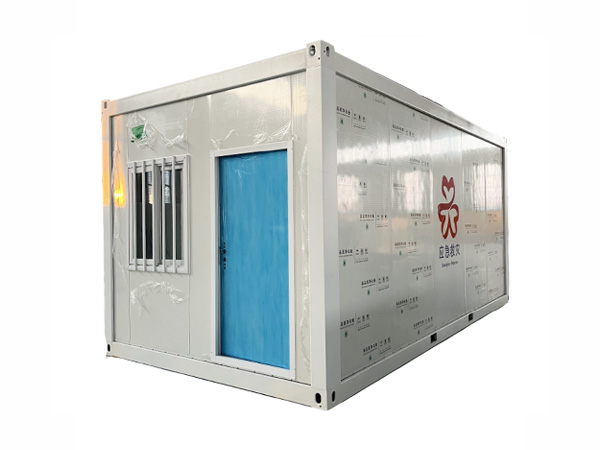
The container home market in 2026 splits into two camps that look similar from a distance but behave very differently on site. On one side sits the traditional shipping container home: a single 20- or 40-foot box, cut open and finished as living space. On the other sits the expandable container house—a unit that ships folded to a fraction of its footprint and unfolds into a wide, multi-room layout in minutes. Buyers weighing options from manufacturers like TLS Integrated Housing often ask which is "better," but the honest answer depends on space needs, transport limits, and how fast you must be habitable.
This comparison breaks the decision down across the dimensions that actually move the needle: living space, shipping efficiency, setup labor, cost, insulation, durability, and the projects each type serves best. By the end you should know which container solution fits your build instead of guessing from a photo.
What Is a Traditional Container Home?
A traditional container home starts as a standard ISO shipping container—usually 20 or 40 feet long, about 8 feet wide, and 8.5 feet tall. Builders cut openings for doors and windows, frame the interior, add insulation and finishes, and connect utilities. The structure arrives as a complete, weather-tight box and is set on a foundation much like any prefab module.
The appeal is simplicity and robustness. The steel shell is proven, the dimensions are global standards, and stacking or arranging multiple boxes into larger homes is well understood. The limitation is interior width: a single container feels narrow, and combining units means extra cutting, framing, and weatherproofing at the joints.
"Traditional containers are the safe, proven choice when you want a compact, durable unit and you are not fighting a tight delivery access route."— Emma Thompson, Modular Housing Specialist, TLS Integrated Housing
What Is an Expandable Container House?
An expandable container house keeps the steel shipping footprint for transport but adds hinged side walls and sometimes a hydraulic or mechanical extension system. In transit it folds down to roughly one-third of its open width; on site, the sides swing or slide out to create a unit as wide as 20–30 feet with separate bedrooms, a living area, and a kitchen zone in one shell.
This category overlaps with what some brands call expandable folding houses or foldable container houses. The defining trait is the transformation from a narrow shipping box to a broad living space without assembling separate modules. For buyers who need room but face narrow roads, low bridges, or high shipping costs, the expandable format is a decisive advantage.
Space and Floor Plan Flexibility
Here the expandable format wins clearly. A traditional 40-foot container gives you about 300 square feet of single-width space. An expandable 40-foot unit can open to 600 square feet or more, often pre-divided into two or three rooms at the factory. That difference changes a "tiny" dwelling into a genuine small home.
Traditional containers still win on customization. Because you cut and frame them yourself, you can stack, cantilever, and combine boxes into architectures an expandable shell cannot match. If your vision is a multi-container compound, the traditional route offers more design freedom; if your vision is one comfortable home delivered fast, expandable wins.
Transportation and Shipping Efficiency
Shipping cost scales with volume, and this is where expandable units shine. A folded expandable house occupies a fraction of a flat-rack or container slot, so you can ship two or three units where one traditional box would go. For overseas buyers, that can mean thousands of dollars saved per unit and easier handling at ports with crane limits.
Traditional containers, being already box-shaped, ship efficiently as-is but take their full volume every time. On domestic flatbed moves the difference is smaller, but on intercontinental freight it is substantial. If your project is export-driven, the expandable format's folded profile is a major logistical edge.
"We routinely load three folded expandable units where one open traditional unit would fit. For our overseas clients that shipping math alone justifies the choice."— Emma Thompson, Modular Housing Specialist, TLS Integrated Housing
Setup Time and Labor
An expandable house is designed to open in hours with a small crew and basic tools—sometimes a hand crank or a small pump, then locking the extended frames. A traditional container home, by contrast, may arrive as a shell needing days of interior build-out, MEP rough-in, and finishing before it is livable.
For emergency housing, remote camps, and fast commercial deployments, setup speed is often the deciding factor. Expandable units can be opened and anchored in a single day; traditional builds stretch into weeks once site work and fit-out are counted. The labor bill follows the same curve.
Cost Comparison in 2026
Sticker prices overlap, but total cost tells the real story. A basic traditional 40-foot container shell might cost less up front, yet the finishing, joining, and site labor add up. An expandable unit carries a higher factory price but arrives closer to complete, with rooms, wiring, and plumbing roughed in.
Traditional 40ft shell: lower unit cost, higher on-site finish cost, longer labor.
Expandable 40ft unit: higher factory cost, lower site labor, faster occupancy.
Shipping: expandable ships 2–3x more units per load, cutting freight per home.
For a single home on easy access, traditional can be cheaper. For multiple units, remote sites, or speed-critical builds, expandable usually wins on total delivered cost.
Insulation and Energy Performance
Both types rely on the same principle: you cannot leave the steel exposed inside, or it sweats and conducts heat. Quality manufacturers insulate the walls, roof, and floor with EPS, rock wool, or PIR panels regardless of format. Expandable units add the challenge of sealing the fold joints, which reputable factories solve with overlapping gaskets and continuous insulation breaks.
A well-built expandable home performs as well as a traditional one thermally, provided the fold seams are detailed correctly. Ask any supplier for the U-value of the extended wall and the joint treatment; vague answers are a red flag.
Durability and Structural Safety
Concern about repeated folding weakening the structure is common, and fair. The answer is in the engineering: expandable houses use reinforced hinge channels and locking braces rated for thousands of cycles. Under normal operation and basic maintenance, the frame's structural safety is unaffected by opening and closing.
"The moving parts are the most over-worried aspect of expandable homes. Engineered hinges and braces are rated well beyond a home's realistic open-close frequency."— Emma Thompson, Modular Housing Specialist, TLS Integrated Housing
Traditional containers have no moving parts and a century of service history, giving them a psychological edge. But a properly engineered expandable unit is every bit as safe for residential use when sourced from a credible manufacturer.
Best Use Cases for Each Type
Choose a traditional container home if you want maximum design freedom, plan to combine multiple boxes, have easy site access, and do not mind longer fit-out. Choose an expandable container house if you need more interior space from a single delivery, face tight transport routes, want same-day setup, or are deploying several units for camps, clinics, or rentals.
Common Buyer Questions
Can an expandable house be relocated? Yes. It folds back down and moves like a standard container, making it ideal for temporary or rotating sites.
Is the fold seam waterproof? In quality units, yes—overlapping gaskets and sloped sills handle rain when installed on a correct foundation.
Which holds value better? Both depreciate slowly if maintained; traditional may appeal to a broader resale market today.
Conclusion
Neither type is universally better; they solve different problems. Traditional container homes offer proven simplicity and design freedom, while expandable container houses deliver space, shipping efficiency, and speed that traditional boxes cannot match. Match the format to your access, timeline, and square-foot needs.
Not Sure Which Format Fits Your Project?
TLS Integrated Housing manufactures both traditional and expandable container houses, plus folding and flat-pack variants, and can model shipping, setup, and total cost for your specific site. Talk to our team and we will spec the right shell for your goals.