




Benefits of Choosing a Modular Integrated House for Modern Construction
2026-05-11 04:42:50

Modern construction is advancing at a rapid pace, as developers, architects, and homeowners strive to find building solutions that are quicker, more efficient, and more sustainable. One of the most influential innovations in recent years is the modular integrated house, a construction approach that combines the precision of factory manufacturing with on-site assembly. Opting for a modular integrated house is more than just a design choice—it is a strategic decision that delivers measurable benefits in terms of cost, time, quality, and sustainability.
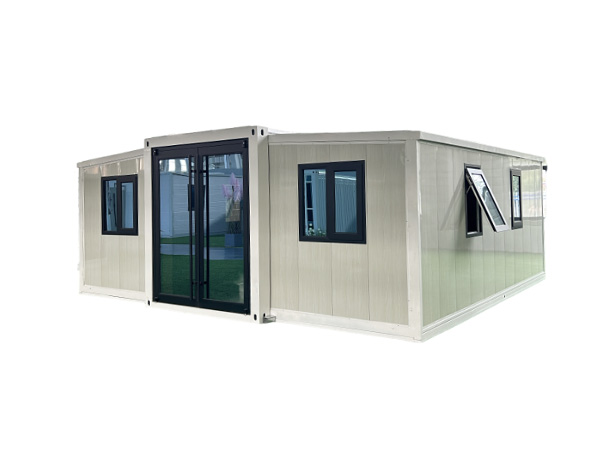
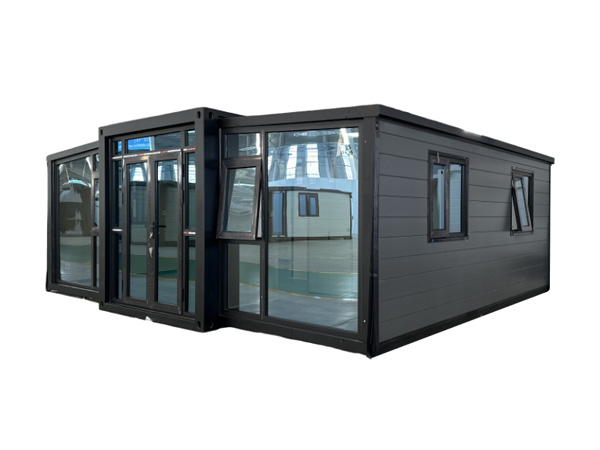
1. Faster Project Completion
Speed is one of the most notable advantages of modular integrated housing. Unlike traditional construction, which relies heavily on weather conditions and sequential on-site work, modular homes are constructed in a factory while site preparation takes place at the same time. This parallel workflow significantly shortens the total project duration. In many instances, projects that would typically take 6–12 months to finish can be completed in just a few weeks once the modules are delivered to the site. This makes modular construction an ideal choice for:
Rapid urban development initiatives
Emergency or temporary housing needs
Time-critical commercial projects
2. Enhanced Construction Quality
Since modular houses are produced in controlled factory settings, their quality is more consistent and easier to oversee. Each module is built using standardized processes and undergoes rigorous inspections at every stage of production. This leads to:
More precise structural alignment
Greater consistency in material quality
Fewer construction flaws caused by weather conditions or human error
The controlled environment also safeguards materials from moisture, temperature fluctuations, and other environmental hazards during the construction process.
3. Cost Efficiency and Predictable Budgeting
Modular integrated housing helps cut down on the unexpected costs that are common in traditional construction. Key reasons for this include:
Reduced on-site labor needs
Lower material waste thanks to precise factory manufacturing
Shorter construction timelines that reduce financing costs
Furthermore, project costs are more predictable because most of the work is done under fixed factory conditions, which lowers the risk of budget overruns.
4. Strong Sustainability Performance
Sustainability is a core benefit of modular construction. Compared to traditional building methods, modular housing generates:
Less construction waste
Lower carbon emissions during the construction phase
More efficient use of raw materials
Many modular systems also incorporate energy-efficient designs, such as enhanced insulation, airtight structures, and compatibility with renewable energy systems. This helps reduce long-term energy usage and environmental impact.
5. Design Flexibility and Customization
Contrary to popular misconception, modular homes offer a high degree of customization. Modern modular integrated housing systems allow for:
Flexible floor plans
A variety of architectural styles
Scalable building expansion over time
Integration of smart home technology
Homeowners can start with a basic structure and expand it later by adding new modules, making modular housing a practical long-term solution.
6. Reduced On-Site Disruption
Traditional construction sites often produce noise, dust, and long-term disturbance to surrounding areas. Modular construction minimizes these issues because the majority of the building work is completed off-site. On-site activities are mainly limited to:
Foundation preparation
Module installation
Final system connections
This makes modular housing particularly well-suited for urban or densely populated areas.
7. Higher Safety Standards
Factory-based construction significantly improves workplace safety. Since most work is carried out in controlled indoor environments:
Workers are less exposed to hazardous on-site conditions
Safety protocols are easier to enforce
The risk of on-site accidents is reduced
Overall, this results in a safer and more controlled construction process.
8. Scalability for Future Expansion
Modular integrated housing is designed with future growth in consideration. Additional rooms or units can be added without the need for major demolition or reconstruction, making it ideal for:
Growing families
Expanding businesses
Phased real estate developments
This scalability adds long-term value to the property.
Conclusion
The modular integrated house represents a significant shift in modern construction practices. It combines speed, quality, sustainability, and flexibility in a way that traditional building methods cannot easily match. For developers and homeowners looking for efficient, future-ready solutions, modular construction is no longer just an alternative—it is becoming the new standard for modern living and building development.
References
GB/T 7714:A Review Paper on Modular Buildings Construction. International Research Journal of Management, Engineering and Technology,
MLA: A Scalable and Cost-Effective Solution to the U.S. Housing Crisis: A Case Study on Locally Manufactured Modular Multifamily Housing. National Renewable Energy Laboratory (NREL) Report
APA:Advantages of Modular Integrated Construction: Quality, Safety, and Sustainability. Journal of Building Engineering