




Will container houses get very hot in the summer?
2026-02-05 04:47:46
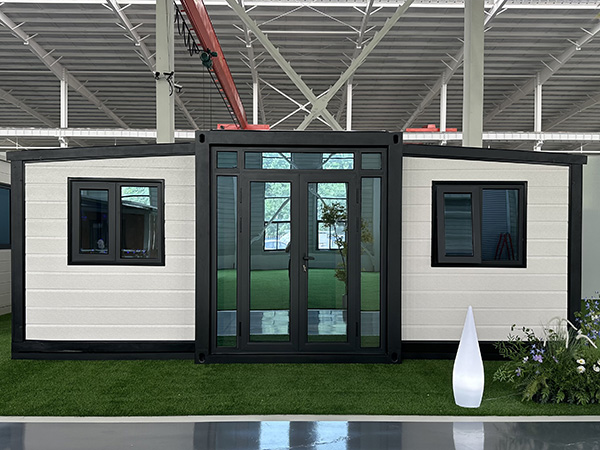
Container houses tend to heat up more easily in summer than traditional brick-and-mortar buildings. The main reason is their steel structure; steel has high thermal conductivity, and the original shipping containers are enclosed and lack insulation. Under direct sunlight, the internal temperature can easily be 8-15°C higher than the outdoor temperature. However, through standardized insulation, ventilation, and cooling modifications, the indoor temperature can be controlled within a comfortable range, solving the problem of stuffiness.
The core factors contributing to the stuffiness of container houses in summer are twofold: first, steel has a much higher thermal conductivity than brick and concrete, allowing outdoor heat to be quickly conducted indoors; second, the original shipping containers lack dedicated insulation layers, relying solely on thin steel plates for heat insulation, resulting in extremely poor insulation. Furthermore, improper window placement can lead to poor air circulation and heat buildup.
Currently, cooling retrofit technologies for container houses are very mature and adaptable to different budgets and usage scenarios: basic retrofits involve lining the inside and outside of the container with thermal insulation cotton and color steel plates (the core retrofit, using 5-10cm thick rock wool/extruded polystyrene board for insulation to block heat conduction), combined with louvers and exhaust fans, achieving natural ventilation and heat dissipation at low cost; advanced retrofits can include adding air conditioning, roof fans, or installing roof awnings and painting the exterior of the container with reflective paint to further reduce heat absorption. After retrofitting, the indoor temperature is no different from that of traditional buildings, fully meeting the long-term needs of accommodation, office use, etc.
In short, the problem of container houses being stuffy in summer is not a structural defect, but a result of not making targeted retrofits. As long as thermal insulation and ventilation designs are incorporated during the construction phase, the problem can be completely solved, and the retrofit cost is a small percentage of the overall construction cost, making it extremely cost-effective.
References
GB/T 7714:Liang W, Ye X, Zhou Y, et al. The thermal performance of a typical prefab container house[J]. Case Studies in Thermal Engineering, 2024, 64: 105445.
MLA:Liang, Wei, et al. "The thermal performance of a typical prefab container house." Case Studies in Thermal Engineering 64 (2024): 105445.
APA:Liang, W., Ye, X., Zhou, Y., Nie, C., Xing, J., Liu, L., ... & Miao, L. (2024). The thermal performance of a typical prefab container house. Case Studies in Thermal Engineering, 64, 105445.