




How to judge the quality of a container house?
2026-02-05 04:51:41
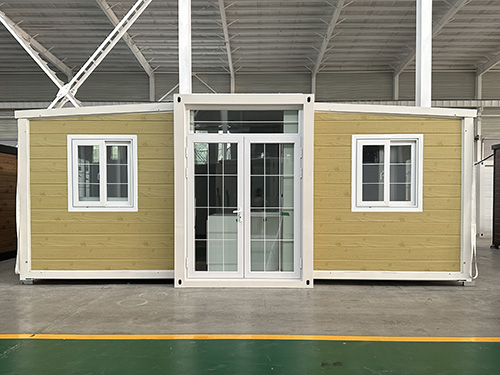
To judge the quality of a container house,the core focus should be on four key dimensions:the basic container material,structural reinforcement process,interior decoration construction,and sealing and protection treatment.This should be combined with a comprehensive inspection of appearance,details,and component quality.This approach is suitable for both finished product acceptance and quick identification during procurement.Even non-professionals can follow the steps to make a judgment.Below are the step-by-step inspection methods,balancing professionalism and practicality:
I.Core Foundation:Container Frame and Panels(Determines Overall Durability)
This is the"foundation"of the container house.The quality of the original container directly determines its lifespan.The focus is on checking the materials and structural integrity:
Check the materials and thickness:A qualified container house's main body is made of weathering steel/galvanized steel,not refurbished thin sheet metal.Check the thickness of the frame columns and beams(standard 20-foot container frame thickness≥2.0mm,top/side panels≥1.2mm).Tap the panels;a solid sound without hollowness indicates quality,while thin sheet metal will produce a crisp sound and dent easily.
Check the frame structure:No obvious deformation,bending,or welding cracks;welds are uniform and full,without missing welds or incomplete welds;key stress points(corner lifting points,frame connections)have reinforced welds;refurbished boxes need to be checked for rust and perforations in the frame,with rust only on the surface and already treated with rust removal and anti-corrosion measures.
Distinguish between original and refurbished boxes:Brand new boxes have original factory markings and stamped steel stamps,and the paint is uniform;refurbished boxes require a thorough check of rust removal,with no rust residue or paint bulges(bulges indicate internal rust not being removed and will rust again later).
II.Key Processes:Structural Reinforcement and Assembly(Determining Load-Bearing Capacity and Stability)
Container house renovations require reinforcement based on usage needs.Inadequate processes can easily lead to floor subsidence and wall swaying.Three key points to check:
Floor/Ground Reinforcement:There should be no noticeable shaking or subsidence when stepped on.Lifting the floor reveals internally reinforced horizontal beams(typically one every 40cm),with the beams firmly welded to the main frame and no looseness.For multi-layered containers,there should be dedicated load-bearing connectors between layers,not simple spot welding.
Assembly Joint Process:Joints between multiple containers should be reinforced with steel structural columns.The overall frame should be square,with a diagonal error≤5mm(excessive error can lead to door and window deformation and poor sealing).
Footplates and Fixing:The matching footplates should be made of thickened steel,without deformation,firmly connected to the frame,and height adjustable to adapt to different ground surfaces.
III.Interior Decoration and Accessories:Materials and Installation(Determining User Experience and Safety)The details of interior decoration construction are the watershed of quality.Focus on the three core areas:insulation,piping,and doors and windows.No shoddy workmanship is acceptable:
Insulation Layer:Open the interior panels(or check the reserved maintenance openings).The insulation layer should be rock wool/extruded polystyrene board(flame retardant and with far superior insulation performance than foam board),≥5cm thick,densely filled without gaps or missing pieces,and have a moisture-proof membrane between layers(to prevent dampness and mold).Inferior houses will use thin foam boards or loose filling,resulting in poor insulation and flammability.
Pipes and Circuits:Circuits should be run through conduits(flame retardant PVC pipes/galvanized pipes),with no exposed wires.Connections should have waterproof junction boxes.Sockets and switches should be qualified national standard products and have leakage protection switches.Water pipes should be PPR pipes,with no water leakage at the joints and secure fixing without loosening.
Door and Window Installation:Doors and windows are made of thermally broken aluminum/PVC(good sound insulation and sealing),installed squarely,open and close smoothly,with intact and undamaged sealing strips,no obvious gaps when closed,and no looseness when shaken.The glass is tempered glass(with 3C certification).
IV.Sealing and Protection:Corrosion prevention,waterproofing,and fireproofing(determine later maintenance costs)
Inadequate protection in these three areas will lead to leaks,rust,and fire hazards later on.This is the area most prone to shoddy workmanship.Pay special attention to the following:Waterproofing and Sealing:The roof has a slope design(to prevent water accumulation),waterproof membrane/waterproof coating is laid,and waterproof edging is applied to corners,skylights,and air conditioning openings;neutral weather-resistant sealant is applied to joints and around door and window frames,with even and full sealant without cracks or missing sealant;a water spray test can be performed,with no water seepage inside.
Corrosion Protection:The exterior of the container is treated with a double-layer epoxy zinc-rich primer and topcoat for corrosion protection,with no missed areas such as corners,welds,and areas prone to rust.The interior steel structure is also treated with anti-rust paint,with no exposed steel surfaces.
Fireproofing:The interior panels are flame-retardant sandwich panels(with flame-retardant test reports),the insulation layer is Class A flame-retardant rock wool,the wiring is flame-retardant,and fire extinguishers and smoke detectors are provided(essential for long-term use of container houses).
V.Detail Inspection:Accessories and Workmanship(Quickly Identify Inferior Products from Small Factories)
Details reveal quality.Several easily overlooked details can quickly determine if the construction is up to standard:
Hardware:Hinges,door locks,and latches are made of thickened stainless steel,free from rust and looseness,and open and close smoothly;lifting rings and connectors are national standard thickened parts,without deformation.
Sealant and Paint:Sealant joints are free from cracks and bubbles;the paint surface is uniform without runs or peeling;edges and corners are smoothly sanded without burrs(to avoid scratches).
Ventilation and Drainage:The interior has ventilation openings/exhaust fans,and the drain outlets have filters,ensuring smooth drainage without blockages.
VI.Required Supporting Documents:Qualifications and Testing Reports(Guaranteeing Product Compliance)
During procurement/acceptance,require manufacturers to provide product certificates of conformity and material testing reports(steel,insulation boards,flame-retardant boards).For long-term use or multi-story buildings,a structural load-bearing capacity calculation report is also required.Products without formal reports lack quality assurance and may not comply with building safety regulations.
Quick Identification Guide(Easy for Non-Professionals):Tap the boards(listen to the thickness),shake the frame(check stability),check the sealant joints(check waterproofing),lift the panels(check insulation),test the switches(check doors and windows),and request reports(check compliance).These 6 steps can quickly eliminate 90%of substandard container houses.
References
GB/T 7714:Bernardo L F A, Oliveira L A P, Nepomuceno M C S, et al. Use of refurbished shipping containers for the construction of housing buildings: details for the structural project[J]. Journal of civil engineering and management, 2013, 19(5): 628-646.
MLA:Bernardo, Luís FA, et al. "Use of refurbished shipping containers for the construction of housing buildings: details for the structural project." Journal of civil engineering and management 19.5 (2013): 628-646.
APA:Bernardo, L. F., Oliveira, L. A., Nepomuceno, M. C., & Andrade, J. M. (2013). Use of refurbished shipping containers for the construction of housing buildings: details for the structural project. Journal of civil engineering and management, 19(5), 628-646.